


h_da racing team with first driverless racing car
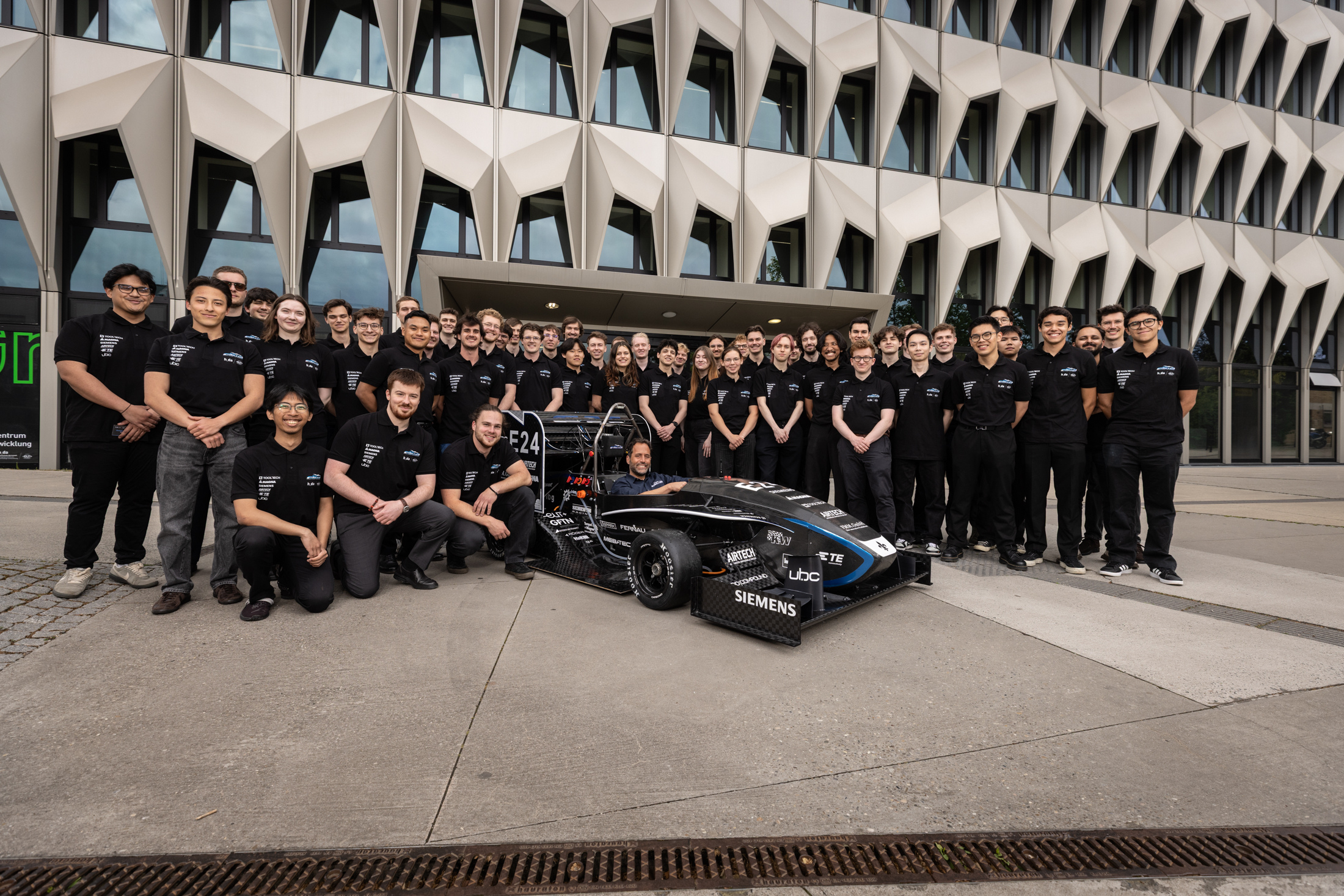
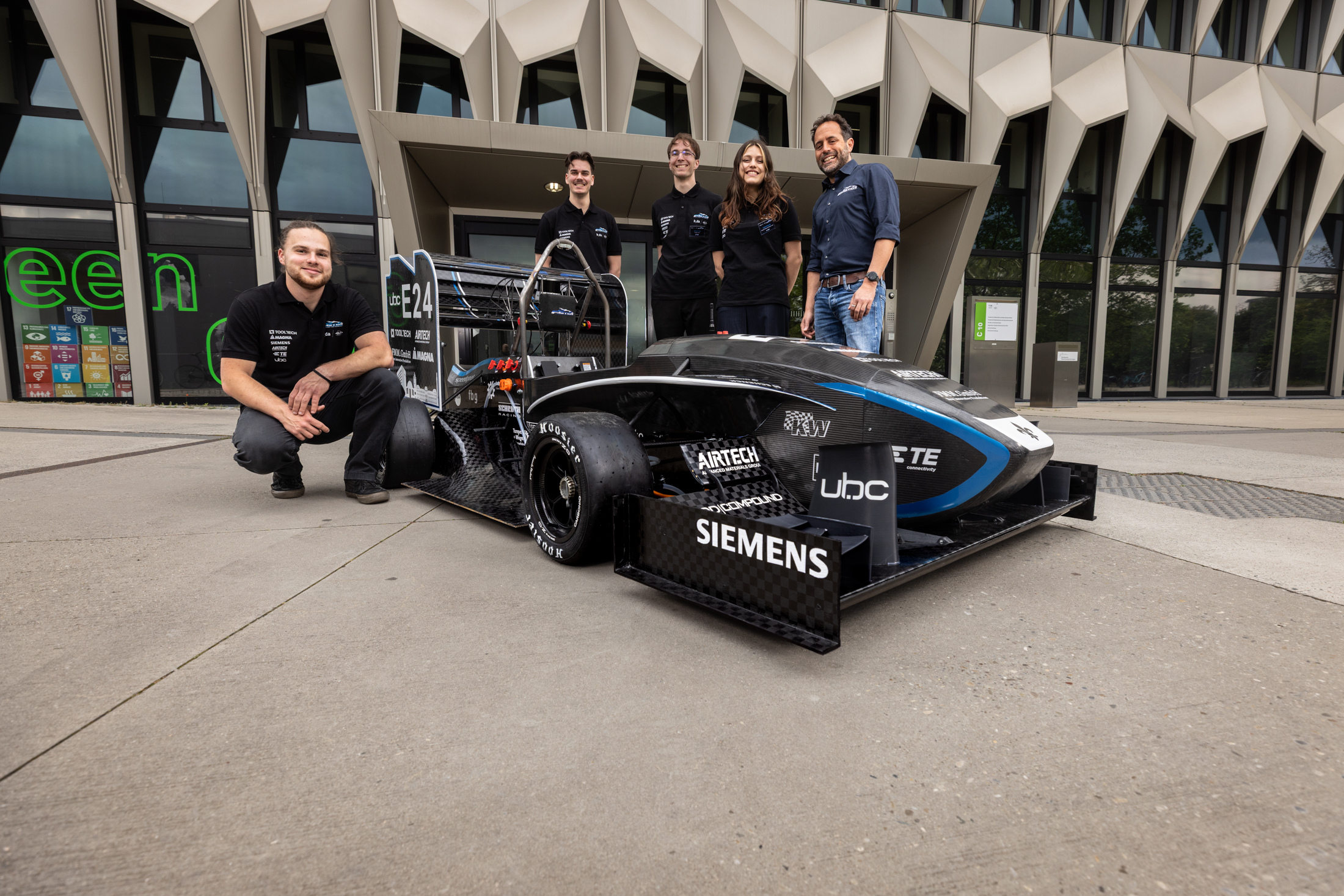
The student racing team at Darmstadt University of Applied Sciences (h_da) is currently developing an autonomous system for its new electric racing car, the “F26”. The “FaSTDa” team aims to compete with its car in a driverless race for the first time at the Formula Student race in the Czech Republic this summer. The students have now unveiled their latest vehicle to the public for the first time at the official roll-out on the h_da campus.
By Simon Colin, 8 May 2026
Lightweight construction is an advantage in Formula Student – even for humans. At least, those who are lighter and smaller have the upper hand when it comes to deciding who from the student team gets to drive the electric speedsters. These seats are highly sought-after – though in future they may well remain empty. For with the “F26”, the FaSTDa team from h_da is heralding the era of autonomous driving. At the Formula Student race in the Czech Republic in mid-July, the h_da students’ self-developed driverless system is set to compete in the sporting event for the first time.
To achieve this, the interdisciplinary team must completely rethink their car. This is because it is no longer the drivers who steer the car, but a sophisticated autonomous system capable of intervening in the steering, brakes and engine. This requires significantly more electrical and mechanical components, as well as expertise from a wide range of specialist fields. Consequently, the FaSTDa team has long since ceased to consist solely of students from mechanical engineering or automotive development courses, but also includes students from fields such as computer science, electrical engineering, as well as opto-engineering and image processing.
The h_da team has a total of three Formula Student races planned for this season: in addition to the Czech Republic in July, they will head to France at the end of August with the autonomous system, and to Italy in early September, this time with drivers in the cockpit. Last year, the students achieved success at the race in Lyon: in the ‘Skid Pad’ discipline, which involves driving a figure-of-eight course, the h_da team came second in the overall standings. More than 40 international teams took part.
“Although the switch to electric drive is still relatively recent, the team has already set itself the next challenging task with ‘driverless’. This demonstrates once again the tremendous motivation and immense commitment with which the students are driving the project forward,” says Prof. Dr Florian van de Loo, who supports the student team as Faculty Advisor.
Background
The h_da FaSTDa team currently consists of around 40 students from 16 degree programmes at h_da. Some of them bring relevant prior experience from technical professions or semi-professional racing to the project. The team is supervised and advised by Prof. Dr Florian van de Loo and other colleagues from the faculties of Mechanical Engineering and Plastics Technology, as well as Electrical Engineering and Information Technology. The racing car project is sponsored by a number of companies. A list of the participating sponsors and further information about the team and project can be found on the project website https://fastda-racing.de, on Facebook https://www.facebook.com/fastda and on Instagram (@fastda_racing).
Contact our Science Editorial Team
Christina Janssen
Science Editor
University Communications
Tel.: +49.6151.533-60112
Email: christina.janssen@h-da.de