


Teaching methods in STEM subjects

Mathematician and university lecturer Professor Torsten-Karl Strempel is one of the driving forces at h_da for networking in STEM subjects, didactics and partnerships with schools. Following the “MNU-Tagung” in Darmstadt, a conference on mathematics and science teaching with workshops for teachers from throughout the whole of Hesse, in this interview for impact he talks about why maths is laughed at in talk shows and about the burden on today’s teachers as well as about the ways that digital tools and artificial intelligence are changing teaching.
Interview: Christina Janssen, 21.11.2025
impact: Professor Strempel, let’s start with a classic: You are at a party and mention that you are a mathematician. The people around you are so shocked that they either say nothing at all or else “I was always really bad at maths”. Correct?
Professor Strempel: Correct! (Laughs)
impact: Some people, including many celebrities, even go so far as to boast about how they hated maths at school. I asked ChatGPT why they do that. The answer was: to gain sympathy. Has maths got an image problem?
Strempel: Yes. And science overall has an image problem. It came to a head during the coronavirus pandemic: many people found it unsettling to see how established teaching concepts had to be revised. Some exploited that situation to discredit science. In mathematics, there is the additional factor that it is considered particularly “difficult”.
impact: Is that a typically German phenomenon? I have the impression that people in France, for example, tend rather to boast about how good they are at maths.
Strempel: I have indeed also heard that about France, but I don’t know whether it applies for lots of other countries too.
impact: Can maths really be fun?
Strempel: Maths is great fun! I always notice this when school classes come to visit. We play with numbers or pen and paper, do little computer simulations and everyone has a sense of achievement. Everybody enjoys themselves straight away – and there is also interaction. Underrating maths is a social problem. Added to this is the fact that teachers have a lot of work and are often additionally burdened with administrative tasks.
impact: Has school teaching improved a little in the last 10 to 20 years?
Strempel: In my opinion, it has deteriorated. Not because of the teachers, but due to the general conditions. Many children start school before they are ready. Bureaucracy is taking over: grants and subsidies for disadvantaged children, new curricula, digitalisation, career guidance, political education – everything ends up on the teacher’s desk.
impact: Meaning that it is not due to a lack of didactic ideas but rather that these ideas cannot be put into practice?
Strempel: Exactly. Teachers are obliged to deal first with educational challenges in the classroom – ADHD, language problems, socialisation, etc. Only after that can they start teaching their actual subject. And if the family at home does not acknowledge that school is something valuable, it becomes even more difficult.

impact: Which new teaching approaches are used in STEM teaching today?
Strempel: Digitalisation has arrived in schools, too. There are learning platforms, tools and animations. But the teaching mandate for teachers in Hesse is 25.5 hours per week. Designing lessons so that they are as appealing to school students as a game show is virtually impossible. In addition, school curricula change very frequently. There is a lack of continuity.
impact: You recently organised an important STEM conference at h_da for teachers: What was on the agenda at the “MNU-Landestagung”?
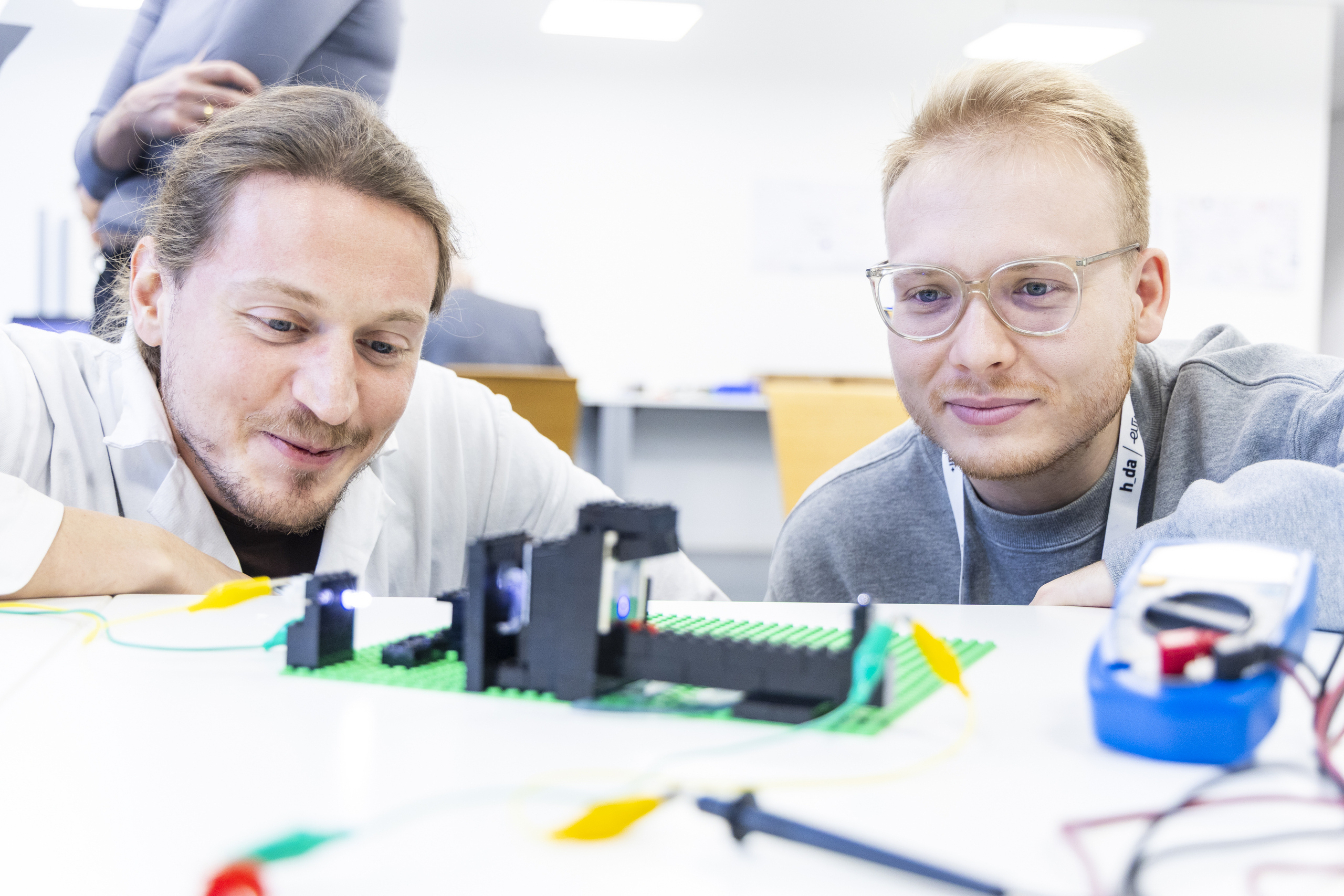
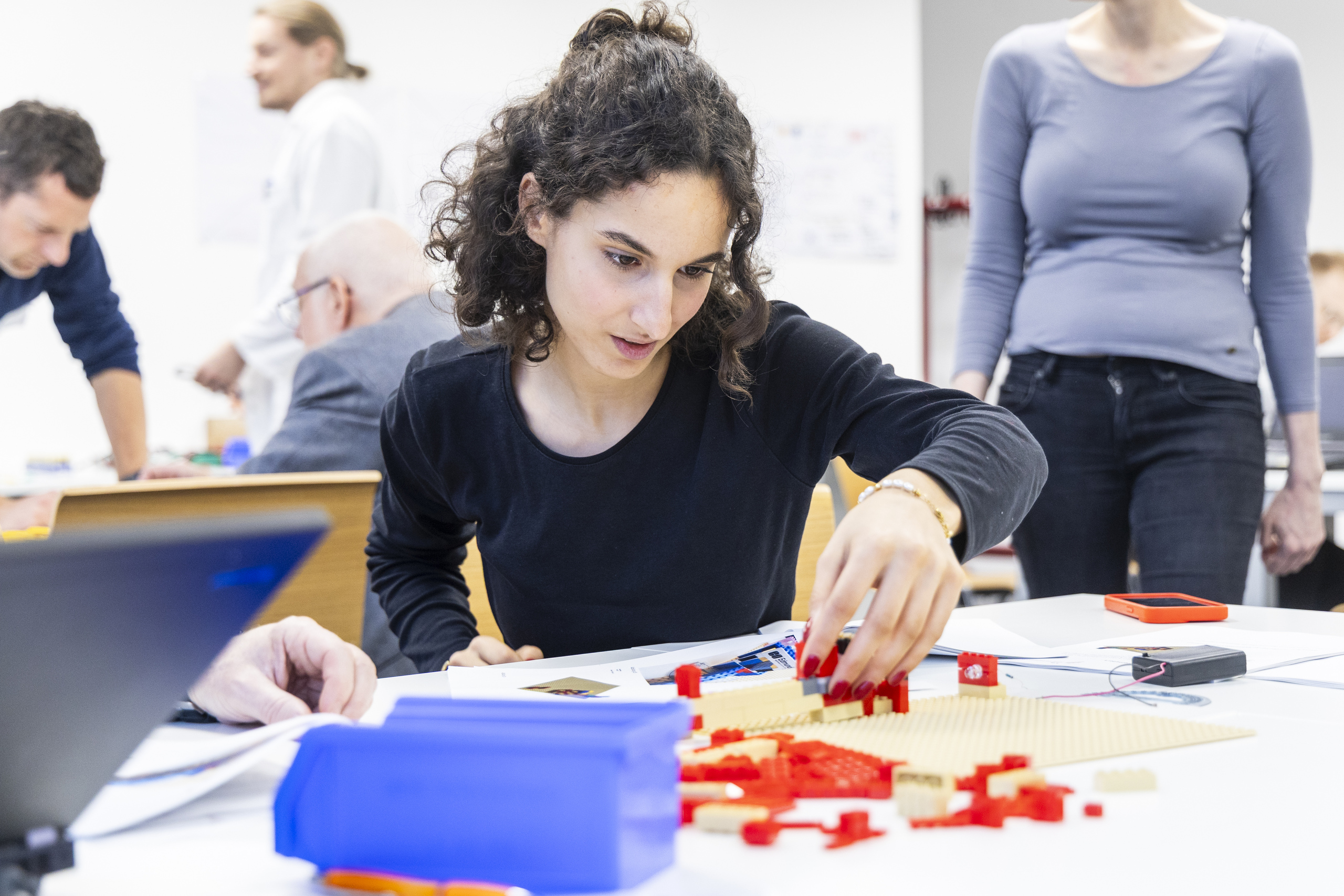
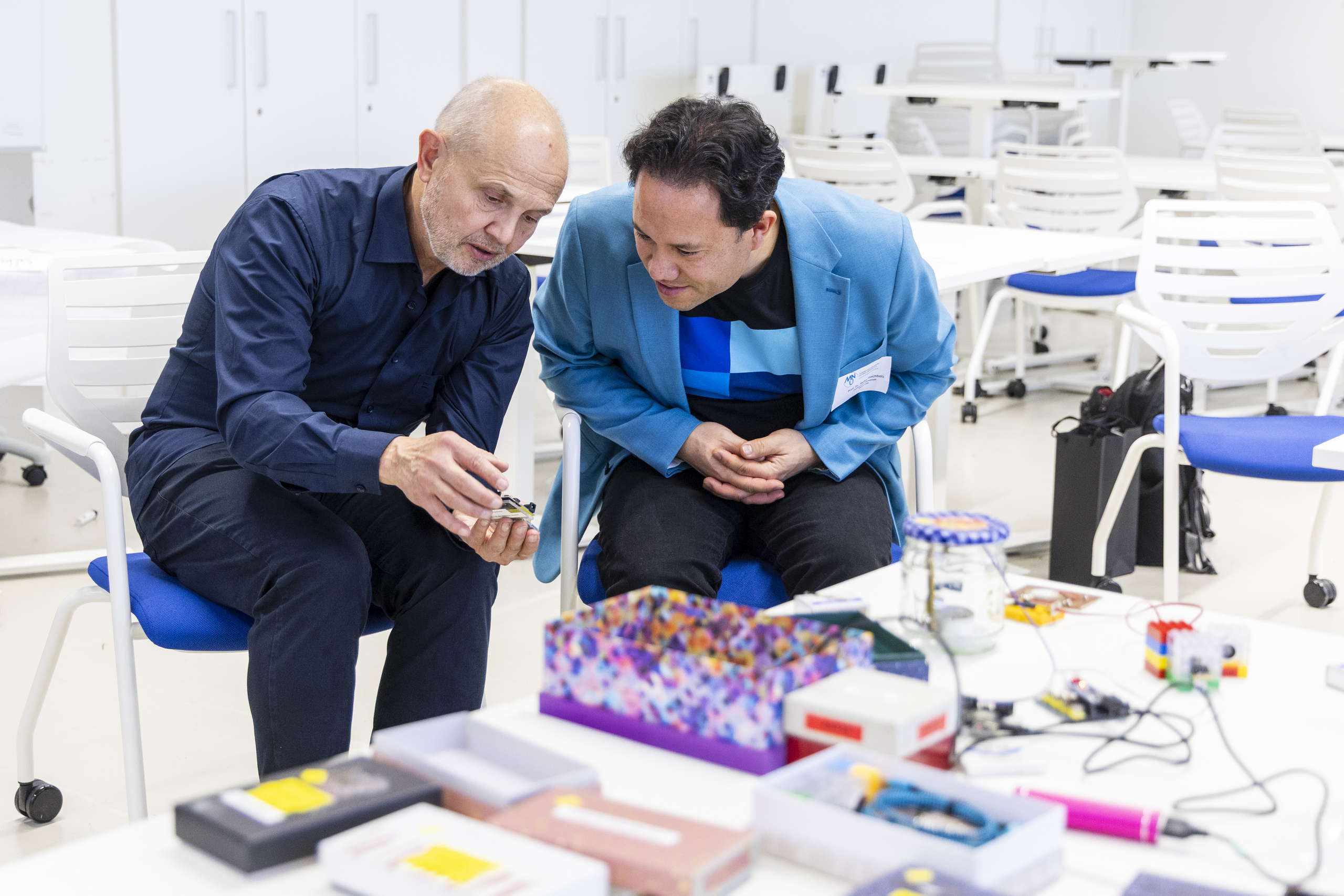
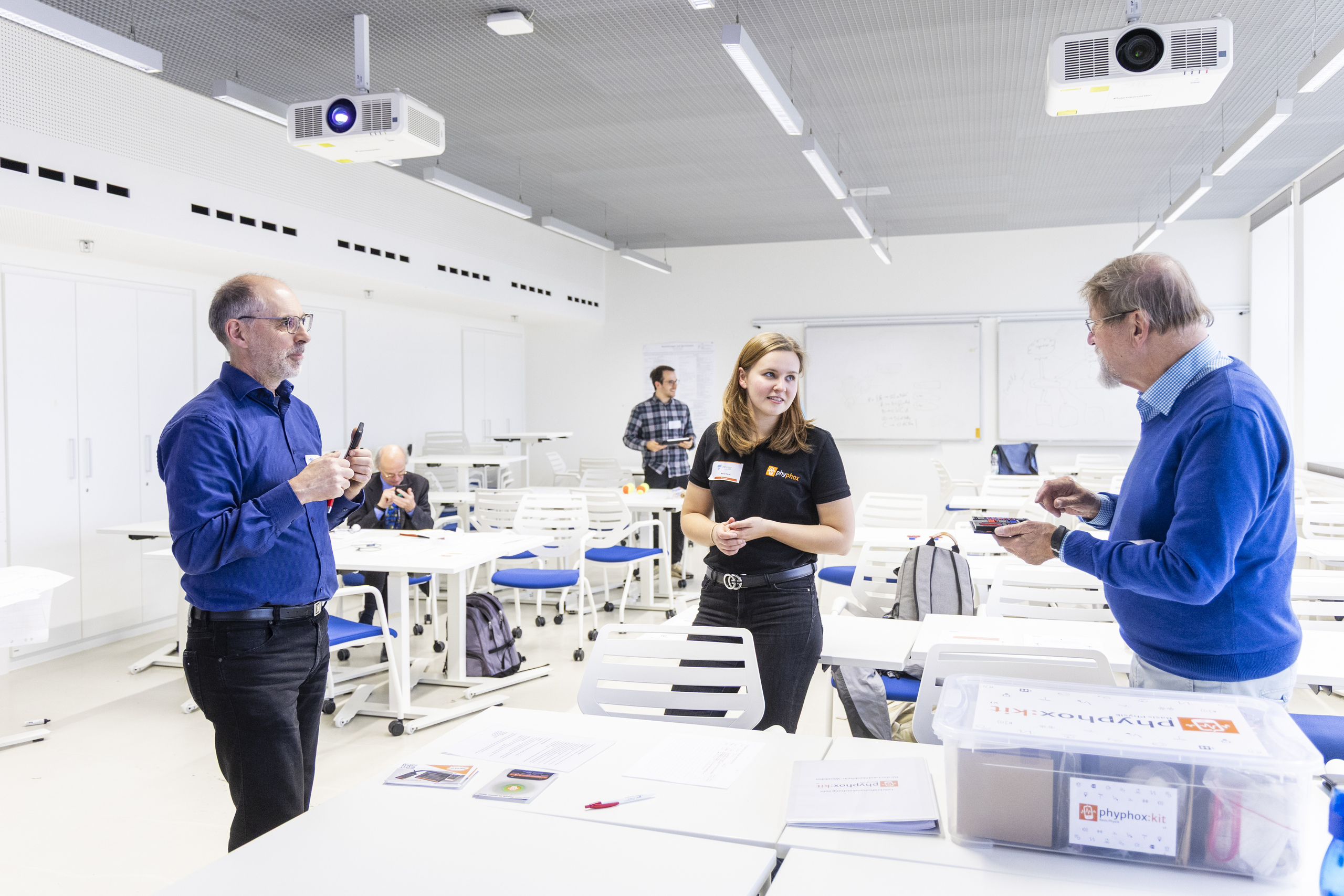
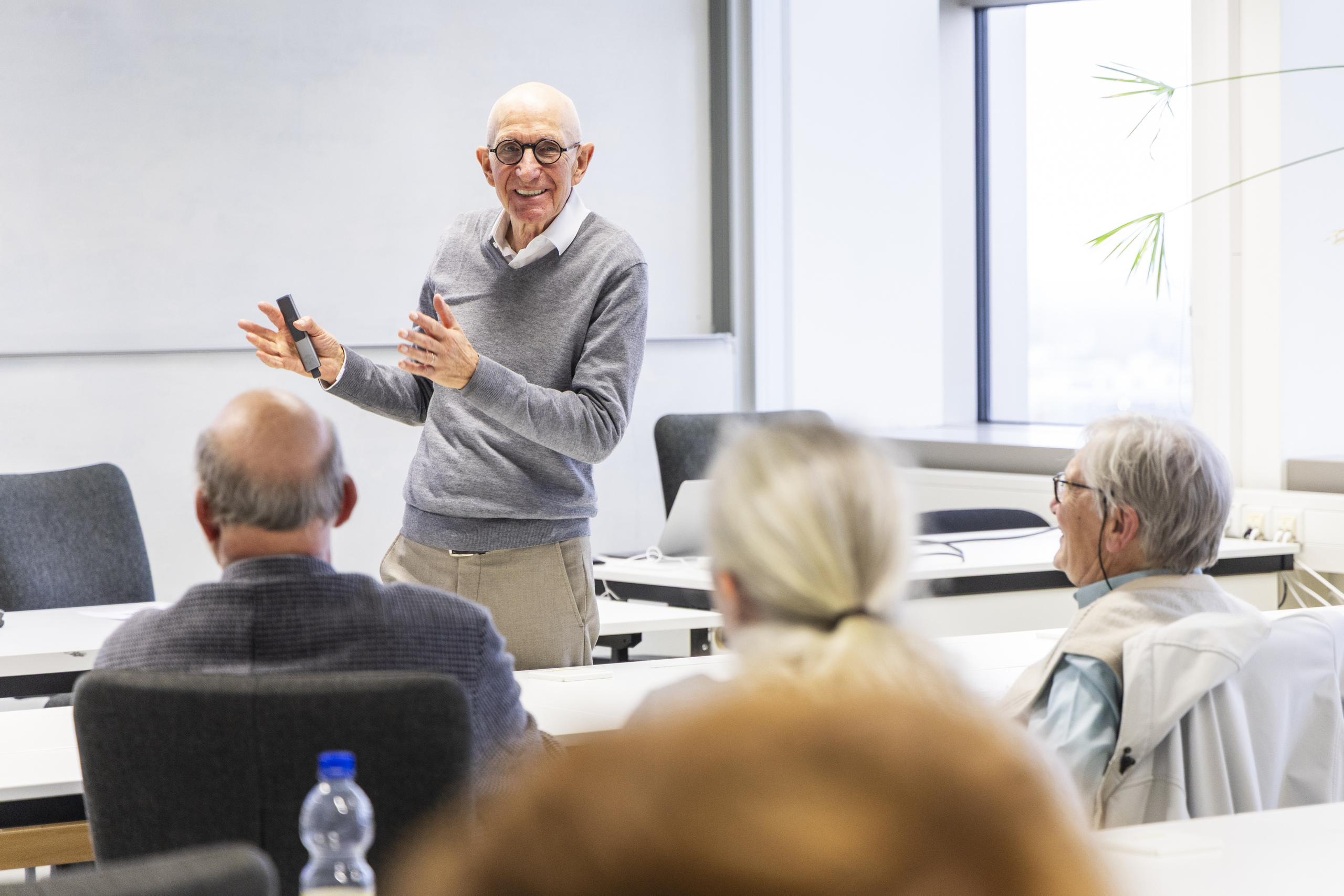
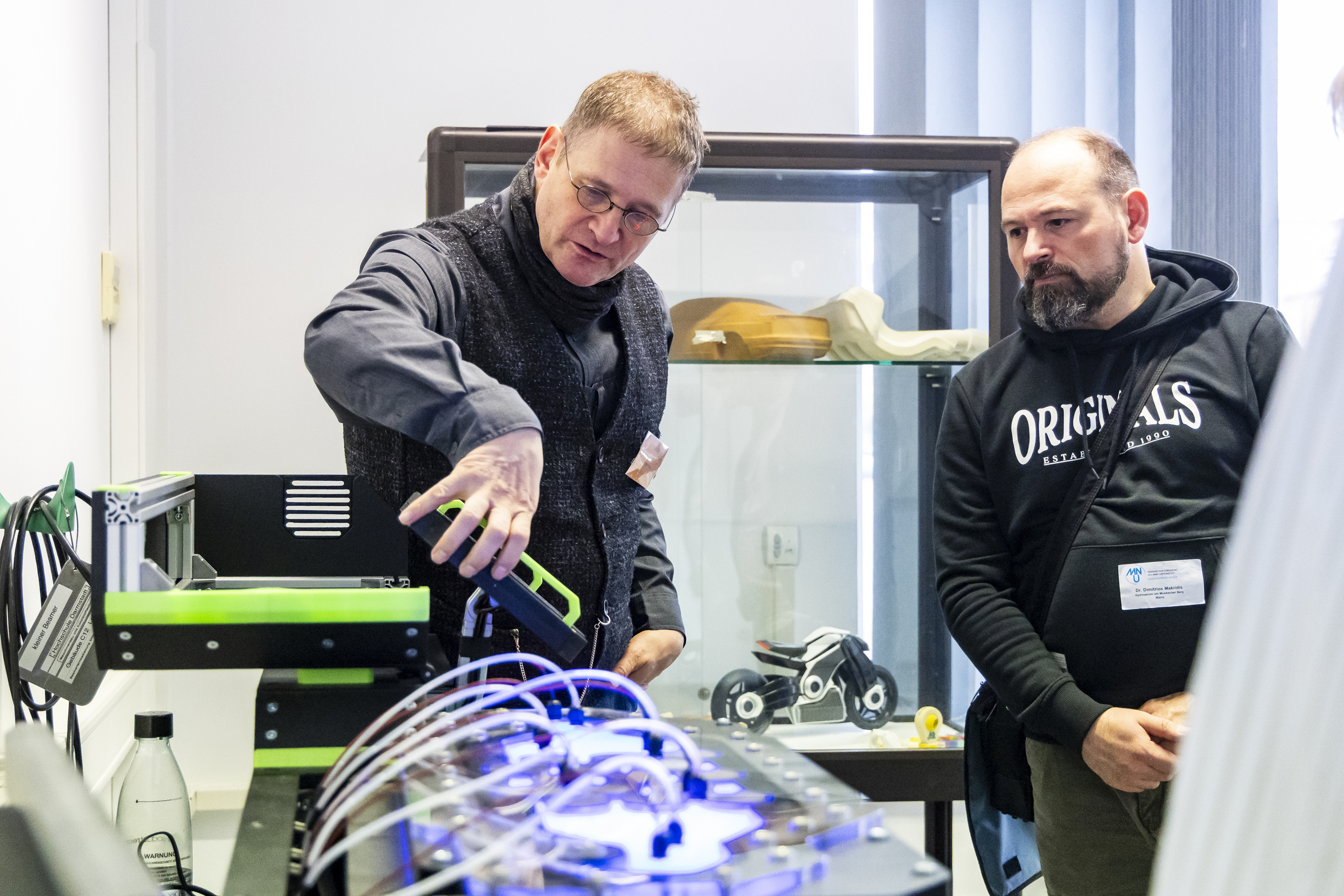
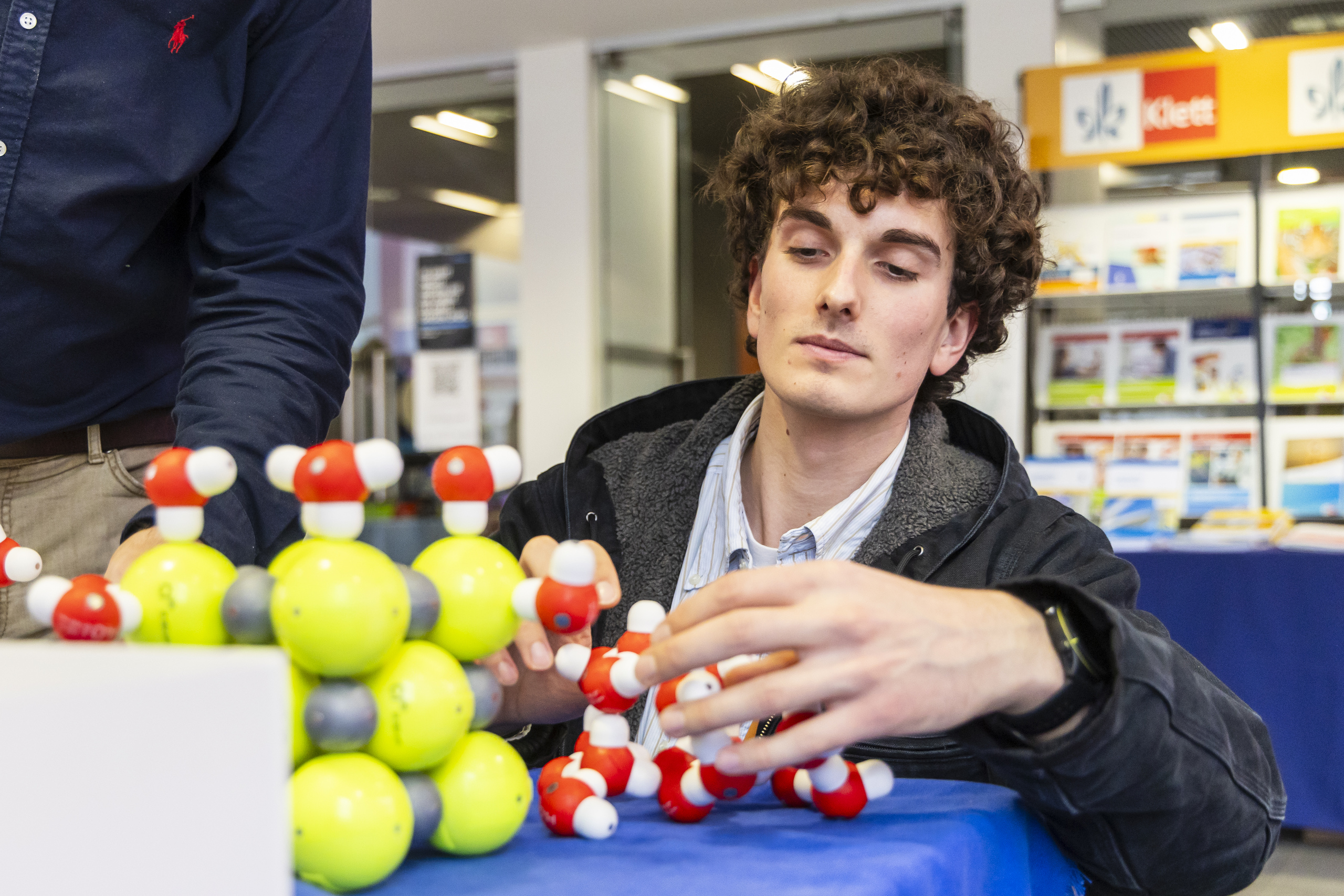
Strempel: A mix of lectures, workshops and experiments covering all STEM subjects – from biology and computer science to engineering. Colleagues from the university demonstrated what can be replicated or used in the classroom – for example, optics experiments for physics lessons or AI experiments with LEGO robots. There was an Arduino workshop where the participants could conduct experiments with small circuits. The fire brigades from Frankfurt, Darmstadt and Fulda also attended – with topics related to chemistry and physics applications, among other things. We had contributions on climate change in Greenland, experimenting with smartphones and serious games in teaching. A very wide range of topics, and lots of them really are implementable in the classroom.
impact: Who attended the conference?
Strempel: About 90 participants from throughout the whole of Hesse: teachers, retirees, university professors, representatives of fire brigades and of various STEM centres, publishing companies and lab suppliers.
impact: You yourself ran a workshop on AI. What contribution can AI make to maths teaching?
Strempel: A growing one! Initially, AI often spat out nonsense. Today, it often delivers correct deductions or solutions. To that extent, we must ask ourselves whether it is still expedient for students to learn these skills, or whether we shouldn’t perhaps go one step further and integrate AI as a training partner in the knowledge acquisition process: learners who are quick to comprehend are given additional tasks, while others take more intermediate steps. This principle of internal differentiation has existed for a long time – but AI makes it more practicable.
impact: Is it already used in schools?
Strempel: Yes. On the FelloFish platform, for example.
impact: Did you experience anything at the conference that would have inspired you when you were at school?
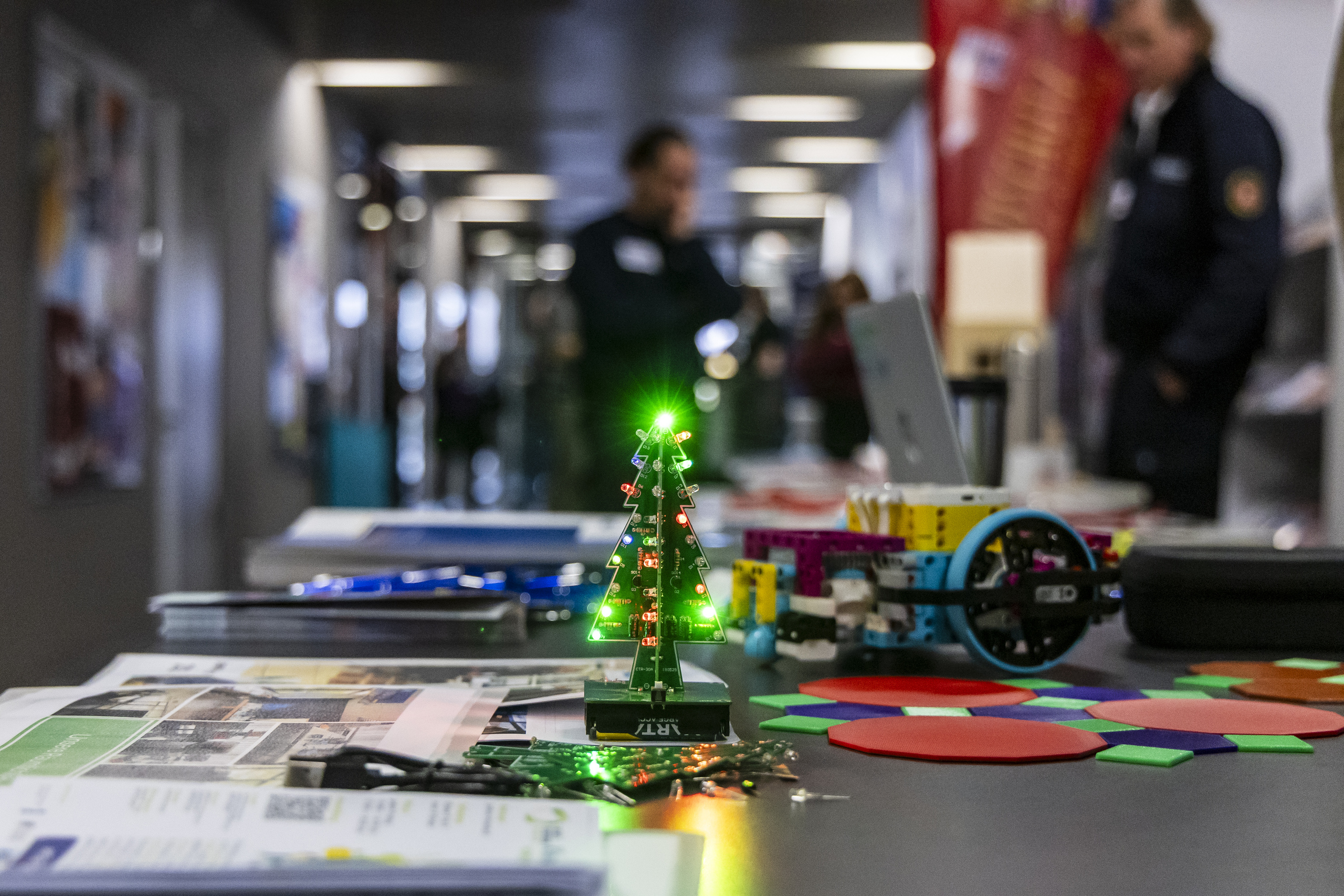
Strempel: When I see a computer or an electronic device, my eyes light up. The “MINT-Zentrum Darmstadt”, which promotes STEM subjects, brought along a little Christmas tree with LED lights. It was a real eye-catcher. But the point in question wasn’t Christmas, of course, but rather the fact that today you can build your own electronic circuits cheaply and with just a few components. For example, you can use a small computer to water a flowerpot. I can install a sensor on my balcony to monitor air quality. I can activate a distance sensor when riding my bike and transmit this data to a platform. These are small steps – and suddenly you find yourself in the world of science. It’s simply good fun.
impact: How do such ideas find their way into schools?
Strempel: Via encounters such as our conference. Teachers attend workshops like this, then come to the universities later on with their classes or ask for materials. Partnerships evolve, and that’s precisely what’s important. The gap between leaving secondary school and starting university has grown. We can only solve this problem by working together – not by assigning blame.
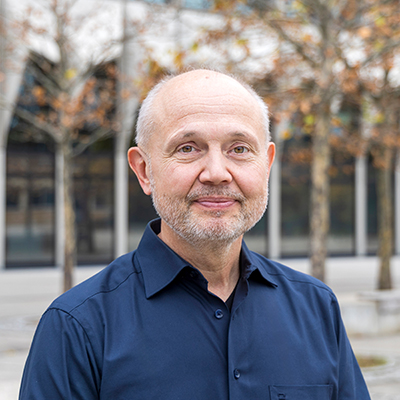
Torsten-Karl Strempel, Professor of Mathematics, has made Waschenbach his home and taught at h_da since 2011. His work focuses on mathematical foundations, numerical analysis and mathematics/physics in export.
Strempel organises events at h_da on a regular basis, e.g. the Forum Mathematik for discussing maths-related topics and sharing experiences. He also supports new students with programmes such as MatheFit at the start of their studies and represents h_da at the annual conference of the Fachbereichstag Mathematik, an alliance of mathematics departments, faculties and institutes at German universities of applied sciences. He is co-organiser of the Tag der Mathematik, a maths competition for senior school students, and the Forum Begabungsförderung Mathematik, which promotes maths teaching for particularly gifted school students.
Outside the lecture theatre, Strempel is an avid cyclist and plays table tennis and volleyball. He writes for the “Darmstädter Echo” newspaper on a regular basis, turning questions about Easter and Christmas into mathematical formulas – for example, when he explains why Santa’s sleigh works better without wheels...
impact: What exactly is the problem in the transition from school to university?
Strempel: In the past, five percent of school students in any given year went to university; today, that figure is 50 percent. This means that schools today must primarily prepare students for university. But knowledge in STEM subjects is also important for apprentices: what used to be a car mechanic is now a mechatronics engineer. A painter or plasterer today has to work with very sophisticated materials. Therefore, the most important thing is for schools and universities to talk to each other. For example, a catalogue of minimum requirements for STEM subjects is currently under discussion: What skills and knowledge must school students have? That would be very useful.
impact: How did you discover mathematics? Did you already rack your brains over the geometry of an Easter egg as a child?
Strempel: No, it was pure coincidence. I come from a working-class family. As a child, I fluctuated between wanting to become an astronaut and a racing driver. But then at some point my uncle gave me a construction kit, and it had an impact on me. Later, I had a colleague in my handball team who was studying at the Technical University of Darmstadt, so I studied maths and physics and met a group of people who it was fun to study with. That’s the most important thing: when students find a good group of people, they soon progress.
impact: And a little fun during lectures is allowed sometimes...?
Strempel: I hope so! I try to create an amiable atmosphere. I had a prime example of this just last semester: for some reason, a particular student didn’t join in when we were doing calculations on the blackboard. But I noticed how he explained the solution perfectly to another student in his group, which led me to remark – somewhat mockingly – that he was obviously just too lazy to work it out on the blackboard. Another student then explained to me that they were like diamonds: they only form under pressure. That is and remains my “diamond group”.
impact: Earlier on, we mentioned the Christmas tree. Each year, you write the Christmas story on a maths theme for the “Darmstädter Echo” newspaper. Can you already reveal to us what problem Santa has to solve this year?
Strempel: This year, Santa will probably take care of wrapping presents. But we haven’t yet gone into detail about that... (laughs)
Contact our Editorial Team
Christina Janssen
Science Editor
University Communications
Tel.: +49.6151.533-60112
Email: christina.janssen@h-da.de
Translation: Sharon Oranski
Photography: Samira Schulz
Links
Study programmes at the Faculty of Mathematics and Natural Sciences
Torsten-Karl Strempel’s website (in German only)
Verband zur Förderung des MINT-Unterrichts (in German only)
Zentrum für Mathematik e. V. (in German only)
Begabtenförderung Mathematik e. V. (in German only)