


EUT+ guest professor in Cassino
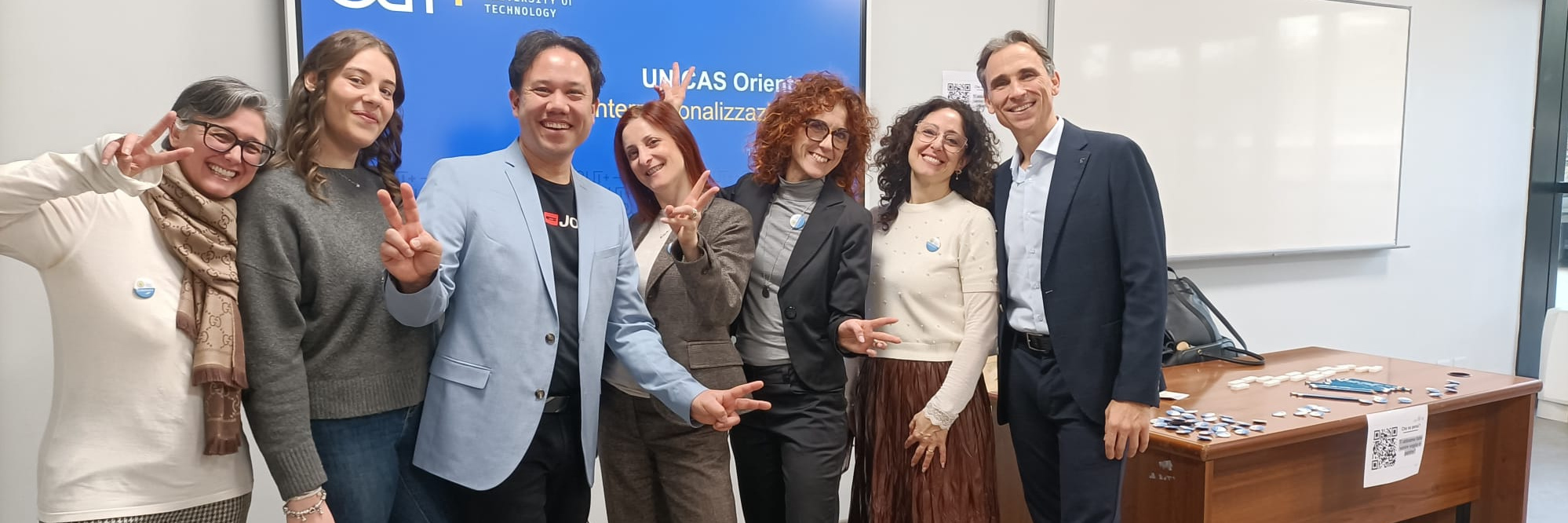
Three weeks as a visiting professor in Italy, extensive networking and lightbulb moments in the lift: during his stay at the University of Cassino and Southern Lazio (UNICAS), Heiko Rochholz, Professor of Mathematics at h_da, experienced what makes the European University of Technology (EUT+) so special. In this interview with impact, he explains why he did not feel like a guest in Cassino but more like part of a family, what challenges he sees for EUT+ – and why internationality is his top priority.
Interview: Christina Janssen, 23.4.2026
impact: Professor Rochholz, three weeks in Italy in the spring – that sounds like a great holiday.
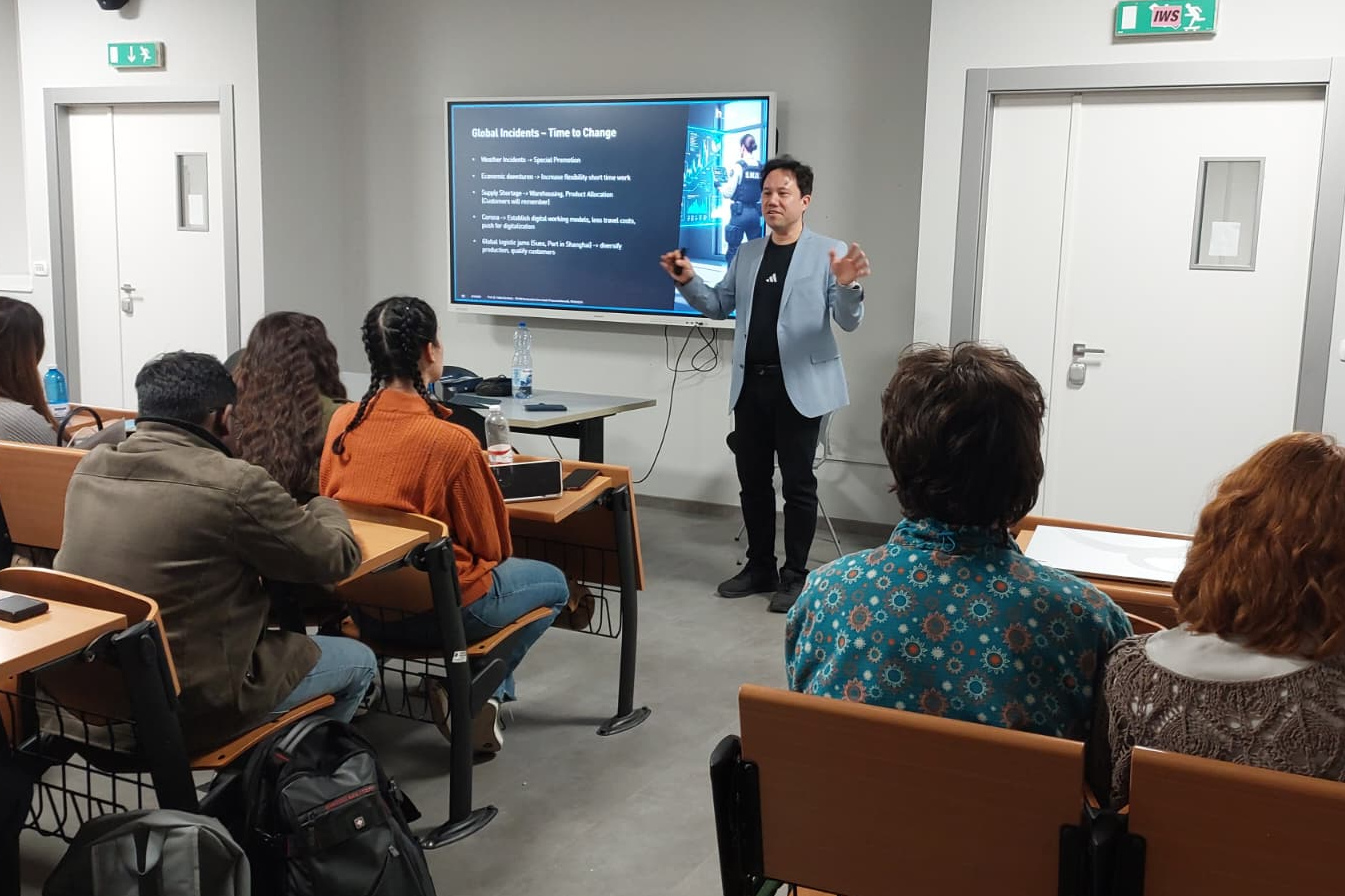
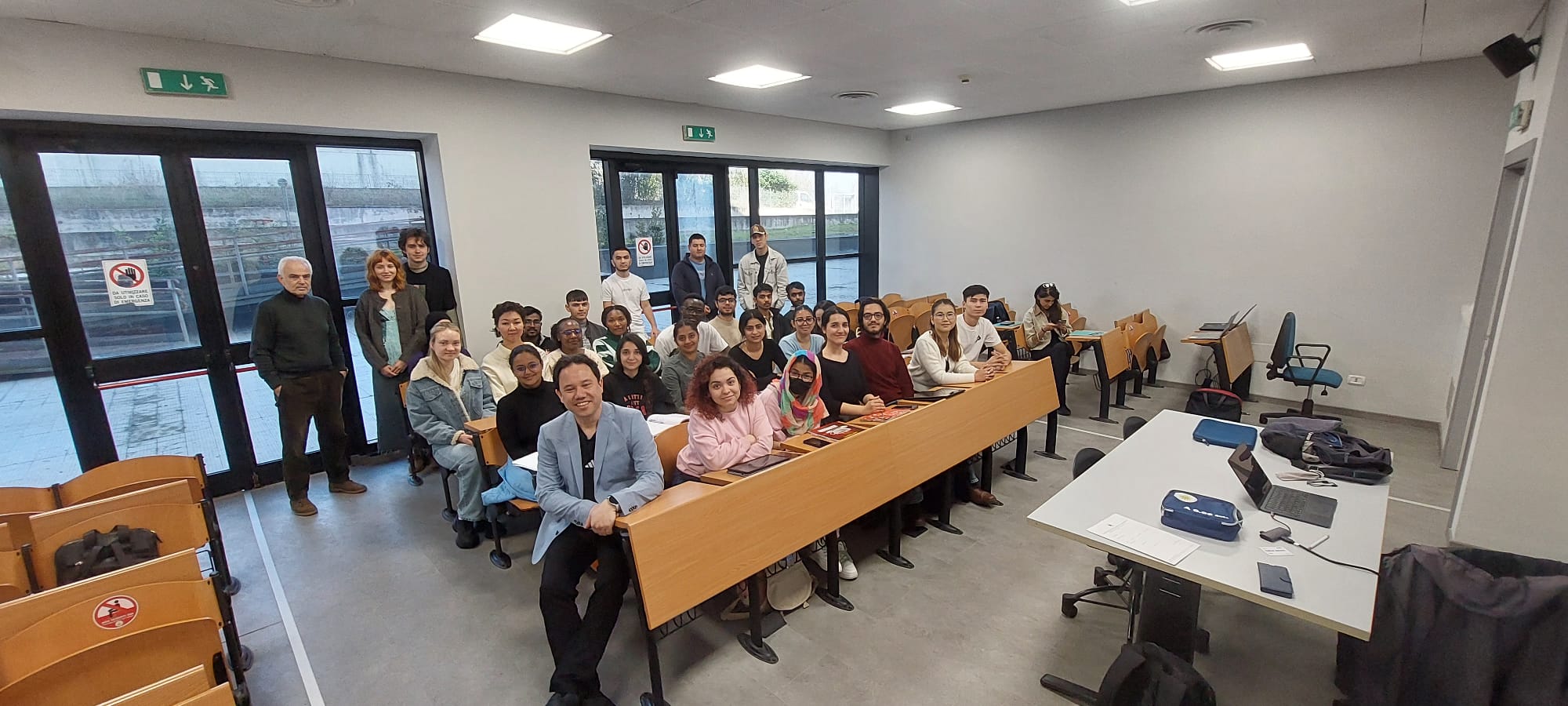
Professor Heiko Rochholz: I thoroughly enjoyed the lovely weather, but it wasn’t a holiday. I spent three weeks at UNICAS as a lecturer on the Master’s degree programme in Global Business and Economics at the Faculty of Economics and Law, where I took over the Microeconomics and Service Management courses. These were regular courses, that is, they were part of the normal teaching curriculum at our EUT+ partner university.
Between lecture theatre and global politics
impact: What was your first impression? What was new or surprisingly different?
Rochholz: It was fun from the very beginning, but you immediately notice that a lot of things are different as far as culture is concerned. Internationality feels different there too because the student body differs from ours at h_da.
impact: How does it differ?
Rochholz: Overall, I have the impression that UNICAS is very heterogeneous, very diverse and internationally oriented. I liked that. For example, I had students from India in my course, but also from regions in the Middle East, partly even from war zones. Suddenly I found myself dealing with issues that I mostly don’t experience first-hand in Darmstadt – such as that internet access is restricted in some of the students’ home countries, that they have no contact with their families, and that bank transfers from their parents are suspended. These are situations that introduce an entirely different reality into the lecture theatre. That’s something I’ve rarely experienced in Darmstadt so far.
impact: How did you find the campus and the surrounding area?
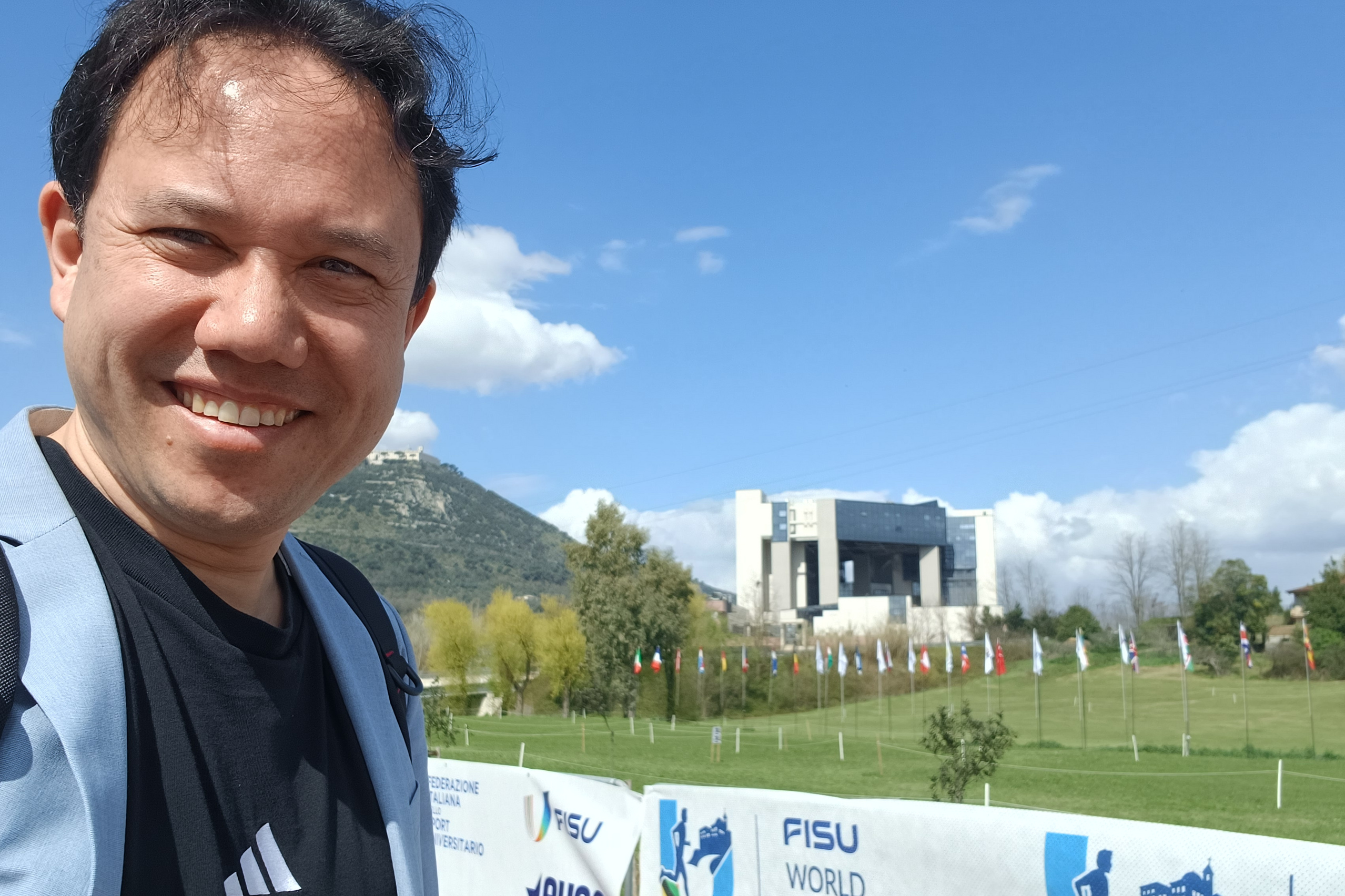
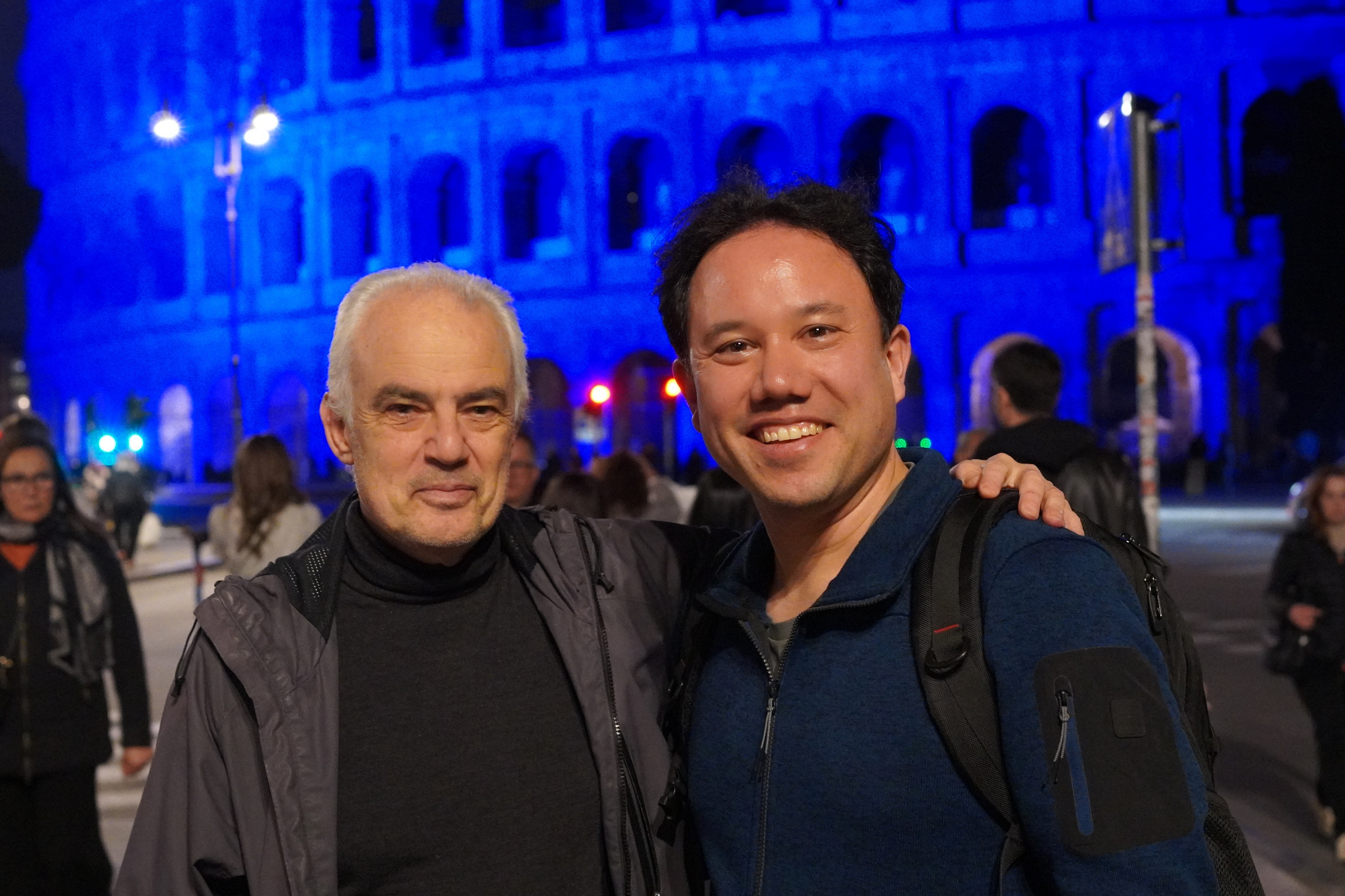
Rochholz: The campus is more compact, and with 35,000 inhabitants Cassino is considerably smaller than Darmstadt, but surprisingly lively – especially as far as eating out is concerned! And the transport connections are truly excellent. It was really easy for me to get to Rome and Naples. I visited Pompeii for the first time in my life, which was very impressive, and spent a whole day walking around Rome – about 40,000 steps! After that, I’d really earned my dinner with Professor Sergio Nistico, my Italian colleague.
Lightbulb moments in the lift
impact: Were there also moments when you first had to find your way around?
Rochholz: Yes, definitely – and quite literally! The building has several parts that are separated from each other on the upper floors. When you are on the ground floor, you need to know which lift to take in order to get out at the right place. At first, I simply got into the first one that came, then found myself stuck at the top. It was like a little maze.
impact: There is something almost metaphorical about that.
Rochholz: Yes, indeed. You find your way around step by step – both in the building and in the system, in the European University. But that’s exactly what also makes it so exciting.
“You don’t feel like a guest”
impact: What do you remember most?
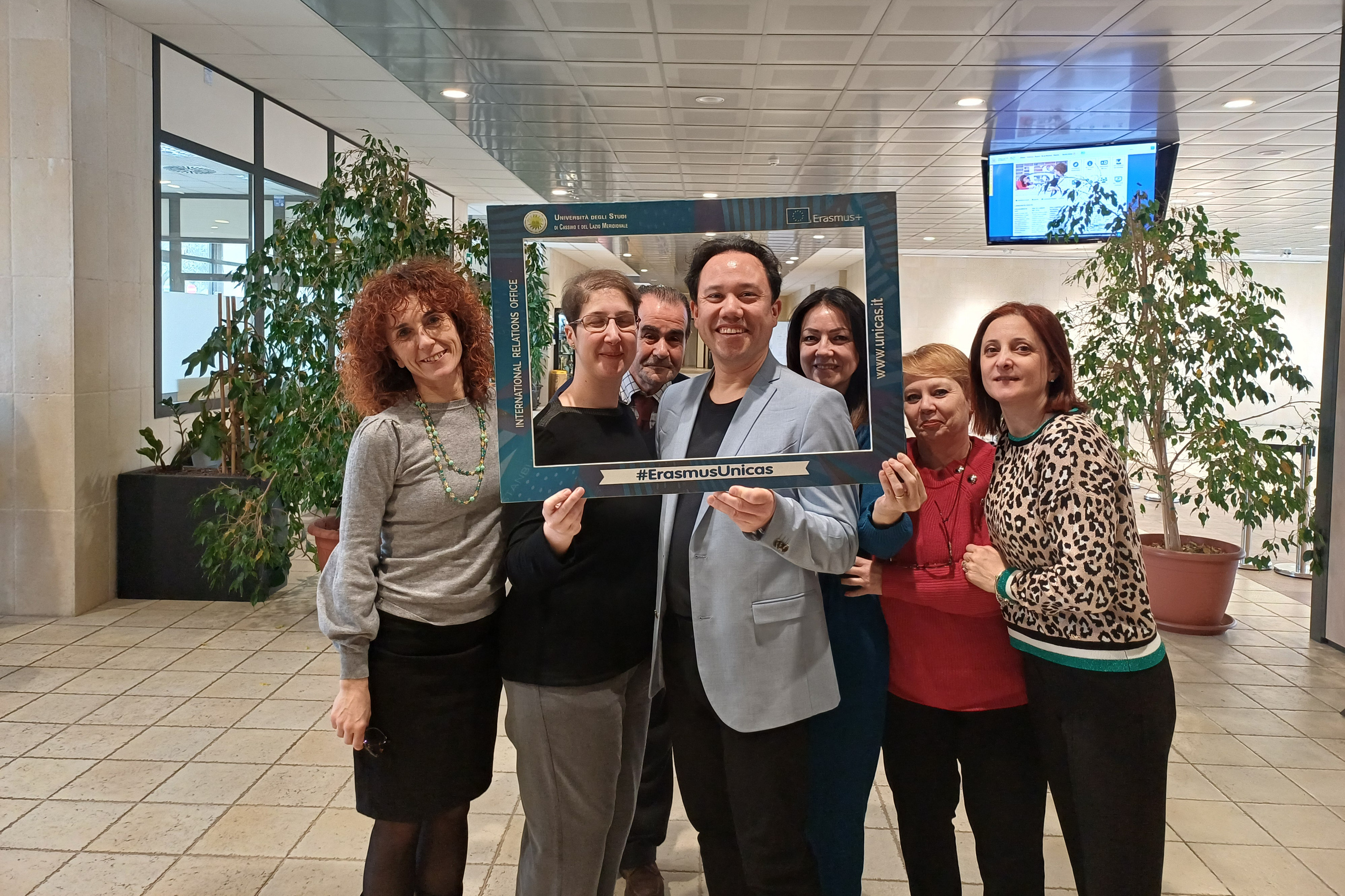
Rochholz: The feeling of being part of something. You don’t feel like a guest. Instead, you are immediately accepted as part of the EUT+ family. That’s why I experienced Italy so intensely and like never before. You get to know the people and university life in a completely different way. It is much more personal – and simply fantastic.
impact: What do you mean exactly?
Rochholz: Through EUT+, you are integrated in everything straight away – I was involved with the Erasmus team, had to do with everything from staff management to research, and spent time with lots of colleagues. I was always regarded as part of the team from the outset. And it’s precisely this feeling that makes a big difference.
Heiko Rochholz joined h_da in October 2025, where he is currently deputy professor. He studied physics and earned his doctoral degree at the Max Planck Institute for Polymer Research. In parallel, he dealt extensively with business management topics.
He then worked for over 20 years in the chemical industry, for example at Budenheim, a company that produces special chemicals and is part of the Oetker Group, and Evonik. During this time, he was already working as a lecturer at h_da. He is now contributing his international experience from industrial practice and teaching to the EUT+ alliance.
Collaboration with an interdisciplinary perspective
impact: Did your visit also lead to concrete follow-up projects?
Rochholz: Yes, indeed. We laid the foundation for further expanding our collaboration. This semester, I’m running a seminar and planning a one-week working visit to Cassino with students from Darmstadt in September. Each participant is working on a project with a partner from Cassino for a whole semester. It’s an incredibly intensive experience for everyone involved.
impact: What’s it all about?
Rochholz: The title of the seminar is “International Business”. The idea is to bring Italian business management students together with German applied mathematics and data science students. Here in Darmstadt, we have many students who are good at analytics and looking for possible applications. We find precisely such questions in business management. Our data scientists and applied mathematicians step in at the point where economists’ methods reach their limits.
Opportunities and bigger projects
impact: In your opinion, where do the challenges currently lie for mobility within EUT+?
Rochholz: In quite a few areas, it doesn’t yet feel like a single university, but instead still like nine individual ones. This is apparent, for example, in the websites – they each have a different structure, are in different languages, and it’s not easy to find your way around. But clearly that’s a bigger project…
impact: And in everyday practice?
Rochholz: In that respect, I’m coming up against some very specific issues right now: for example, we use different platforms for teaching – at h_da we work with Moodle, whereas in Cassino they use Google Classroom. When I organise a joint seminar for both universities, I’m obliged to operate both systems in parallel: I’m the interface that keeps all the information aligned. A common platform would be helpful here.
impact: Is there anything else?
Rochholz: The administrative procedure necessary for such a guest visit is partly still very complex. It goes without saying that it’s more than just a normal “business trip”, as you get a local contract that needs to be agreed. This is entirely understandable and no small matter.
Internationalisation as a game changer
impact: Why are you so enthusiastic about EUT+?
Rochholz: I worked for over 20 years in the chemical industry. It’s a global business. You work with customers, factories and supply chains throughout the world. That is why introducing students to this international reality at an early stage is important to me.
impact: Is it solely about economic aspects?
Rochholz: No, it’s about social aspects too. Especially at a time when we are once again seeing stronger national and nationalist tendencies, it’s important to encourage openness and cooperation because these are the foundation for global prosperity, sustainability and peace. EUT+ is a concrete tool for achieving this.
impact: In your opinion, what is the greatest benefit for the EUT+ universities?
Rochholz: That EUT+ exists in the first place. Last year, I attended a forum for university lecturers, where we discussed, among other topics, how universities can advance. Almost all universities are struggling with a decline in student numbers, particularly in STEM subjects. And they all see internationalisation as part of the solution. With EUT+, we are several steps ahead and already have concrete, visible successes under our belt, while other universities do not even know where to start.
impact: And what professional benefit did your visit to Cassino generate?
Rochholz: I believe that EUT+ offers points of departure that I don’t have here at h_da – even though we’re not exactly a small university: for example, the possibility to build bridges to companies abroad. Last year, together with some of our students, I visited our EUT+ partner university in Riga, where we analysed local businesses, among our other activities. As a result, I now have personal contacts to companies in Latvia. In this way, we can expand our Rhine-Main network. That’s tremendous. In Cassino, we jointly developed a new understanding of how we can work together, and in this way laid the groundwork for our students, as it were, in areas ranging from teaching to networked communities of researchers.
EUT+ in three words
impact: If you had to describe EUT+ in three words…?
Rochholz: First: Europe – in its purest form. Through EUT+, I can experience first-hand how people from different cultures team up and work together. This isn’t an abstract idea, but everyday reality. Second: opportunity. Students gain access to international experience and networks that they otherwise wouldn’t have. This is also important vis-à-vis their later career development. And third: campus. A joint European campus is evolving, where you feel part of a larger whole with all its possibilities. It’s precisely this sense of belonging that is so important.
What is EUT+?
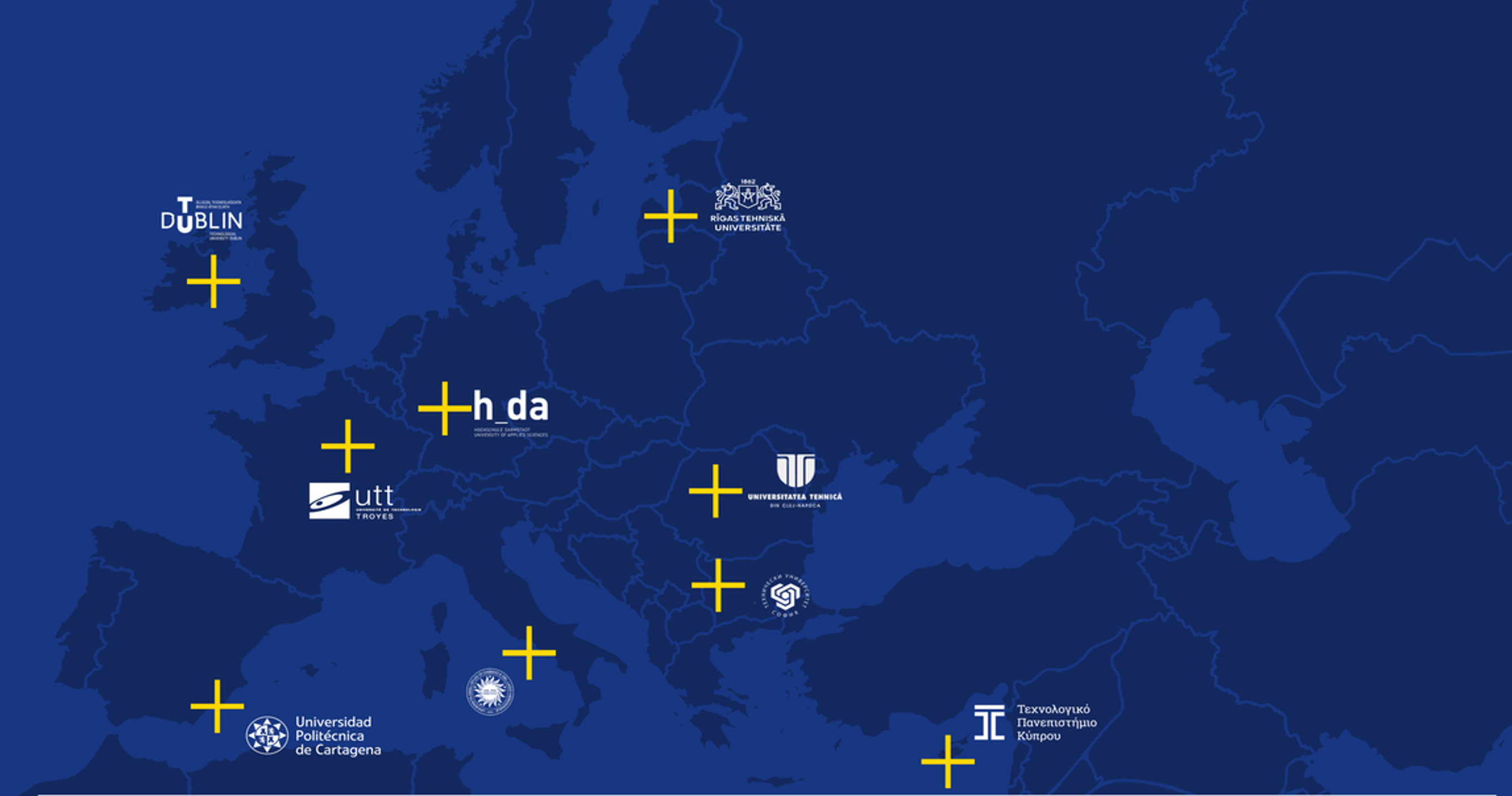
The European University of Technology (EUT+) is an alliance of nine European universities. The aim is to create a joint European university – with interlinked study programmes, collaborative research and international mobility for students and staff. Its key priorities are to support international cooperation in teaching and research, initiate exchange programmes and joint study formats, foster multilingualism and intercultural skills, and strengthen the European idea in the university context.
Contact our Editorial Team
Christina Janssen
Science Editor
University Communications
Tel.: +49.6151.533-60112
Email: christina.janssen@h-da.de
Translation: Sharon Oranski
Are you interested in an EUT+ exchange?
EUT+ / h_da Coordinator
Dr Jorge Medina