


Conference on anti-Semitism, racism and authoritarianism
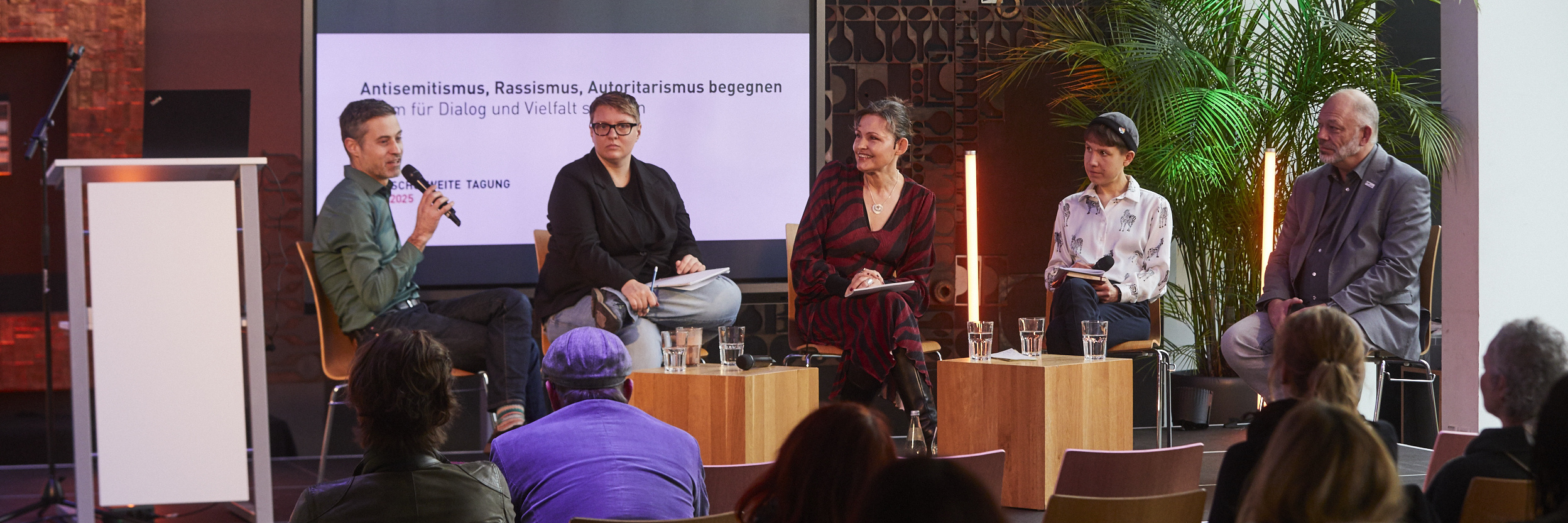
It’s like a football stadium. That’s how Meron Mendel describes the culture of debate that has reached a pinnacle and become established in Germany and many other countries. Vociferous camps group on both sides. And you must decide which one to join. Meron Mendel calls this “bubble communication”. It is often rather a matter of winning than of reaping any personal benefit from the discussion. The conference “Confronting Anti-Semitism, Racism and Authoritarianism – Creating Space for Dialogue and Diversity” at h_da demonstrated that alternatives exist.
By Simon Colin, 17.11.2025
h_da’s Equal Opportunity Office was able to attract renowned speakers for the conference: together with his partner, political scientist Saba-Nur Cheema, Professor Meron Mendel, director of the Anne Frank Educational Centre, spoke about the escalating public debate in Germany since the terrorist attack by Hamas on Israel on 7 October 2023. Dr Ayline Heller and Dr Charlie Kaufhold, social science researchers, presented the results of a study on contemporary authoritarianism. In an art workshop, Professor Lisa Niederreiter from h_da’s Faculty of Social Work invited participants to explore defensive reactions to “foreignness”.
Neutral space for discussion
Applied Science (h_da), made clear the university’s express wish to maintain an atmosphere on campus that fosters open discussion. To this end, he said, the university offers a neutral space where discussions can take place and different positions are represented. He added that university members are, of course, entitled to their own voice and opinion, but as an institution h_da must take a neutral stance on contentious social issues. Neutrality does not, however, rule out the possibility to actively campaign for democratic values, added Charlie Kaufhold. h_da also sees this as an important task, and the conference plays a key role.
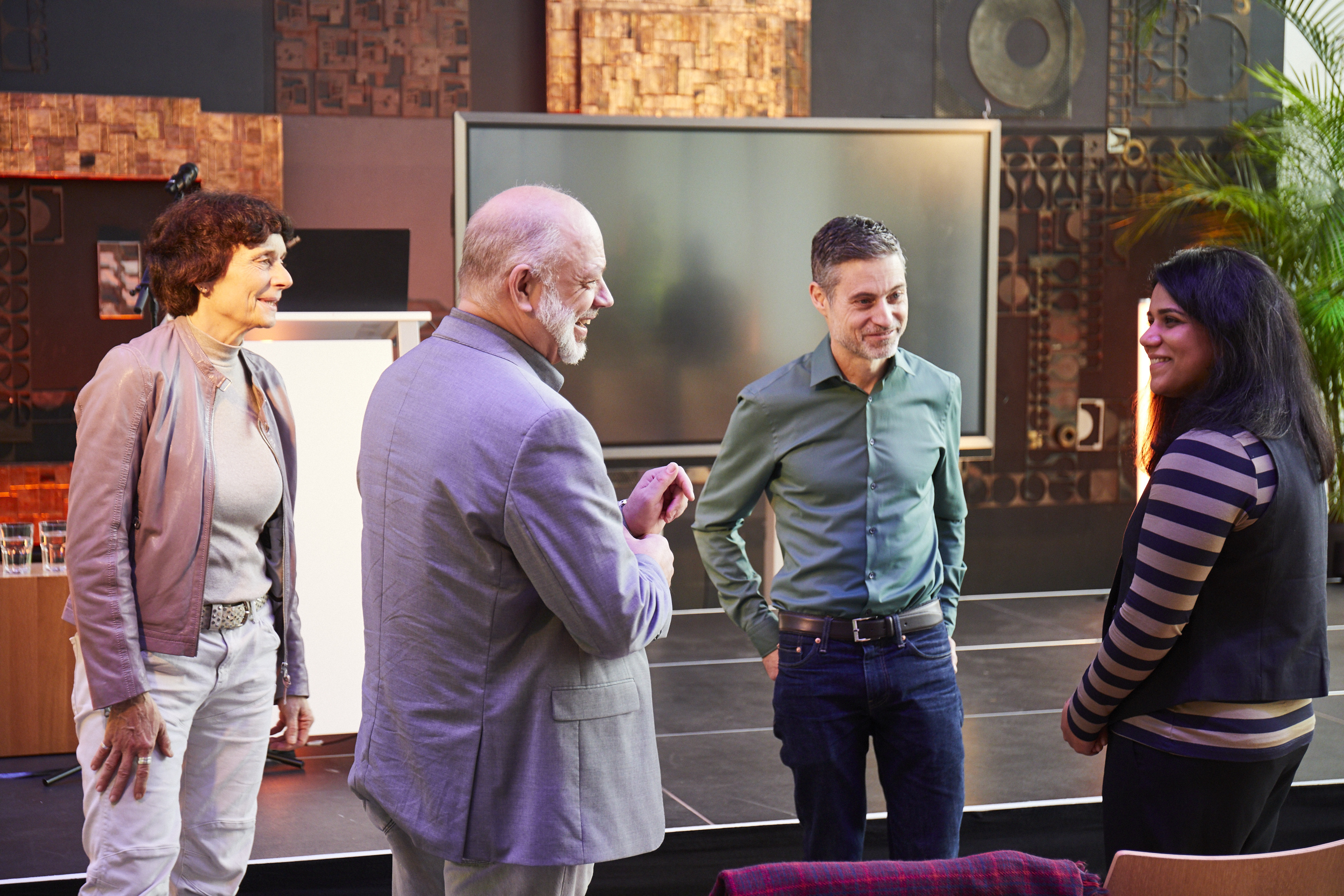
According to Meron Mendel, the tone in many discussions has sharpened, and it is now a case of being on the “right” side. This has had significant consequences: since 7 October 2023, Jewish people have been subjected to anti-Semitic hostility and threats on a massive scale. At the same time, Muslim people have experienced discrimination as well as racially motivated attacks and come under general suspicion. On the other hand, he sees the discussions that he and Saba-Nur Cheema have conducted at universities and public events on this topic in a positive light. They have held 200 lectures and debates over the past two years.
Selective empathy and awkwardness
Mendel considers “self-referential activism”, a practice that tolerates only one’s own perspective, to be a central problem. In the most extreme case, solidarity applies only to one’s own group: although parts of the pro-Palestinian movement demanded and showed solidarity towards the people in the Gaza Strip, they were at the same time reticent about the terrorist act committed by Hamas. This, he says, is “selective empathy”.
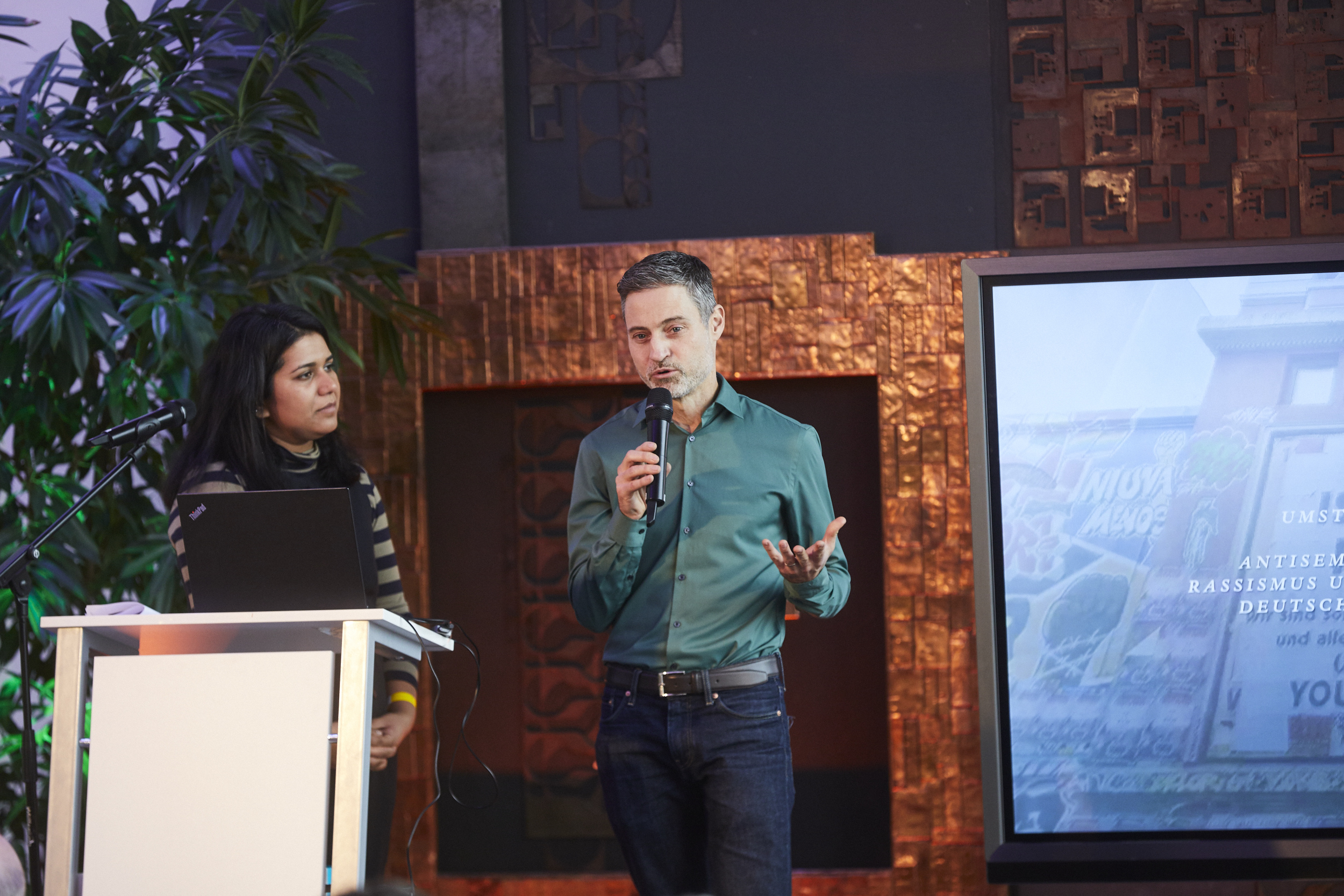
He is highly critical of the fact that some event organisers choose to retract their invitations to prominent Israeli and Palestinian figures simply because they are Israeli or Palestinian. He gives several examples, including that of a Palestinian author – whose book became the subject of debate after 7 October – who was disinvited from the Frankfurt Book Fair in 2023. Meron Mendel mentions awkwardness in dealing with Palestinian people and says that this also affects politics. In his eyes, when Jewish figures are disinvited, this constitutes anti-Semitism.
Confronting one’s own racism
Ayline Heller and Charlie Kaufhold spotlighted the rise of authoritarianism. Using an illustrative example from qualitative research, Kaufhold prompted the audience to confront their own unintentional racism. Charlie Kaufhold’s doctoral thesis explores NSU terrorism and how Germans deal with it. Kaufhold reports on a conversation with an older woman who is, in fact, democratically minded and without any right-wing extremist leanings. But she nevertheless remembered meeting a young migrant woman with her children in the supermarket whom she found pleasant – but did not speak to.
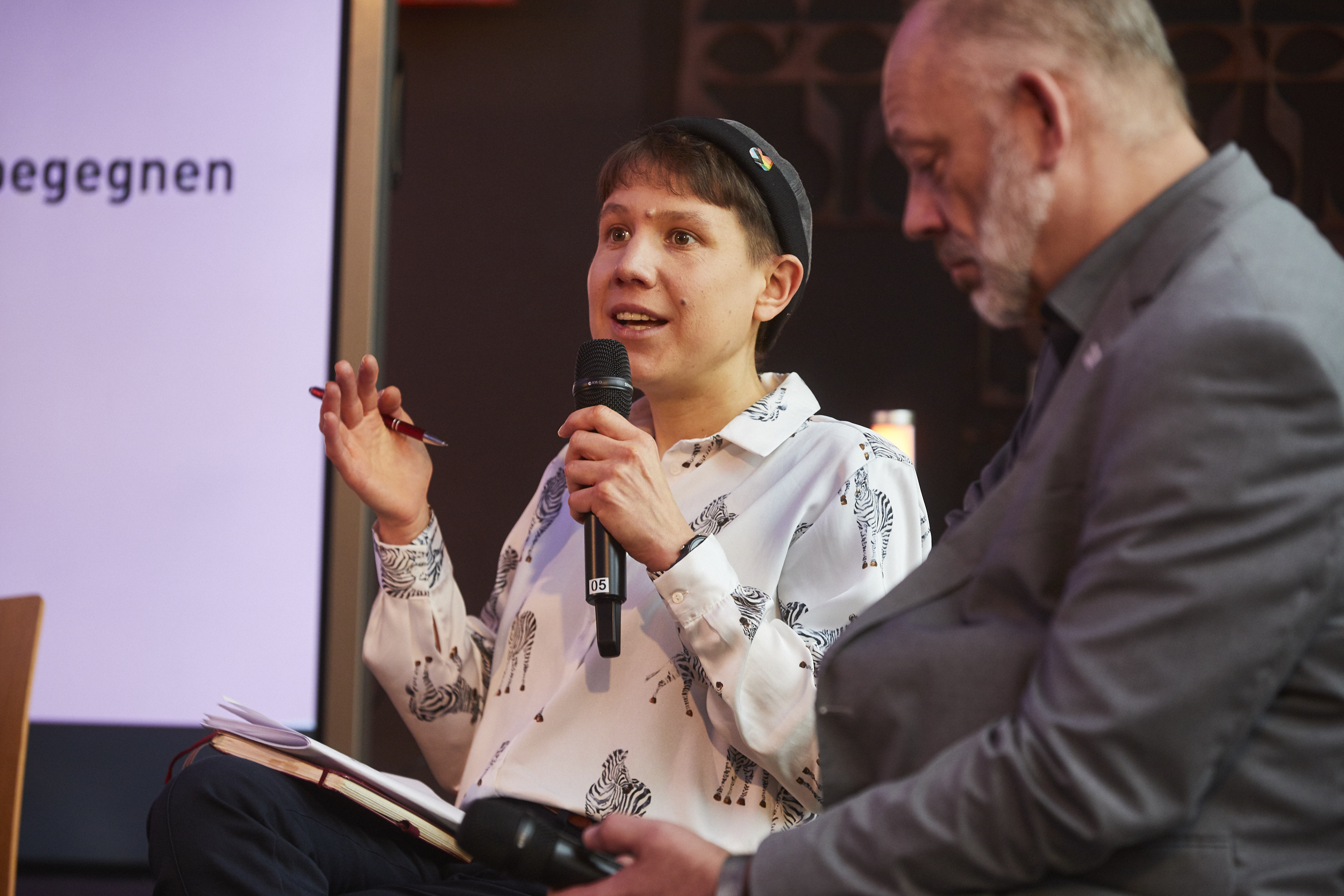
Charlie Kaufhold calls this “contact inhibition” and analyses it in greater depth: from a psychosocial viewpoint, it is a racist defence mechanism, he says, because confrontation with people who look different to us is – from a psychosocial perspective – a threat to German identity. This triggers fear. When transferred to NSU terror, this means that the group’s actions confront the German people with the crimes perpetrated by the Nazis. This repressed guilt inhibits contact with victims of racism.
Support for right-wing ideology is growing
Ayline Heller then presented some key findings from the 2024 Leipzig Authoritarianism Study “United in Resentment”, according to which people’s satisfaction with the state of democracy is crumbling. In Eastern Germany, not even a third are satisfied with it. Overall, she said, support for right-wing ideology is growing throughout the whole country. According to the study, almost 50% of the 2,500 respondents agree with right-wing extremism and chauvinism, if you include those who do not express an opinion, i.e. who are neither for nor against. The study interprets this as latent agreement. Anti-Semitism, on the other hand, is evident on both the far left and the far right – and is thus a bridging ideology.
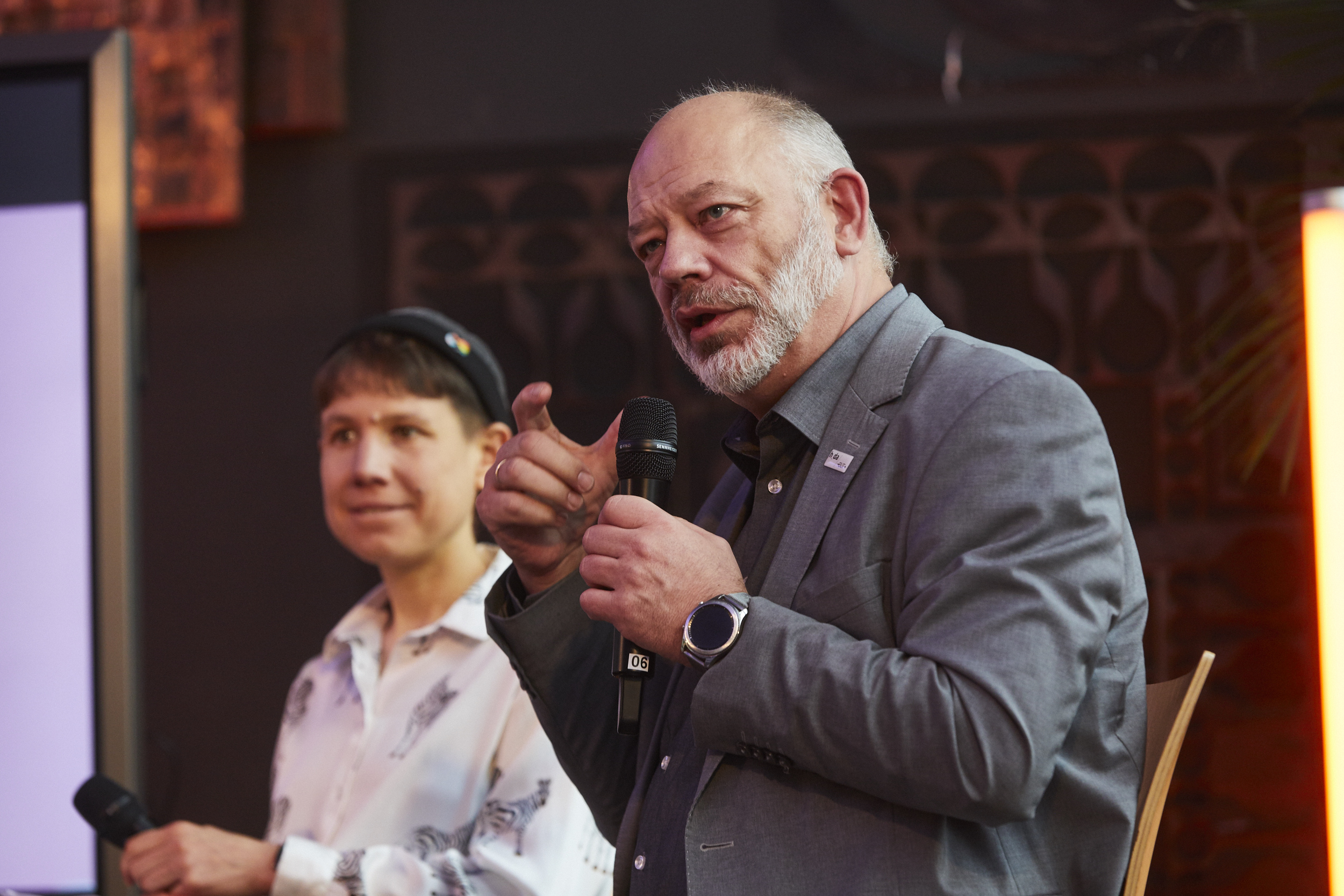
Professor Arnd Steinmetz, President of Darmstadt University of Applied Sciences, asked what could be done to counter authoritarian tendencies and against the polarising conflict in the Middle East. His proposal was to communicate and explain such complex situations – and in this way bring people on board. And at the same time encourage even more young people to spend time abroad. He believes that the European University of Technology (EUT+), a higher education initiative to which h_da belongs together with eight other universities across Europe, can be a suitable vehicle. In his opinion, experiencing what it is like to be a foreigner and in the minority is very helpful. It gives people a new perspective.
Contact our Editorial Team
Christina Janssen
Science Editor
University Communications
Tel.: +49.6151.533-60112
Email: christina.janssen@h-da.de
Translation: Sharon Oranski
Photography: Jens Steingässer