


Workshop on ecological narratives and storytelling
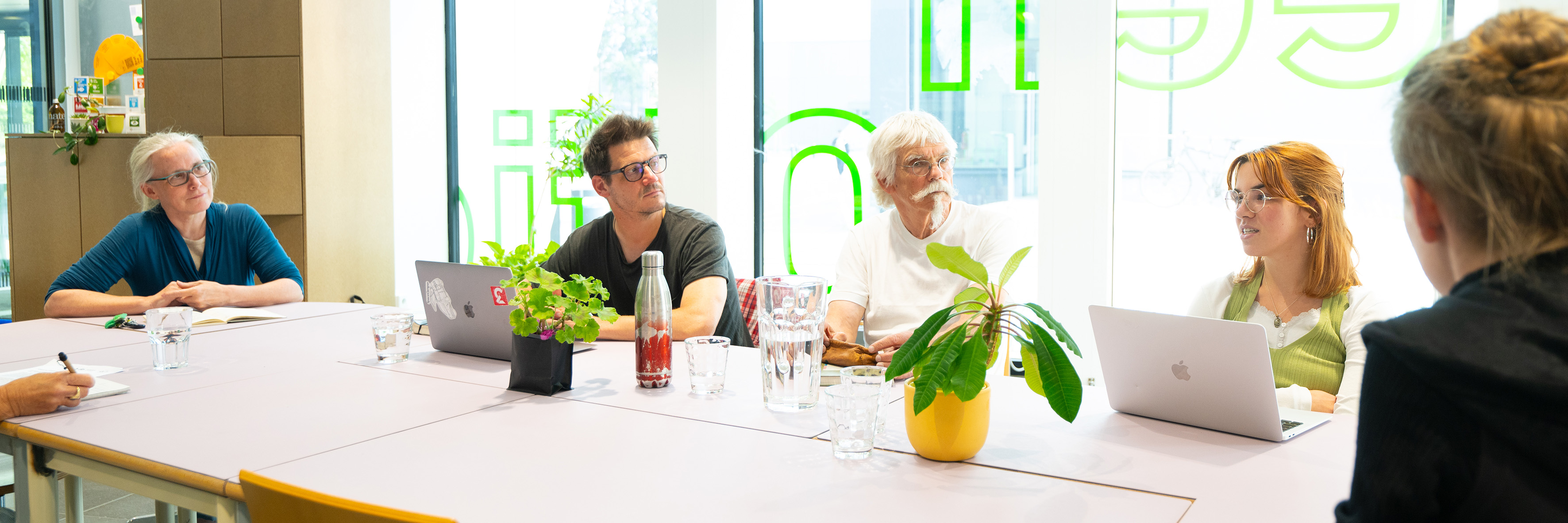
Dr Torsten Schäfer, Professor of Journalism and Text Production at Darmstadt University of Applied Sciences (h_da), is convinced: animals and plants can act as storytellers and open up new perspectives on our relationship with the environment. Within the collaborative “Talking Salmon” research project with OsloMet University in Norway, Schäfer has started an ecological storytelling lab, which includes a writing workshop for members of the public. The aim is to create a narrative together that motivates people to persevere more as far as sustainability is concerned.
By Annette Wannemacher-Saal, 16.6.2026
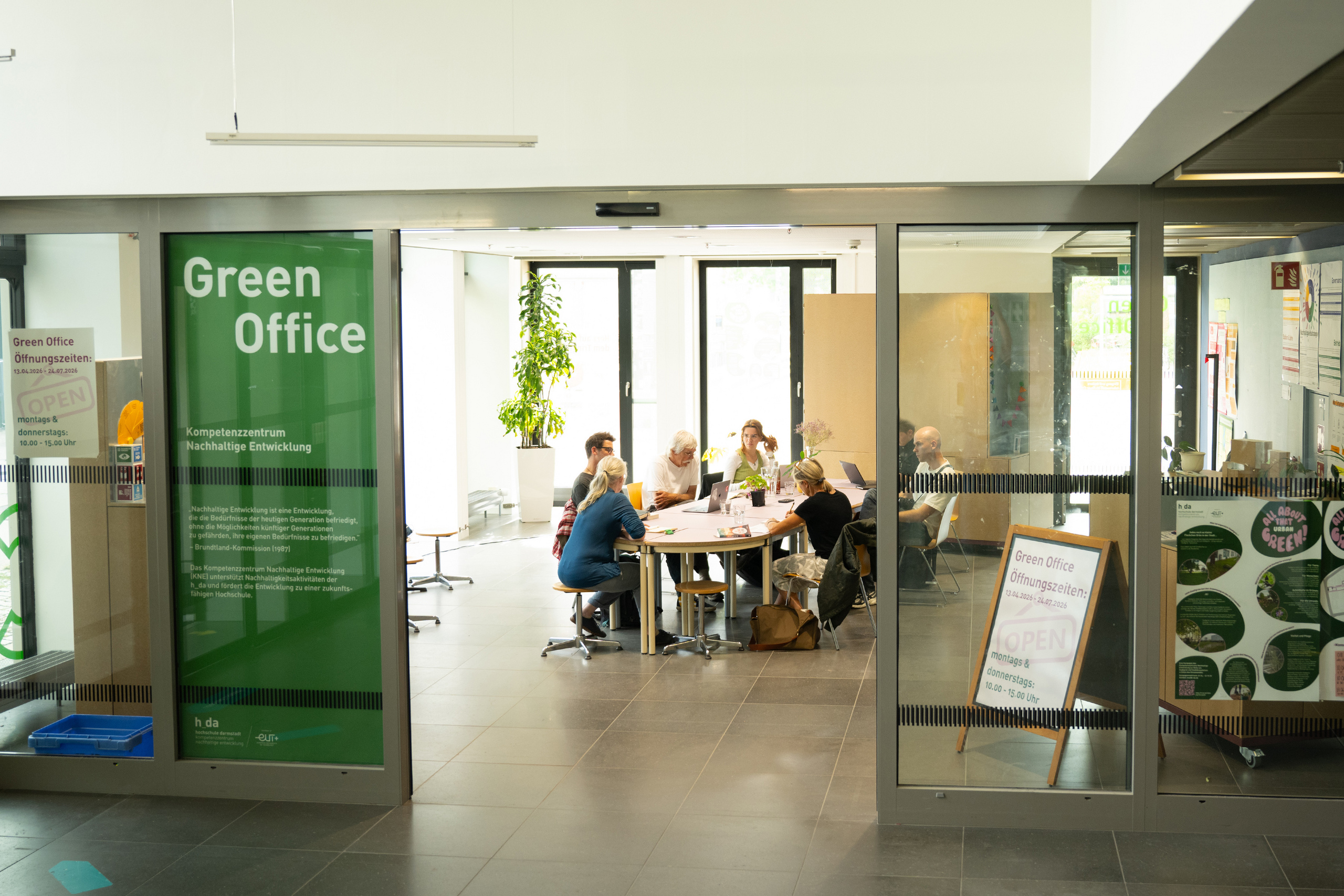
The table stands at rather an unusual angle in the middle of the Green Office at Darmstadt University of Applied Sciences (h_da). “And what’s taking place here is also rather unusual,” says Eva Schäfer, who works at h_da’s Service Centre Research and Transfer (SFT). “Ecological storytelling” – what’s that? And the fact that university staff and members of the public are participating alongside students is also rather the exception for a university event.
It is out of conviction that Torsten Schäfer, who teaches climate journalism and journalistic storytelling at the university’s Media Campus, has opened the living lab’s doors to external participants. “It’s exciting, isn’t it? The various age groups, professions and experiences ensure a lot of different input,” says Schäfer. In this way, budding online journalists, literary studies experts, educators, pensioners and Nabu members come together to pool their ideas.
First off is the Madagascar jewel
But the first task this summer semester is for the eight participants – aged between mid-20 and mid-70 – to pen a narrative that addresses the pressing issues of climate change, species extinction and sustainability. The scenario should be plausible. “It’s not about Martians coming to save the planet,” says Schäfer. Instead, the aim of this new form of ecological storytelling is to point out realistic pathways. “The carousel of possibilities is allowed to spin, but it must be grounded in reality.”
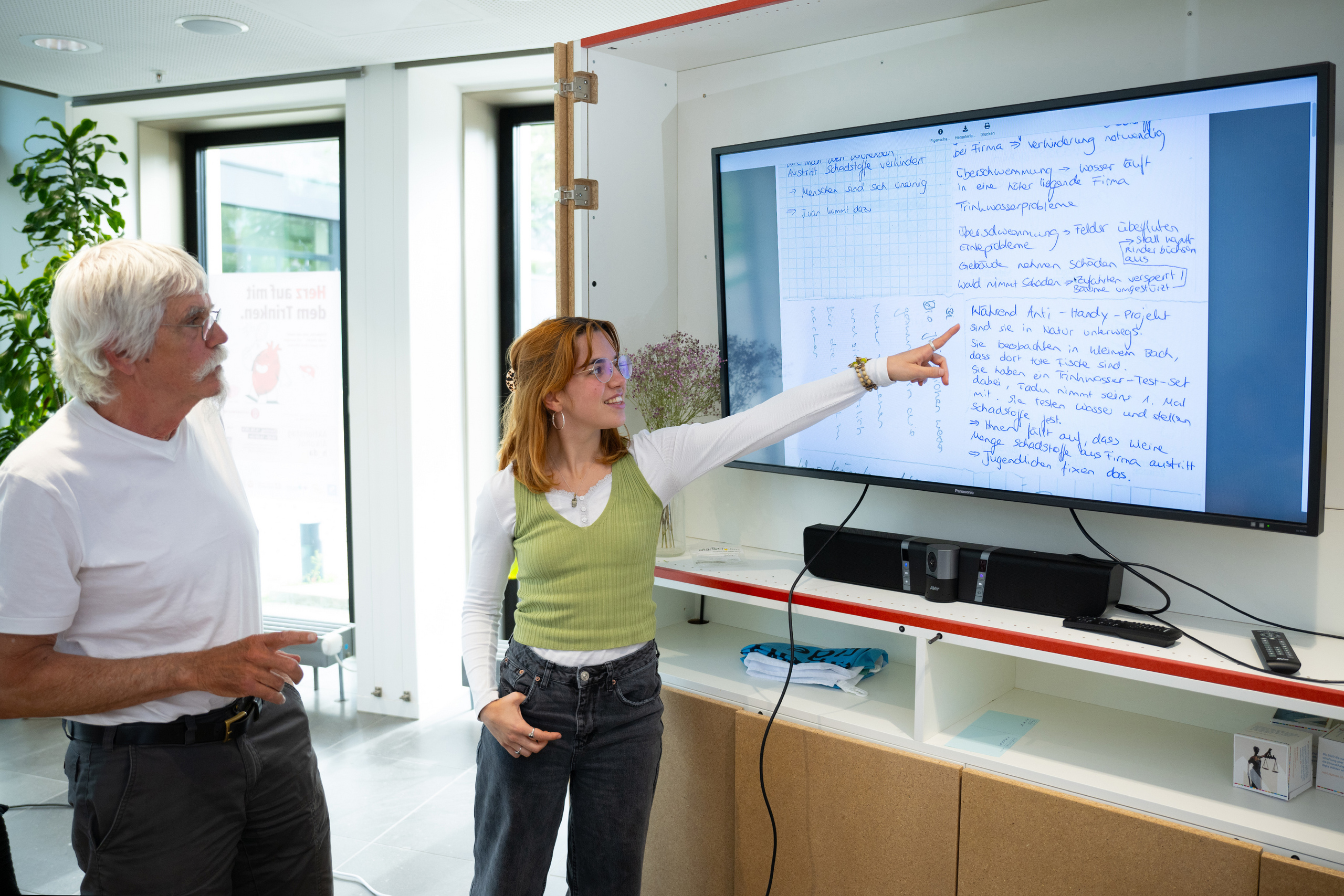
On the first day of the workshop, reality took the form of a plant sitting on the table in the Green Office: Euphorbia leuconeura, commonly known as the Madagascar jewel and for “spitting out” its seeds. When the fruit is ripe, it bursts open and hurls its spherical seeds several metres into its surroundings. “Just like we want to spread our story,” says Charly Richter, a literary studies and project management student. It was quickly agreed that the participants should not all write their own stories, but instead each take on the role of one of the protagonists.
A farmer as role model: Actions speaks louder than words
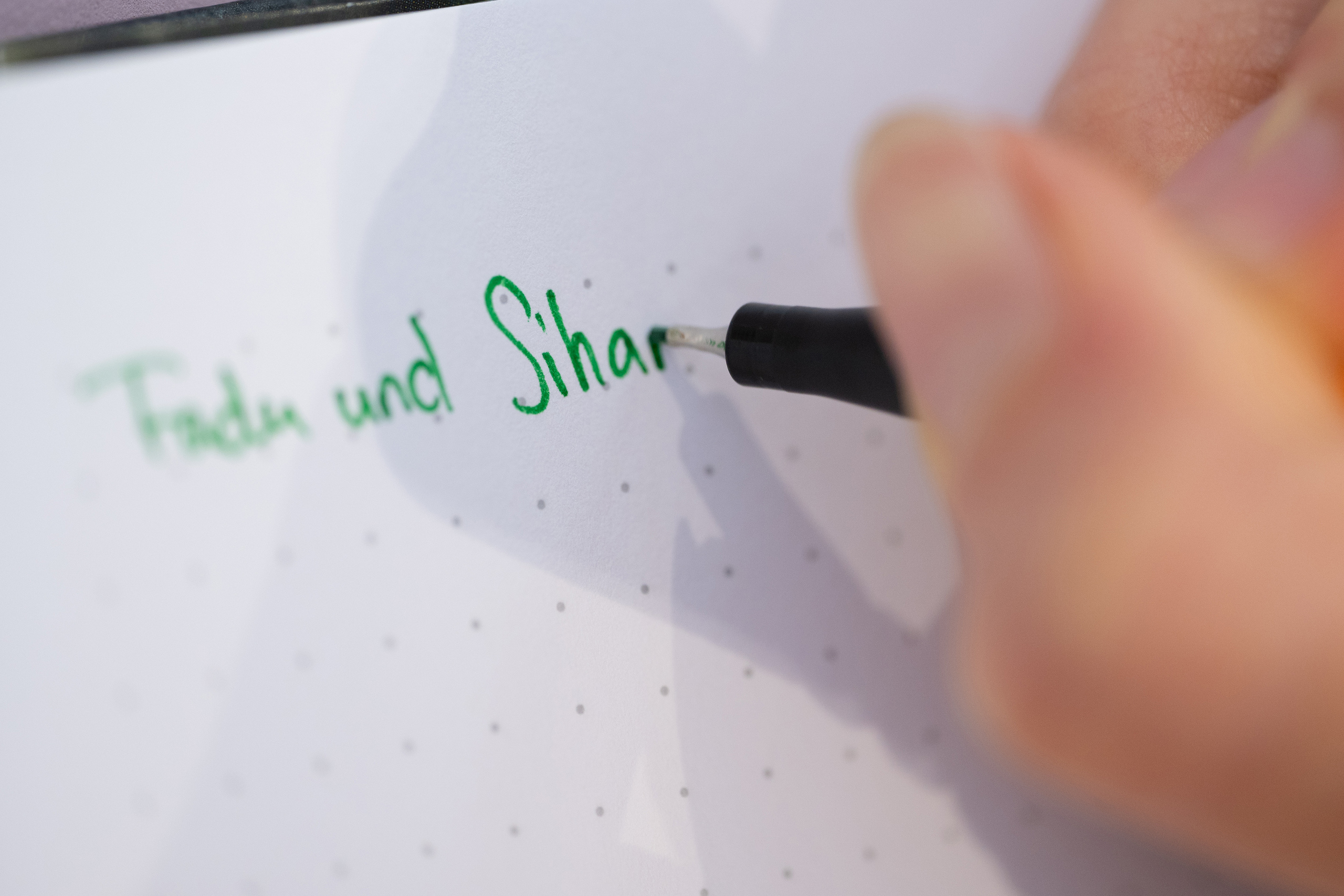
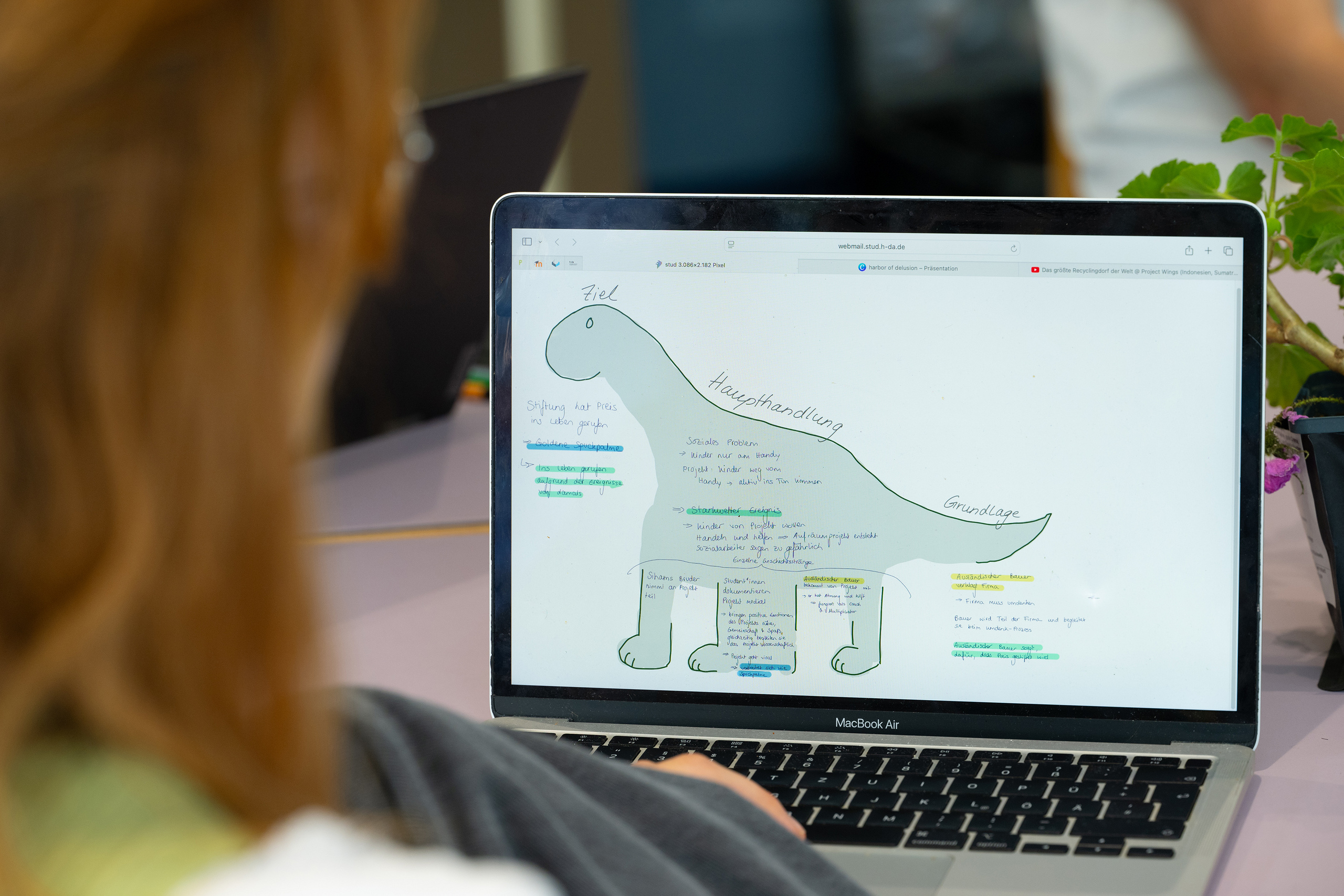
The starting point was fundamental questions about the protagonists, the setting and the plot. First, everyone devised their own story, which they then shared and discussed. “This generated six or seven brilliant ideas, which we combined to create a new one,” says Charly. The story revolves around Juan, a former farmer with a wealth of Indigenous knowledge, who lost all his goods and chattels through the ruthless actions of a large corporation. He wins his court case against it, but instead of complaining and licking his wounds, he works for the company from then on as a consultant – to solve ecological problems. A reformed industrialist, who takes responsibility for his past actions, funds Juan’s projects. Among the other main characters are a climate refugee and his media-addicted brother, who will ultimately be responsible for publicising the story. Finally, the “Golden Madagascar Award” is presented for the most sustainable idea, symbolising that it should be widely disseminated.
Ecological storytelling is rich in relationships
The story has not yet been written. After all, we’re still in the middle of the workshop. But it already contains the most important levels of ecological storytelling, says Torsten Schäfer. “Ecological storytelling is rich in relationships,” the narrative stretches across three levels of connection: the connection between people, the connection between people and other living organisms and the connection between habitats. “It’s always about seeking a good life for all,” says Schäfer, who has participated several times in the “Salon des guten Lebens” (Salon of the Good Life), a series of events organised by the Heinrich Böll Foundation that focuses on how we, as a society, will meet the various challenges facing us in the future and what each individual can do within their personal orbit to lead a good life.
A female trout as the narrator
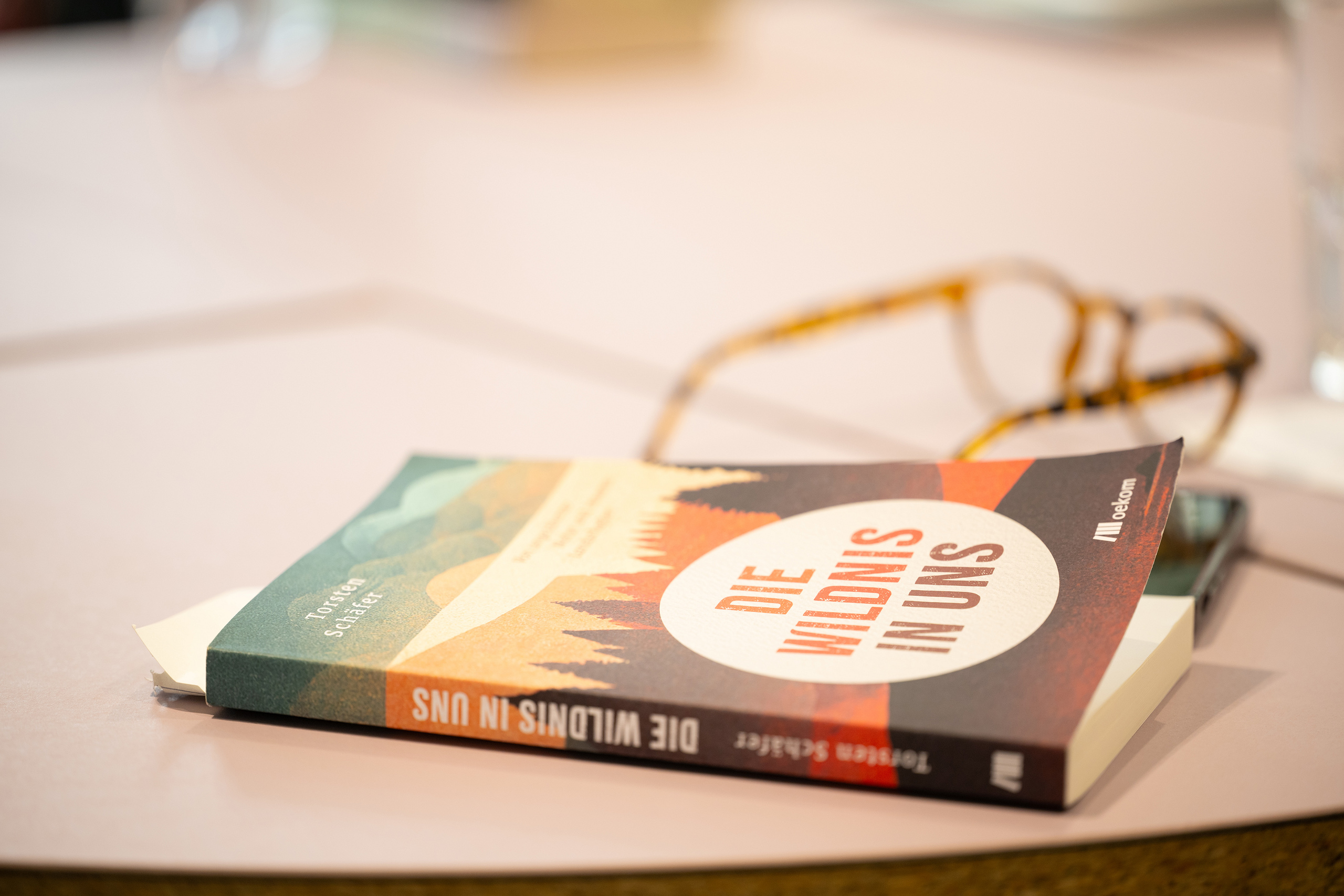
Here, good journalism and inspiring texts play an important role. As does the style of storytelling. In his new book “Die Wildnis in uns. Von ungezähmter Natur und inneren Landschaften” (The Wilderness Within Us: On Untamed Nature and Inner Landscapes), Schäfer – who has also made a name for himself as an author and editor of the periodical “GEO International” – describes what life is like for an older female trout in the Modau River near Eberstadt. How it feels in the summer when she can no longer breathe even in the cool eddies, and her gill covers and those of her sisters start to give up. How she faces the end, having seen so many dead among her own kind, the loaches and the crayfish. And how, in her final days, her hopes for a better life slowly rise nevertheless – “just like the water in the pale green of May after the days of reddish rain.”
Dismantling the divide between humans and nature
The female trout is the narrator; her story is empathetic and vivid. Like in the “Talking Salmon” research project, where salmon-like fish assume the role of narrator and become ecological mediators between humans and nature – always with the aim of dismantling this divide.
“These animals have connected oceans, rivers and forests around the world for thousands of years,” says Schäfer. That is why, based on his hypothesis, “they can become stories that open up new perspectives on our relationship with the environment.” He is perfectly aware that this calls for perseverance and plenty of good stories. But one is already in the pipeline, isn’t it? And it has already been decided that the project will continue as part of the Interdisciplinary Study Programme of Social and Cultural Sciences (SuK) in the forthcoming summer semester.
Torsten Schäfer’s latest book, Die Wildnis in uns, was published by Oekom Verlag in February 2026.
Contact our Editorial Team
Christina Janssen
Science Editor
University Communications
Tel.: +49.6151.533-60112
Email: christina.janssen@h-da.de
Links
Study programmes at Media Campus
Professor Torsten Schäfer’s website (in German only)