


Satellite ground station and emergency networks
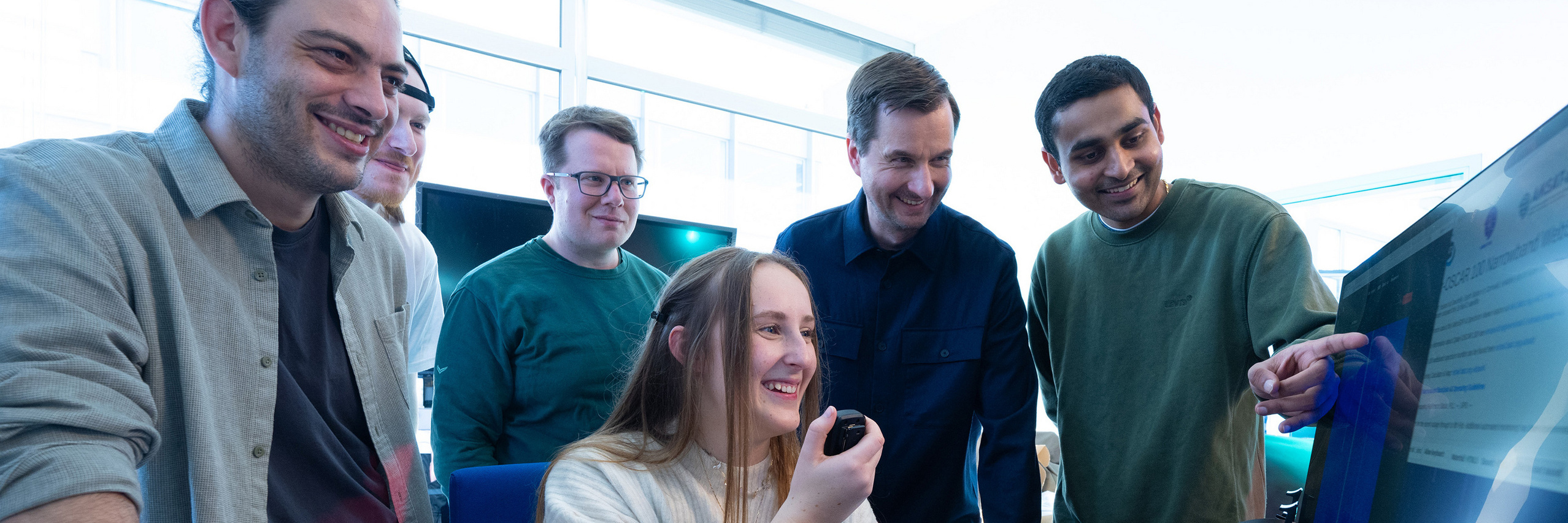
Sending messages across 72,000 kilometres, paging halfway around the world and communicating with objects in space: in a “Blended Intensive Programme” (BIP) funded by Erasmus+, students from Darmstadt University of Applied Sciences (h_da) are collaborating with partners from France and Italy to develop systems which could ensure communication in the event of a disaster – and which will be important for 6G, the next generation of mobile communications.
By Christina Janssen, 2.3.2026
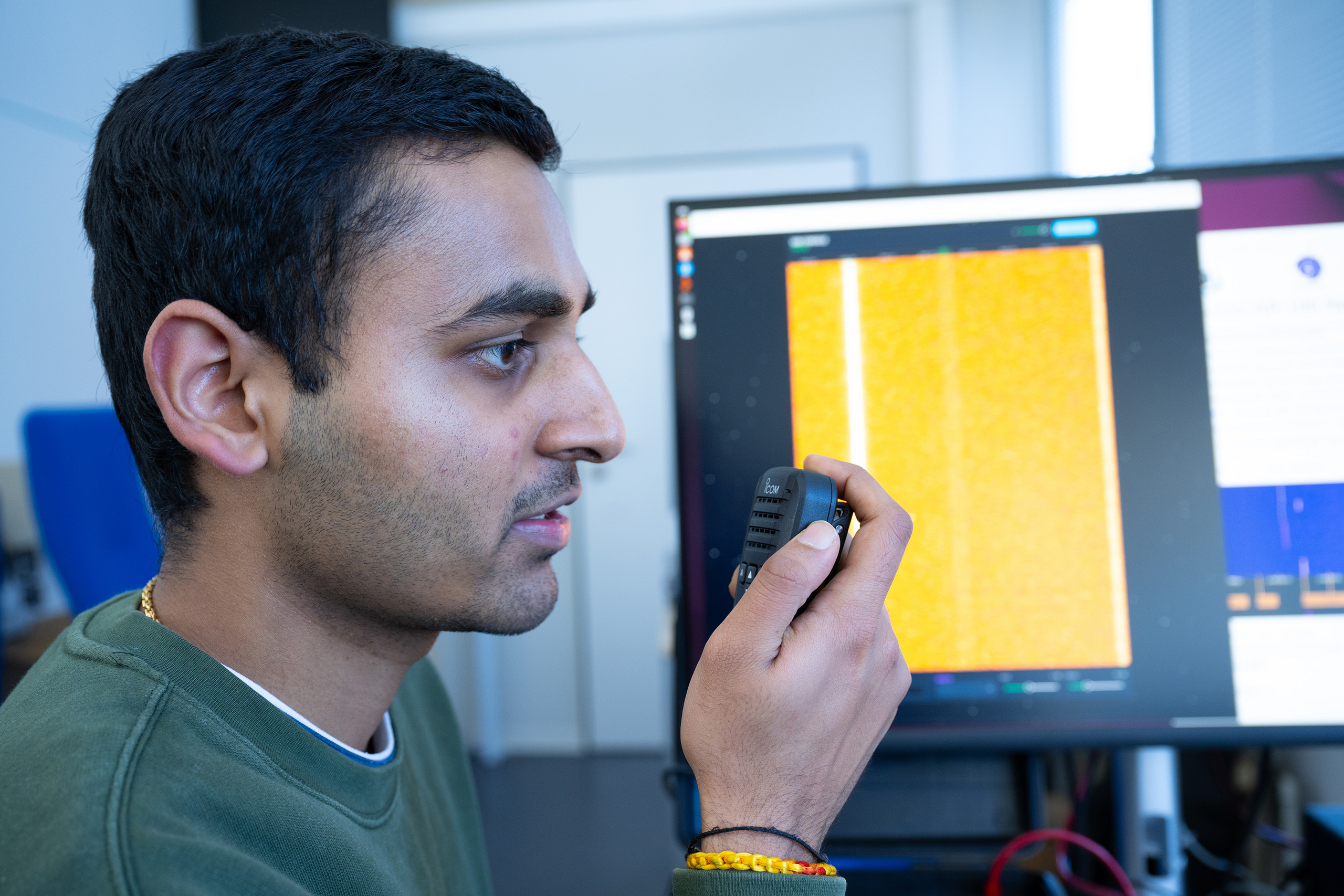
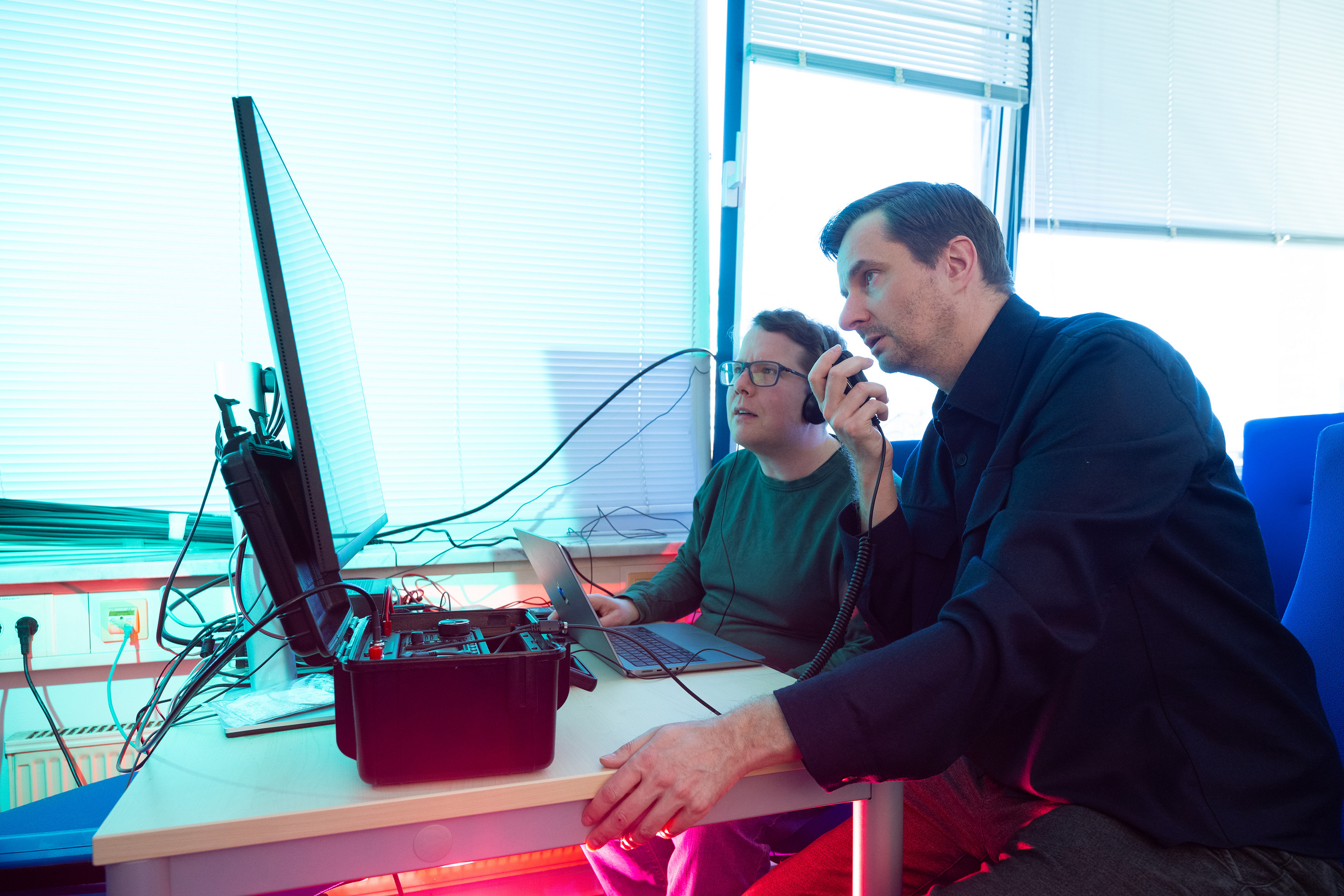
“Victor – Echo – Delta – Alfa …” When Vedant Vedant, a Bachelor’s student at h_da, spells his name into the radio handset with the NATO alphabet, his voice sounds a little hesitant. An eighth of a second later, the message arrives on the QO-100 satellite in geostationary orbit 36,000 kilometres above Earth. It is then reflected by the satellite and sent back to half the globe. What sounds like an episode of “The Big Bang Theory” is part of an international teaching project that Professor Stefan Valentin is running in the 2025/26 winter semester. The signals travel around 72,000 kilometres – up to the satellite and back down to Earth.
Hands-on technology, not magic
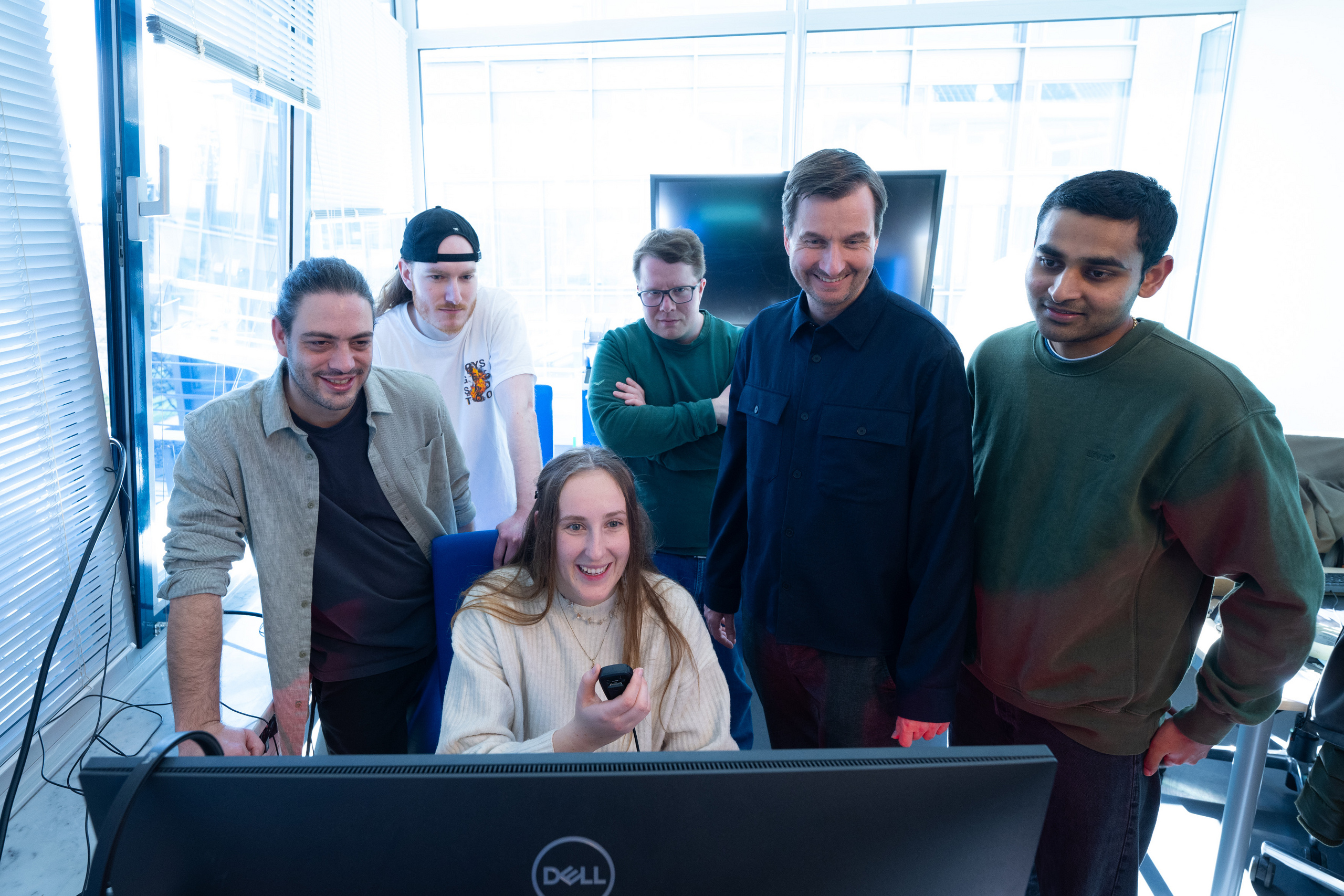
At the heart of the programme was the construction of a satellite ground station by h_da students in cooperation with fellow students from Grande École Télécom Saint-Étienne in France and the prestigious Università degli Studi di Padova in Italy, where Galileo Galilei once taught. To launch the project, the young researchers met for a week in France. After that, four students worked on site in Darmstadt on the antennas, signal processing and hardware, while teams in Italy and France developed the software, web interface and documentation.
“Within the project, we built a ground station that receives signals and can be controlled worldwide via a website and used to listen to radio signals”, explains radio expert Valentin. The system’s technology is based on a software-defined radio (SDR), which digitises radio signals. This makes it possible to process them directly in the computer. The students have developed a type of website known as a webSDR, which displays radio signals from satellites in real time and makes them audible to everyone.
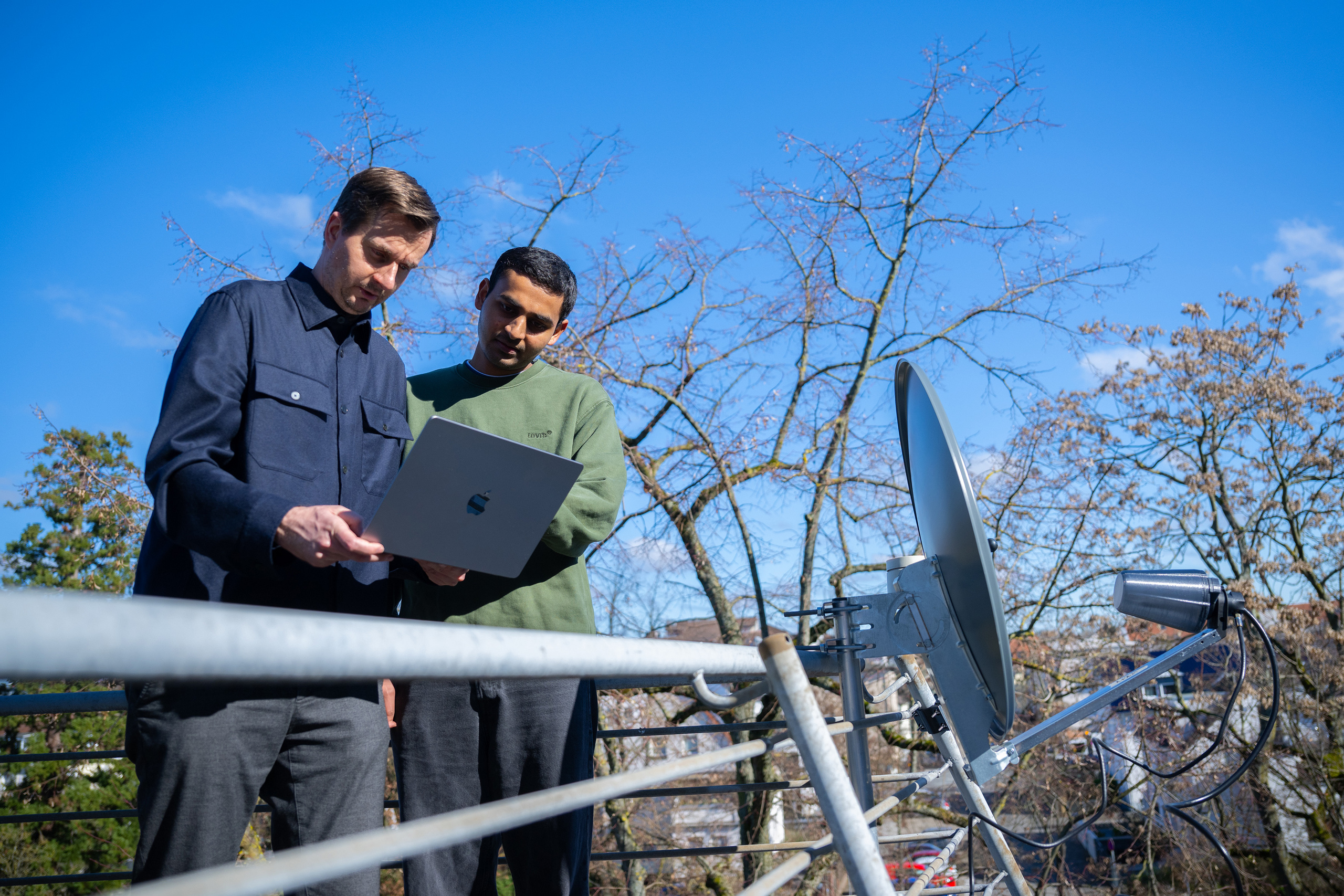
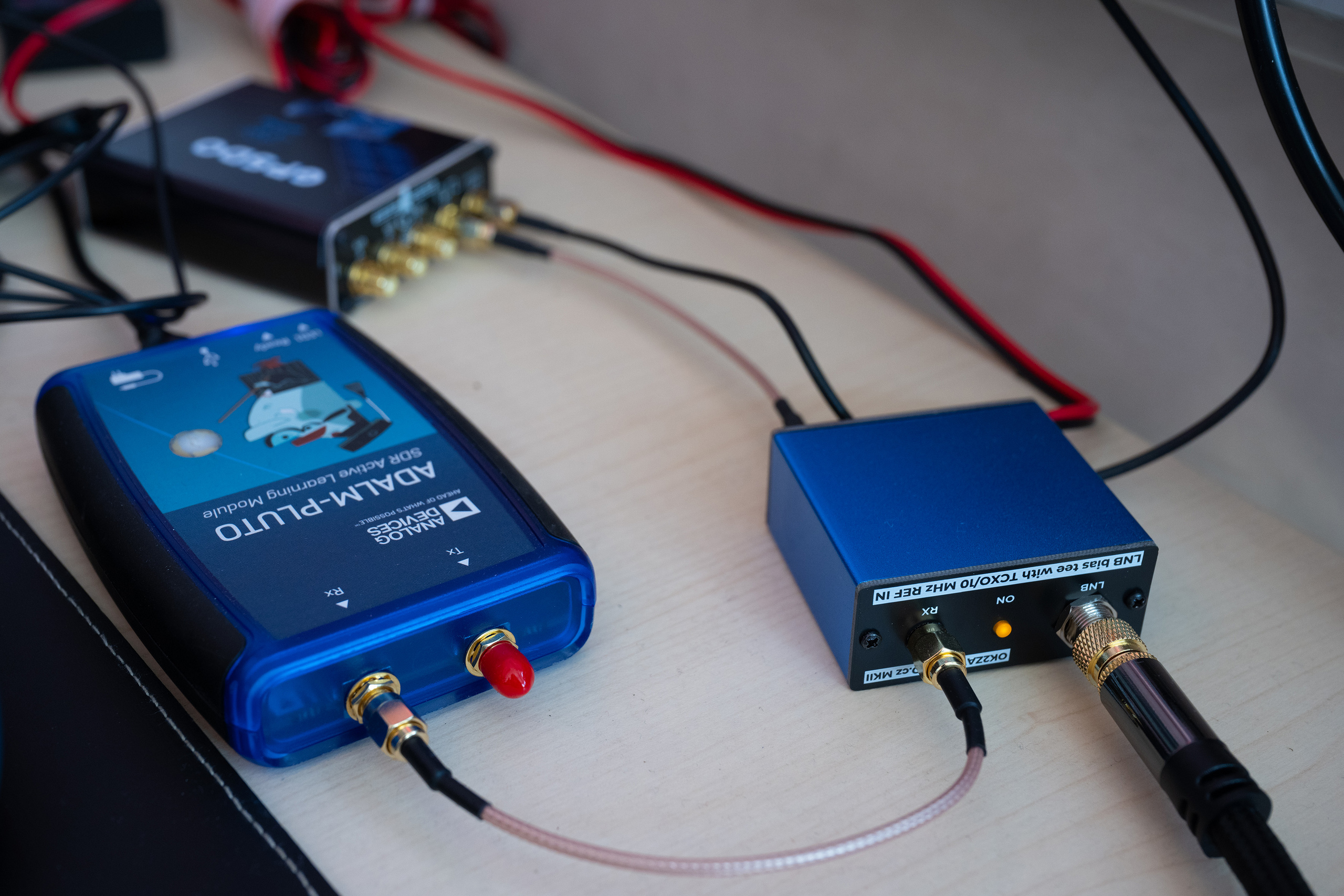
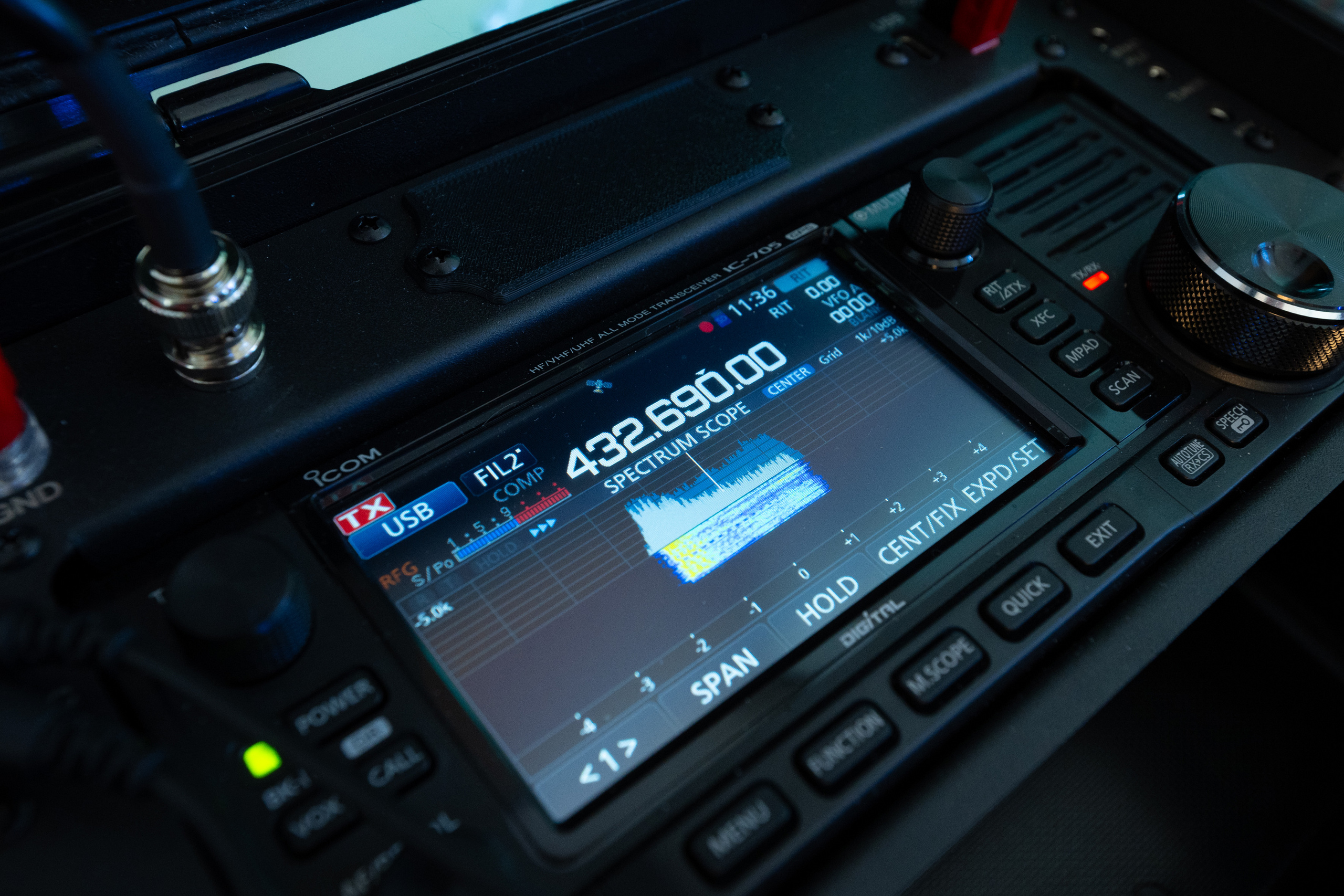
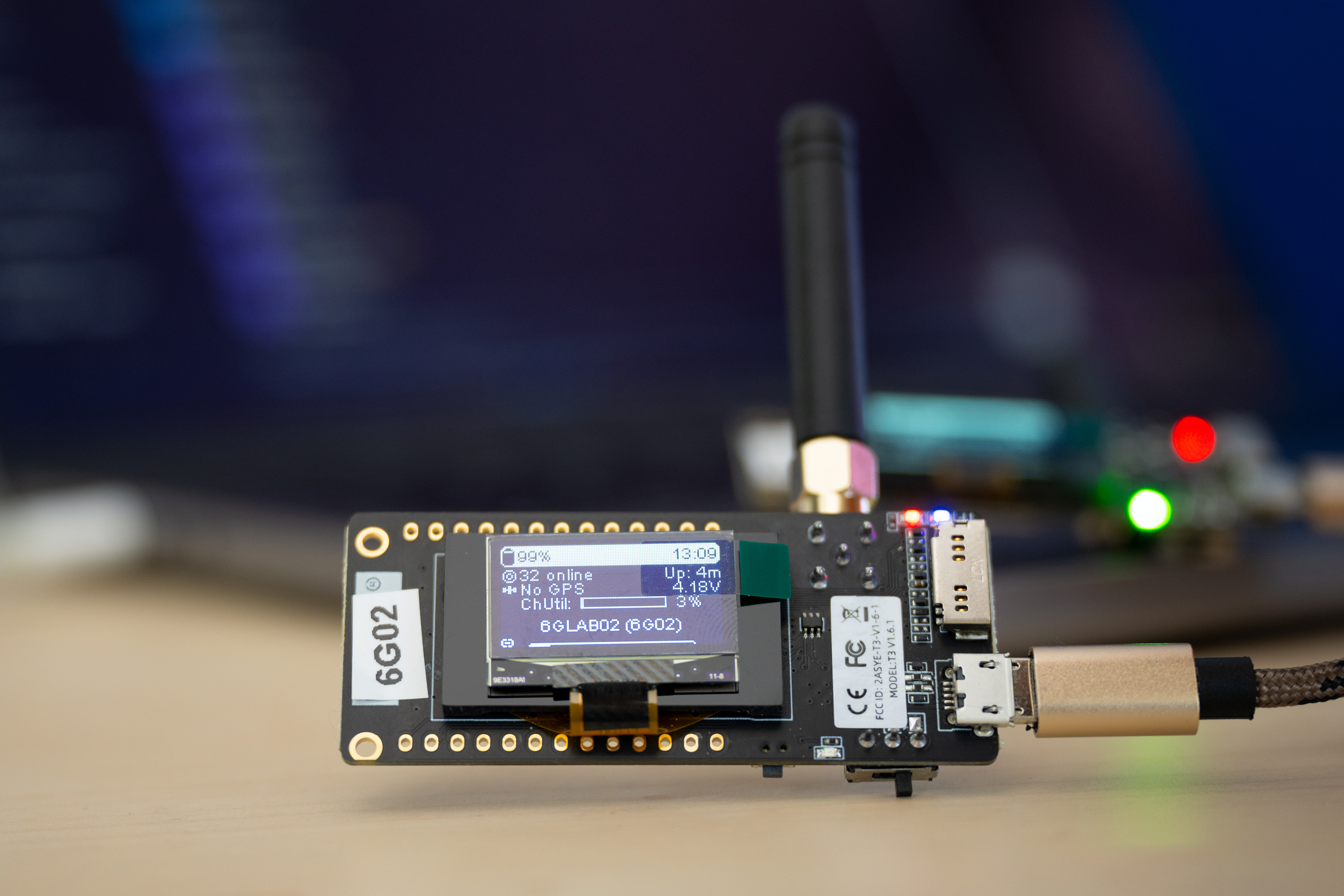
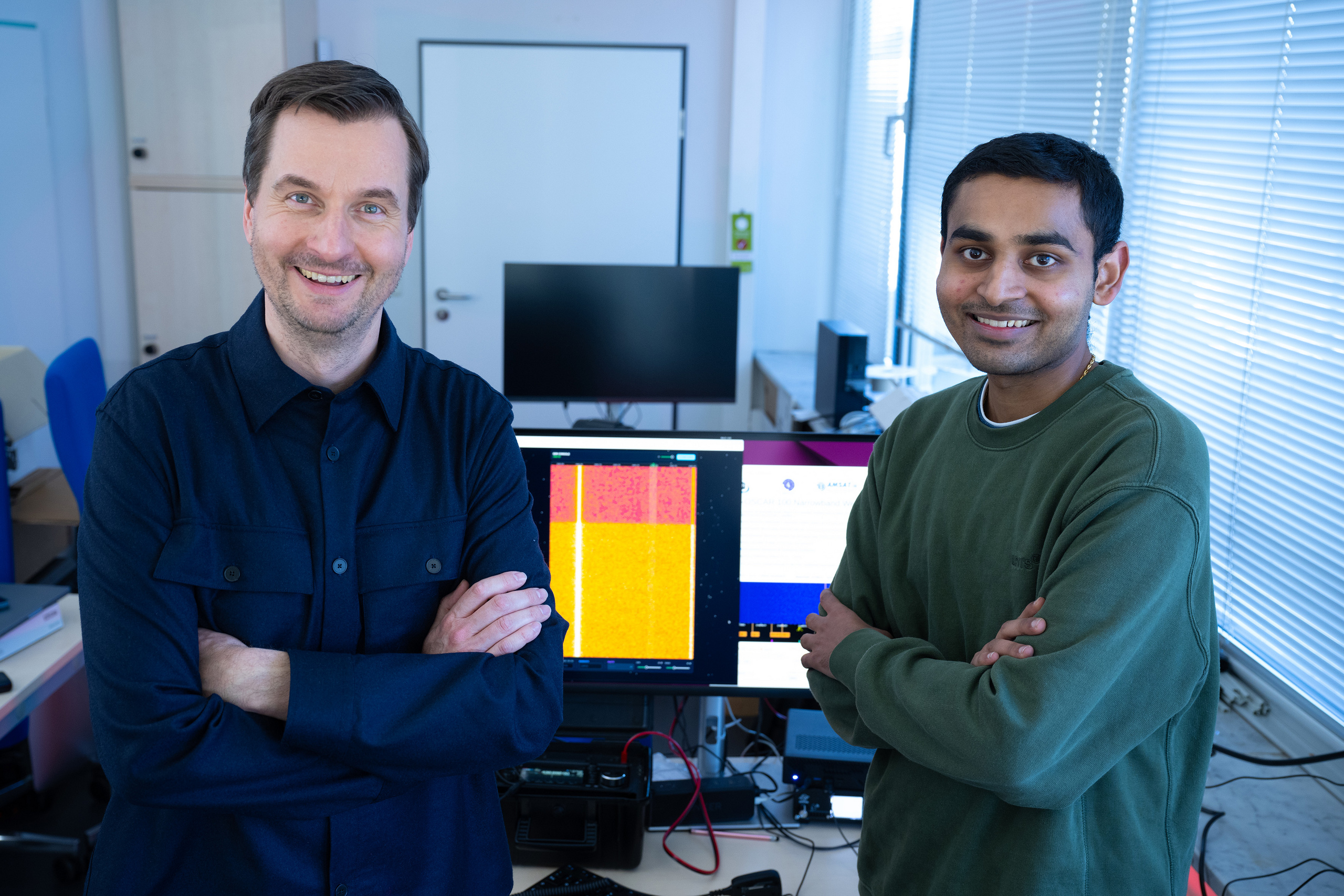
One of the project’s goals was to show students that wireless communication is nothing mysterious. “Radio is not magic. It’s just normal technology like your microwave oven at home,” says Stefan Valentin. Instead of theory, in the first instance it’s about screwdrivers, cables and code. “Tinkering with the equipment,” as Valentin calls it. But when building the ground station, even the smallest deviations can be crucial. If the antenna’s alignment is changed by just one degree, it might miss the satellite 36,000 kilometres away by hundreds of kilometres. Which is why it is of paramount importance that curious visitors wanting to inspect the satellite dish on the roof terrace of the Faculty of Computer Science do not touch it.
Communication when all else fails
In the medium term, the project is pursuing a goal that is very important for society: reliable communication in emergency situations. Stefan Valentin laid the foundation for this in the first BIP on radio technology a year ago, when he worked with his student group on something known as “mesh networks”: small, decentralised radio networks that citizens set up themselves and do not require any infrastructure. They connect a community via the freely available LoRa (Long Range) wireless technology. Valentin’s idea is to connect neighbourhood networks via satellite ground stations, such as he and his students have now developed in the second BIP: “Next winter semester, we want to disconnect our ground station from the internet and use it to set up a resilient emergency network,” announces Valentin.
Such systems could be crucial in an emergency: if power outages or natural disasters paralyse communication networks, affected regions could continue to exchange messages via satellite. Thanks to its energy efficiency, such a system can run on a battery or power bank for about a week, i.e. independently of the internet and the power grid. “Cut-off regions would then be able to communicate not only with their immediate neighbours but with half the world,” explains Professor Valentin, who will give a keynote lecture on the topic at the Forum for Network Resilience, which the Hessian Ministry for Digitalisation and Innovation is organising in April.
Practical relevance and lessons learned from real outages
That such scenarios really occur could be observed just recently: widespread power outages in Europe, and in January tens of thousands of Berlin households were left without power for days after a cable fire. Or a year ago, when a power outage in southern Europe paralysed the entire Iberian Peninsula. In such situations, says student Vedant, the system built by the BIP team continues to function “because it communicates via satellite.” It was this aspect of the project that he found particularly exciting.
A further advantage is that geostationary satellites do not need to be tracked by the antenna because they appear stationary in the sky when viewed from Earth. It is possible to reach them using only basic TV dishes and homemade antennas. Unlike SpaceX’s low-flying and very fast Starlink satellites (27,000 km/h at an altitude of approximately 500 kilometres), this means that stable, continuous connections are possible with the simplest of resources.
Component for 6G mobile communications
Alongside civil protection, the team’s work has a second dimension: the future of mobile communications. The upcoming 6G standard should enable direct connections between smartphones and satellites for the first time. “6G will be the first mobile communications standard where cell phones communicate directly with the orbit,” explains Valentin. This means that students working on satellite communication today are acquiring fundamental knowledge for future technologies. But theory alone is not enough, Valentin is keen to stress, because “practical construction tasks help us to understand complex systems.” The BIP students, who orginate from five different countries, had plenty of opportunity to do just that.
Learning beyond borders
The project was part of a Blended Intensive Programme, in which students work on international projects in mixed teams. It was the second edition of the BIP in the German-French-Italian university trio. Apart from the satellite project, students worked on other applied computer science topics related to medicine, industry and agriculture. For example, Bachelor’s student Florian Kapp from h_da and his team developed a method for the environmental assessment of events. A rewarding experience, in his opinion: “You get to participate in projects not only within your own team but also across universities and cultural boundaries.” He was surprised, for instance, by how seriously French people take their lunch break. “I found that very amusing. This different attitude to work isn’t better or worse, it’s just not the same as ours.”
What is a "Blended Intensive Programme"?
A Blended Intensive Programme combines virtual collaboration with a short and intensive in-person period abroad. In the project described here, students from five countries worked together on tasks related to telecommunications, AI and applied computer science. For Stefan Valentin’s BIP in the next winter semester, which will continue the current project, ten h_da students can again apply for an Erasmus+ grant to cover travel and accommodation costs. The university’s International Office is responsible for organising the exchange. After an online kick-off meeting, the student groups will study together remotely in international teams over the course of the whole semester. In addition, there will be a one-week work assignment on site – in this case in France – and a final presentation at the end of the semester. Further information: DAA – Erasmus+ (in German). Interested students may also contact Professor Stefan Valentin with immediate effect.
The two Master’s students Anne von der Lühe and Philipp Kemmerer worked on AI-supported network configurations and found the completely different approaches particularly fascinating: “While Philipp and I, for example, were intent on making rapid progress, having an initial solution and then gradually optimising it, the French and Italian students wanted to plan everything first,” says Anne von der Lühe. The two approaches “complemented each other very well.” The personal experience was also very valuable: “It was educational and nice to study somewhere else for a change,” says Philipp Kemmerer, summing up. What’s more, the Erasmus+ grant meant that no one had to bear all the costs themselves.
“This is Darmstadt University of Applied Sciences: Testing, testing, testing…” When a test message is transmitted via satellite from Darmstadt, someone in South America, Africa, Europe or Asia can hear it, as the QO-100 satellite’s coverage is enormous. For the students and their lecturer Stefan Valentin, this is more than just a technical experiment. It is the moment when textbook knowledge becomes global communication and a university project offers a glimpse into the networked future.
Related articles
impact, 4.9.2025: HARDER THAN THE HACKERS
impact, 12.2.2025: NERO RAISES THE ALARM
impact, 9.7.2024: FROM BEER TO BROCCOLI
impact, 19.11.2023: "DON'T TRUST ANY DEVICE MORE COMPLEX THAN A TOASTER"
Contact our Editorial Team
Christina Janssen
Science Editor
University Communications
Tel.: +49.6151.533-60112
Email: christina.janssen@h-da.de
Translation: Sharon Oranski
Photography: Markus Schmidt
Would you like to organise a BIP?
h-da’s International Office is happy to help you with the planning and implementation. Please contact:
Katharina Niederhacke
+49.6151.533-60661
erasmus-bip@h-da.de
international.h-da.de/