


Students develop a wheelchair ramp for the Schlossgraben Festival
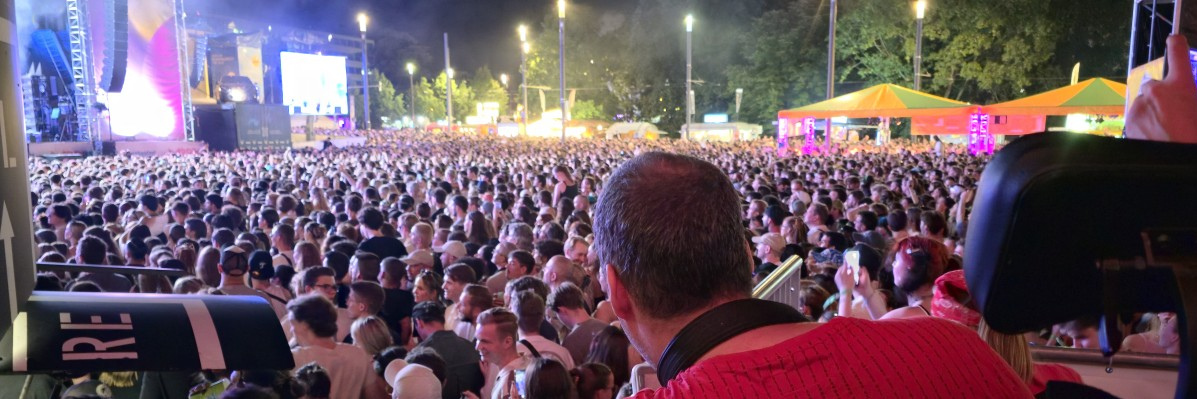
How can visiting a festival be made a more positive experience for people with disabilities? How can accessibility be taken into consideration in all areas without exception? Together with wheelchair users and the organisers of Darmstadt’s “Schlossgrabenfest” music festival, h_da students developed hands-on ideas that were also put into practice – including a dais that gave wheelchair users a good view of the stage. They drafted their proposals as part of the seminar “Building Inclusion: Architecture, Barriers, Disability”, which has been a fixed component of the course offer at h_da’s Faculty of Social Sciences for many years.
By Astrid Ludwig, 11.8.2026
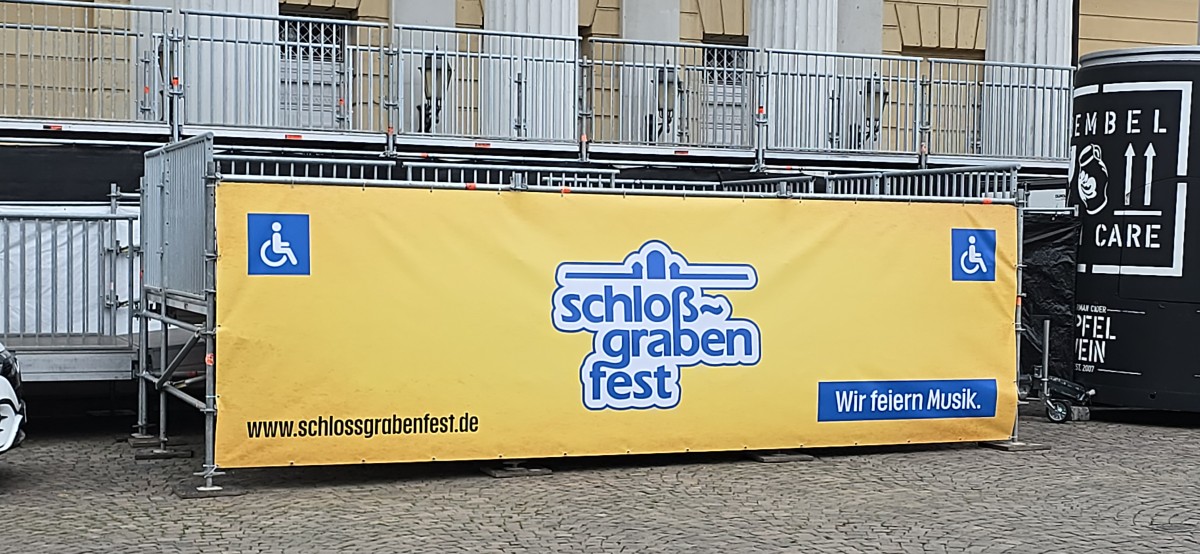
Sascha Bröse, 58, has been to lots of concerts and had a similar experience each time. “We wheelchair users usually can’t get through the crowd, or we get stuck somewhere and can’t see the stage.” He explains how frustrating this is and that it also marred his previous visit to Darmstadt’s “Schlossgrabenfest”, Hesse’s biggest music festival. But this year things were very different. Bröse watched the show by the band “Alphaville” from his position close to the stage, right next to the VIP area. The organisers had set up a special dais for wheelchair users and people with disabilities, along with their companions. “The view was spectacular,” says Bröse, still thrilled. He describes his concert visit as “something I’ll never forget”.
There was space up on the dais for around ten wheelchair users. “It could even have been bigger, it was so much in demand,” he says. The location and the design were perfect. “We felt included and not on display. We were at eye level with the band,” says Sascha Bröse. To get up there, however, the wheelchair users first had to negotiate a ramp with a 12% incline – the standard is normally 6%. But the “Club Behinderter und ihrer Freunde Darmstadt (CBF)”, an association that campaigns for people with disabilities, had recruited helpers who assisted where necessary.
How can the “Schlossgrabenfest” music festival be made more inclusive?
Bröse, who himself lives in Darmstadt, is full of praise for the idea and its implementation, to which, incidentally, he also contributed. He regularly attends the seminar “Building Inclusion: Architecture, Barriers, Disability”, which is part of Social and Cultural Sciences (SuK), a cross-disciplinary programme run by the Faculty of Social Sciences at Darmstadt University of Applied Sciences (h_da). The seminar, which is open to students from all faculties, includes accessible architecture as a main topic. Together with people with disabilities, the “Club Behinderter und ihrer Freunde Darmstadt (CBF)”, represented by engineering graduate Michael Müller, and the organisers of Darmstadt’s “Schlossgrabenfest” music festival, they spent a semester examining how Hesse’s largest music festival, with over 100,000 visitors, 60 bands and myriad events, could be made more inclusive.
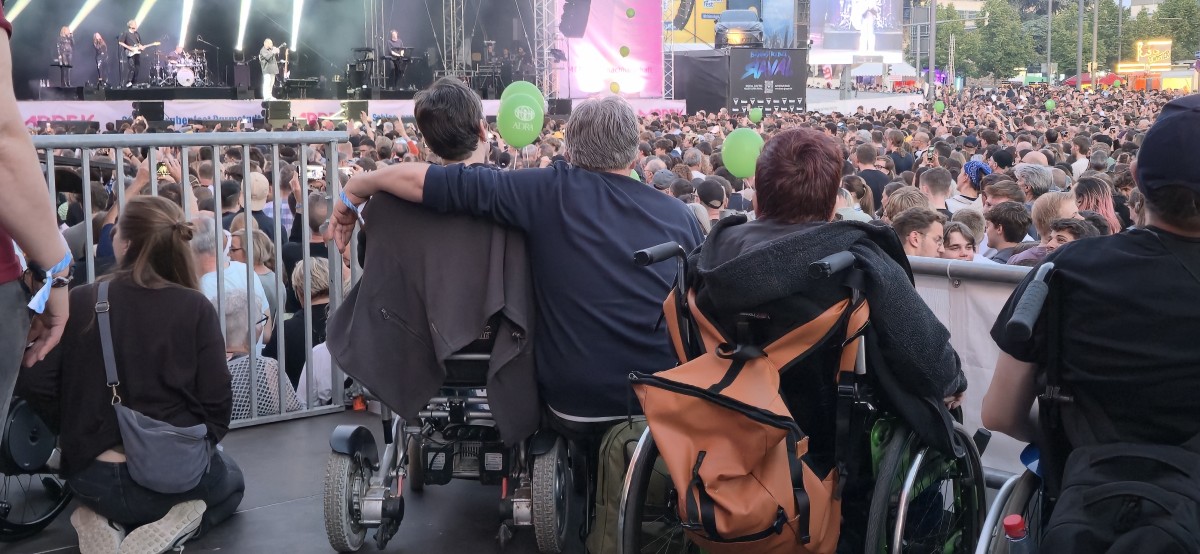
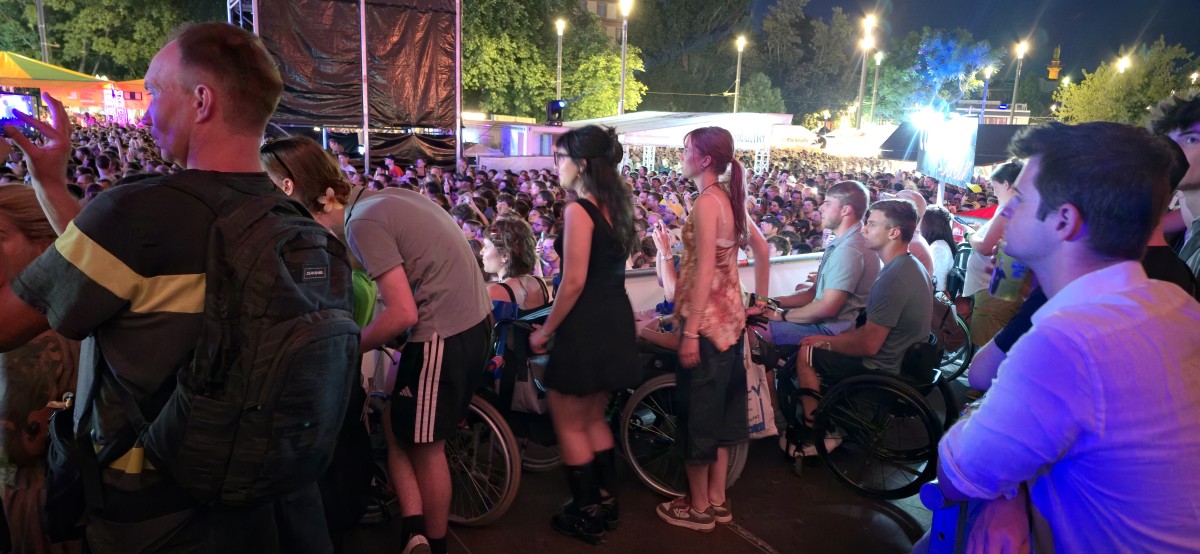
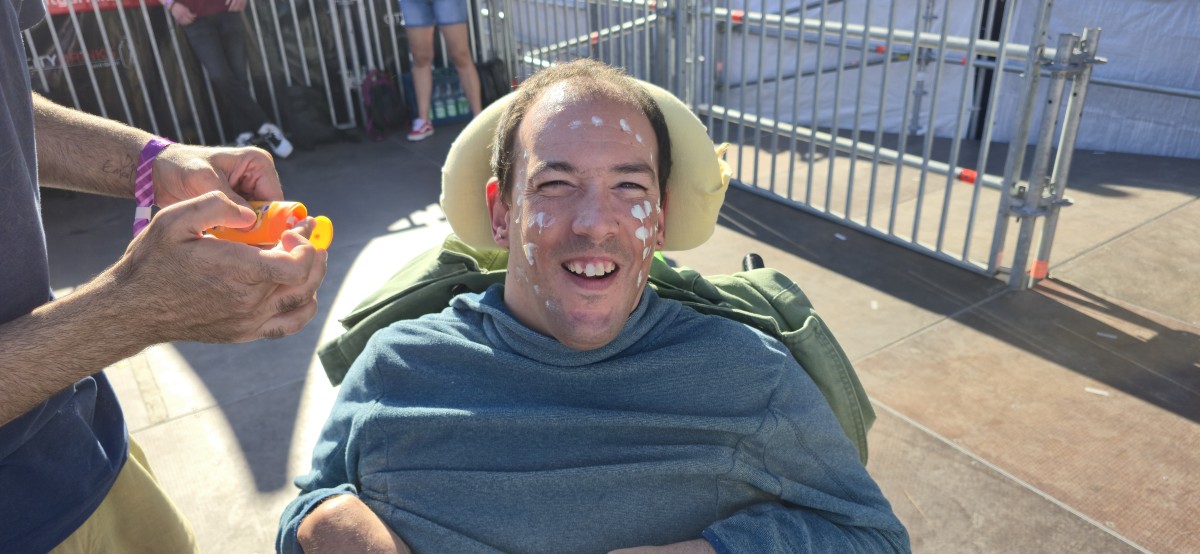
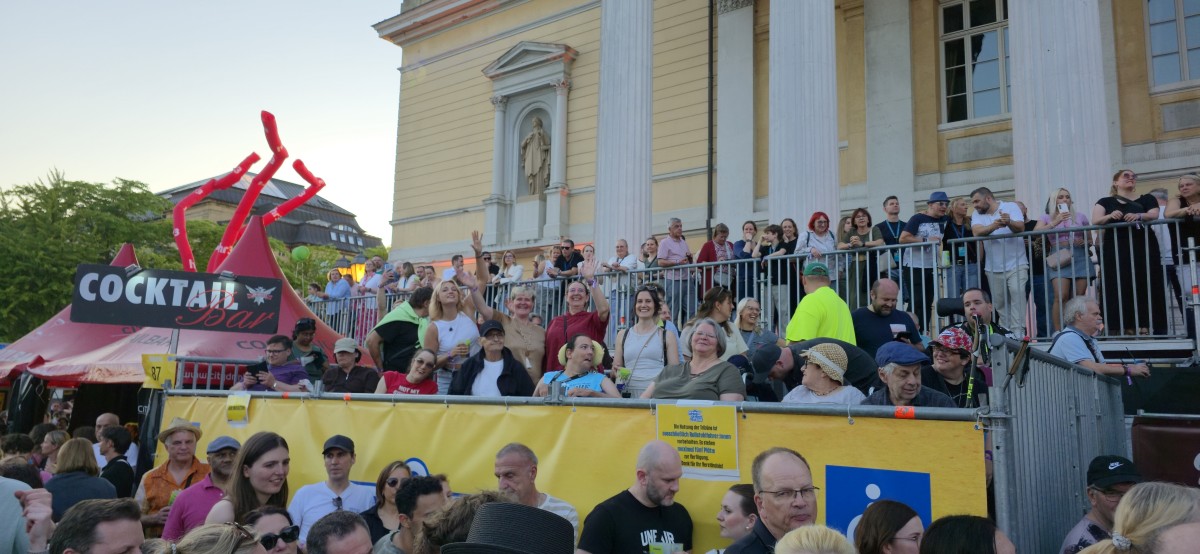
The dais was one of a whole range of proposals developed in the course of the seminar. As Professor Kai Schuster and engineering graduate Michael Müller, the seminar leaders, point out: the task was to consider the “Schlossgrabenfest” music festival as a holistic concept and to develop inclusive ideas for all areas. Kai Schuster is a professor at the Faculty of Social Sciences and introduced this topic into the seminar around 15 years ago.
His reason for doing so was a very personal one: after an accident, he spent three months in a wheelchair. “Fitting into this way of life” left a lasting impression on him. Schuster brought Michael Müller from the “Club Behinderter und ihrer Freunde Darmstadt” on board – and they have been running the seminar together ever since. Each year, it deals with a different aspect of accessible architecture, and those personally affected are also invited. They came up with the festival theme following feedback from wheelchair users who complained of bad experiences at concerts.
Moving around campus in a wheelchair and with a white stick
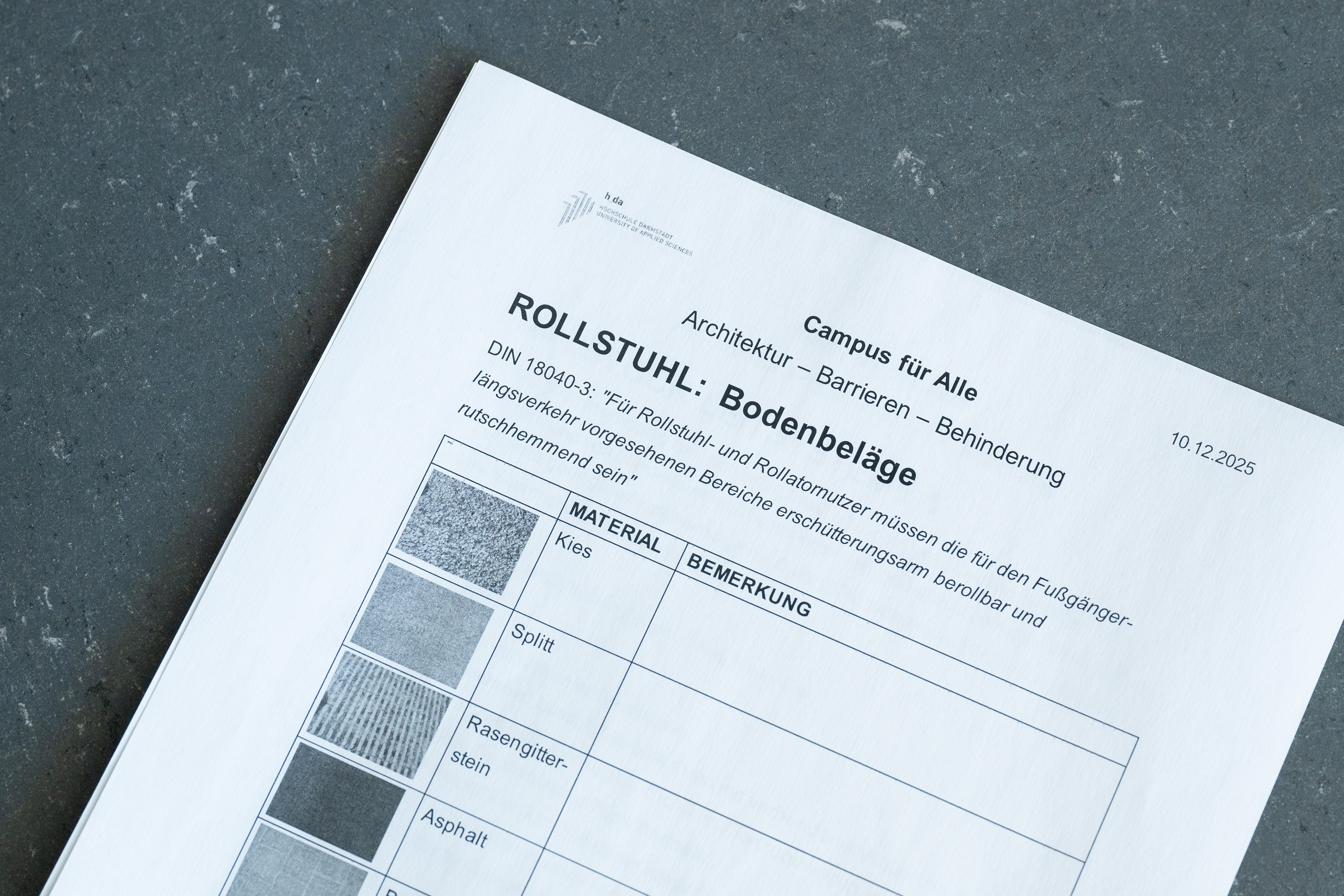
Felix Bärenz is an architecture student in his tenth semester. In fact, he says, accessibility is a topic for prospective architects from the very start of the programme, “but never explored in the same depth as in this seminar”. He experienced in practice what is otherwise often only included in teaching as standard measurements. Not only did the seminar leaders dispatch the 20 or so students into buildings armed with yardsticks to measure doors or corridors. The young people also experienced at first hand what it is like to use a white cane and sit in a wheelchair. Always in pairs, they tentatively felt their way across campus – blindfolded and in a wheelchair – up and down stairs, over kerbs, paving and uneven patches of grass. “Experiencing the obstacles that people with disabilities have to overcome in their everyday lives was really overwhelming,” says Felix Bärenz.
Before studying architecture, Felix Bärenz completed an apprenticeship as a carpenter. He is currently writing his final paper. “My understanding of accessibility has changed a lot since this seminar,” he says. He intends to incorporate these experiences into his future work as an architect, alongside his skills as a craftsman. “You must always keep your users in mind,” he believes.
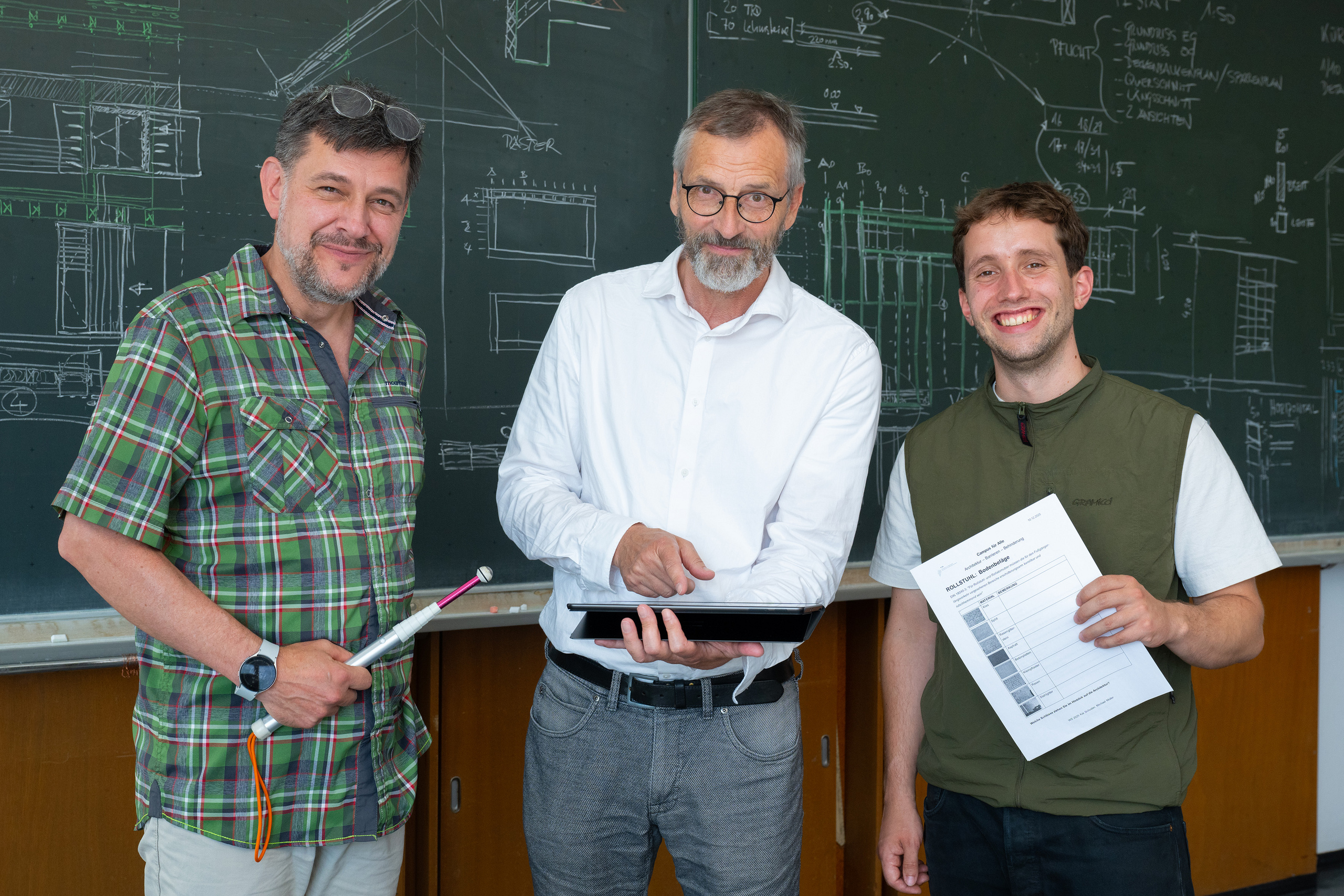
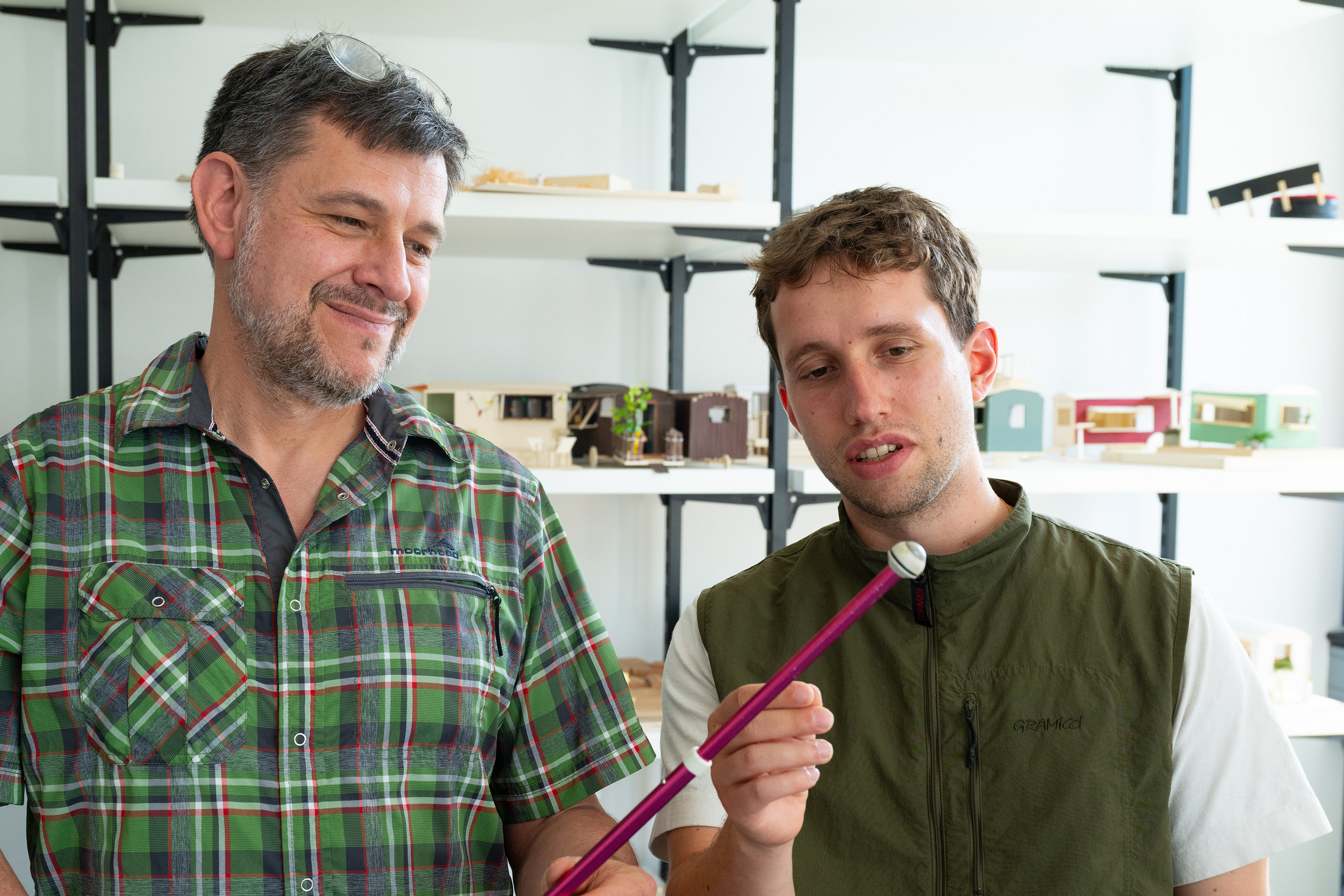
What matters to Professor Kai Schuster is “creating good, interconnected architecture”. In his opinion, accessibility should not be something special but taken into consideration as part of a holistic concept from the outset. He wants to teach his students an approach to architecture that is “consistently people-centric and aimed at quality for all”, and he underscores that planning oriented to the needs of the user group is the social science dimension of architecture. That is why ensuring that the student group is as interdisciplinary as possible and always bringing together architecture students with students from environmental and civil engineering, the natural sciences or the social sciences is also important to the seminar leaders. “The different perspectives are very exciting,” confirms Felix Bärenz.
Festival organisers also on board
The seminar was given a special boost when Schuster and Müller invited Thiemo Gutfried, the organiser of Darmstadt’s “Schlossgrabenfest” music festival, to speak to the students on the course. “That triggered a domino effect,” says Michael Müller. The representative of the “Club Behinderter und ihrer Freunde” is keen to stress that the festival was already progressive, but the students’ ideas were so well received that they sparked further improvements. The wheelchair dais, built from standard stage modules, was a key element among the range of ideas for the better inclusion of people with disabilities. But finding your way around such a huge festival can also be difficult, which is why the h_da students also designed a map with detailed signage.
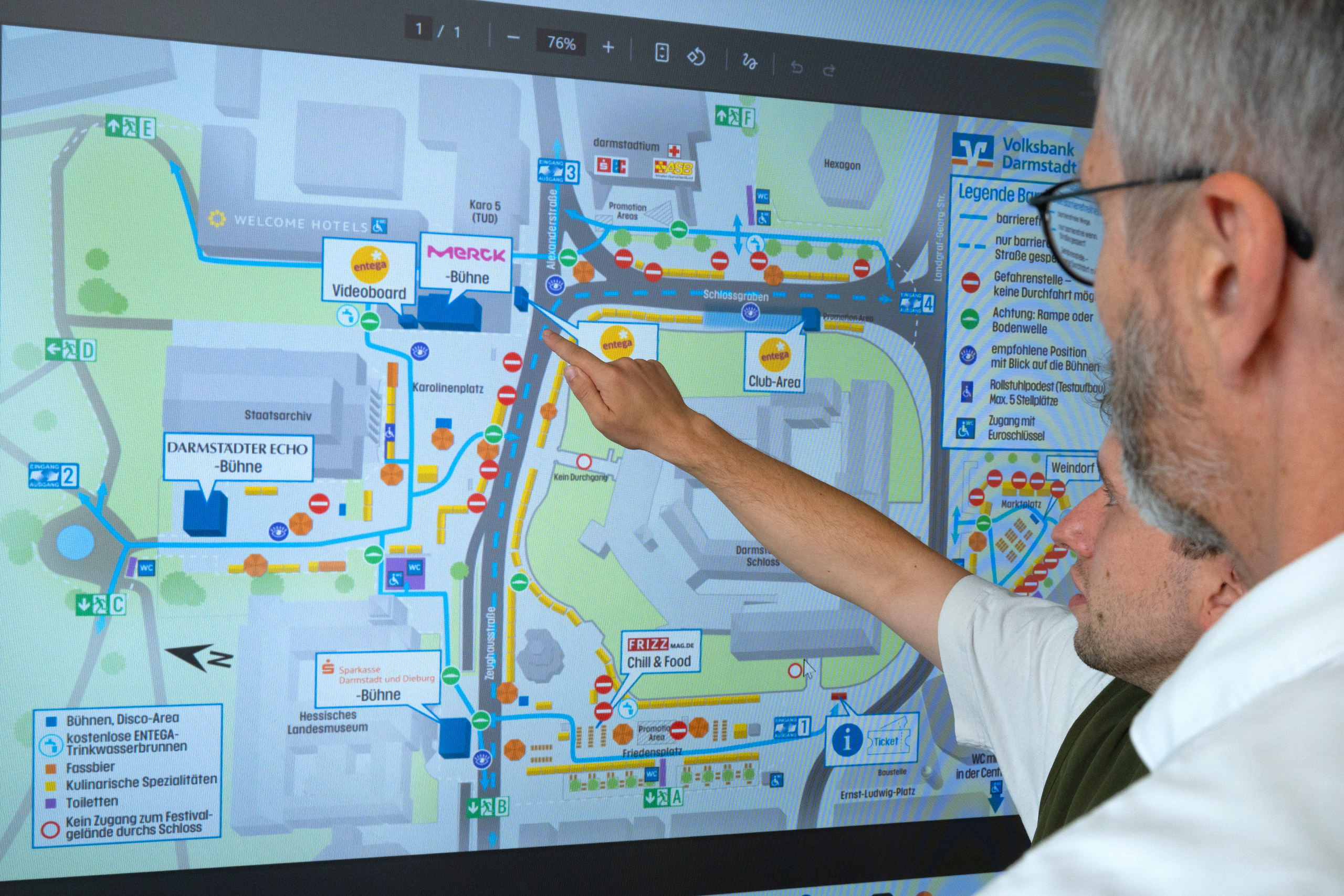
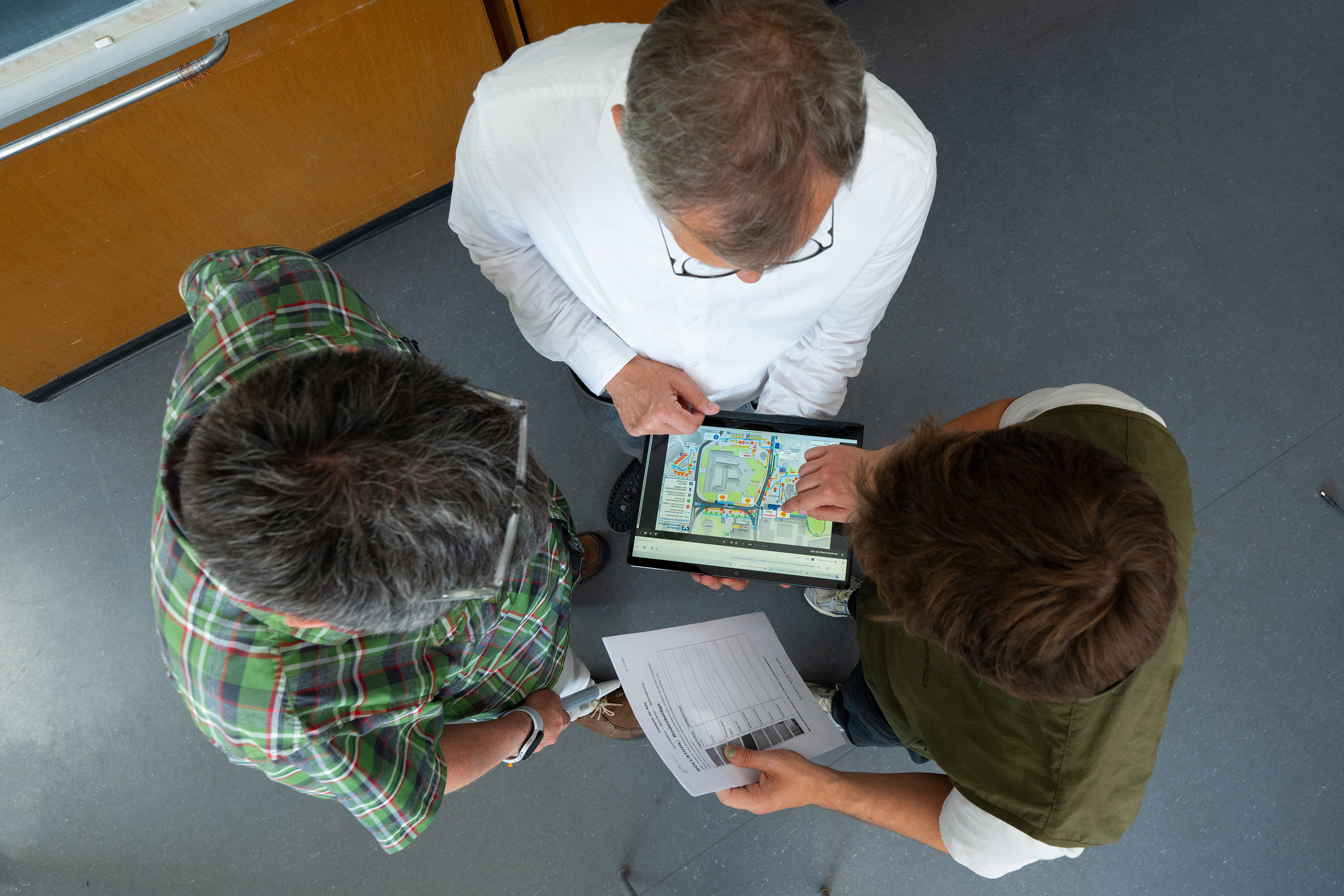
In this context, it’s not just a matter of how easily accessible the PRM toilets are. How can a person with restricted mobility safely navigate the cables – some of which are very bulky and thick – laid across the festival grounds for the technical equipment? Where are there cable bridges that enable wheelchair users to negotiate such obstacles more conveniently? The students have now added and described accessible routes and mapped out cable bridges on the festival’s website. So that people can find their way around the festival grounds more easily, student Felix Bärenz has also produced a tactile model that visitors with visual impairments can feel. The festival organisers liked it so much that they bagged it immediately and took it with them.
The map also shows quiet zones where not only people with disabilities can take a break from the noisy and crowded festivities. This was another proposal from the students that met with a positive response. “That’s the charming thing about this seminar: you can try out lots of things and experiment – away from norms and standards for a change,” says Professor Schuster. He is very taken with the students’ suggestions: “I love it when they amaze me.” And the festival organisers also emerged as open-minded and flexible. “Although space is always the most important commodity at an event like this,” notes Müller.
Wheelchair dais next year, too?
It is likely that even more of the h_da students’ ideas will be put into practice at the next “Schlossgrabenfest” music festival. “We’ve documented our experiences with the wheelchair dais and will be discussing it with the ‘Club Behinderter und ihrer Freunde’,” announces Michael Müller. He plans to stay in contact with the festival organisers and hopes that the dais will feature at the next “Schlossgrabenfest” music festival, too.
Contact our Editorial Team
Christina Janssen
Science Editor
University Communications
Tel.: +49.6151.533-60112
Email: christina.janssen@h-da.de
Translation: Sharon Oranski
Links
h_da's Faculty of Social Sciences
Cross-disciplinary programme at h_da: Social and Cultural Studies (SuK) (in German only)
Professor Kai Schuster’s website (in German only)
CBF Darmstadt e. V. (in German only)