Microalgae research
Industrial wastewater often contains traces of unsafe substances. At the same time, industry produces large amounts of carbon dioxide, and the search for sustainable raw materials is becoming increasingly urgent. That is why researchers at Darmstadt University of Applied Sciences (h_da) are working on a system that will hopefully solve several of these challenges: microalgae are used to treat wastewater, sequester CO2 – and even produce a valuable raw material in the process. The Federal Ministry of Economic Affairs and Energy has awarded funds of €580,000 for the collaborative project.
By Christina Janssen, 16.6.2026
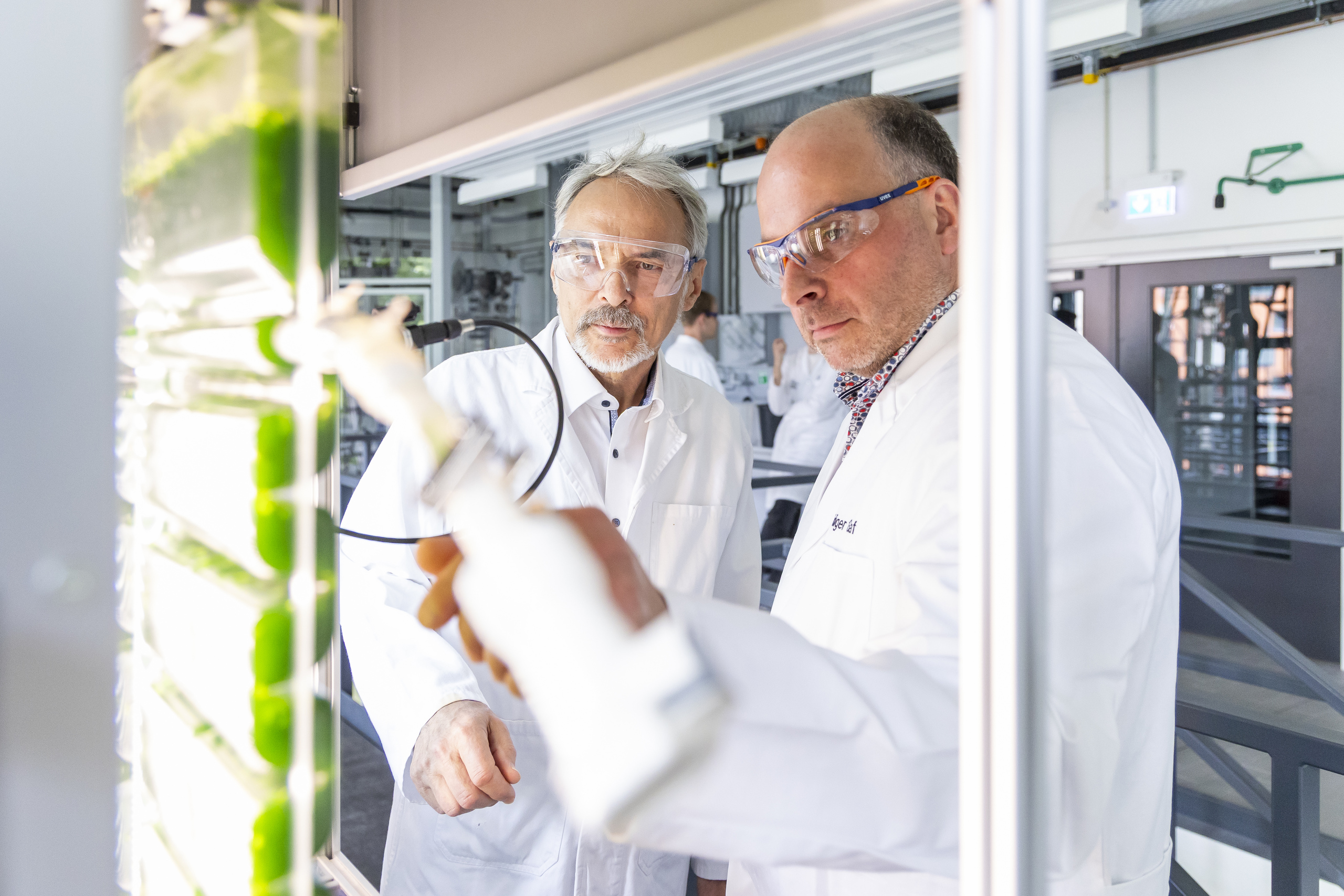
“We’re better than a Kinder Surprise Egg,” says Professor Rüdiger Graf, an expert in bioprocess engineering, with a grin. The comparison seems rather unusual in a scientific context, but as Graf goes on to explain: “The Kinder egg has three pluses – a surprise, a toy and chocolate. We use solar energy to produce oxygen, sequester CO₂ and treat wastewater. And in our case, there is a fourth plus: we produce valuable algal oil.”
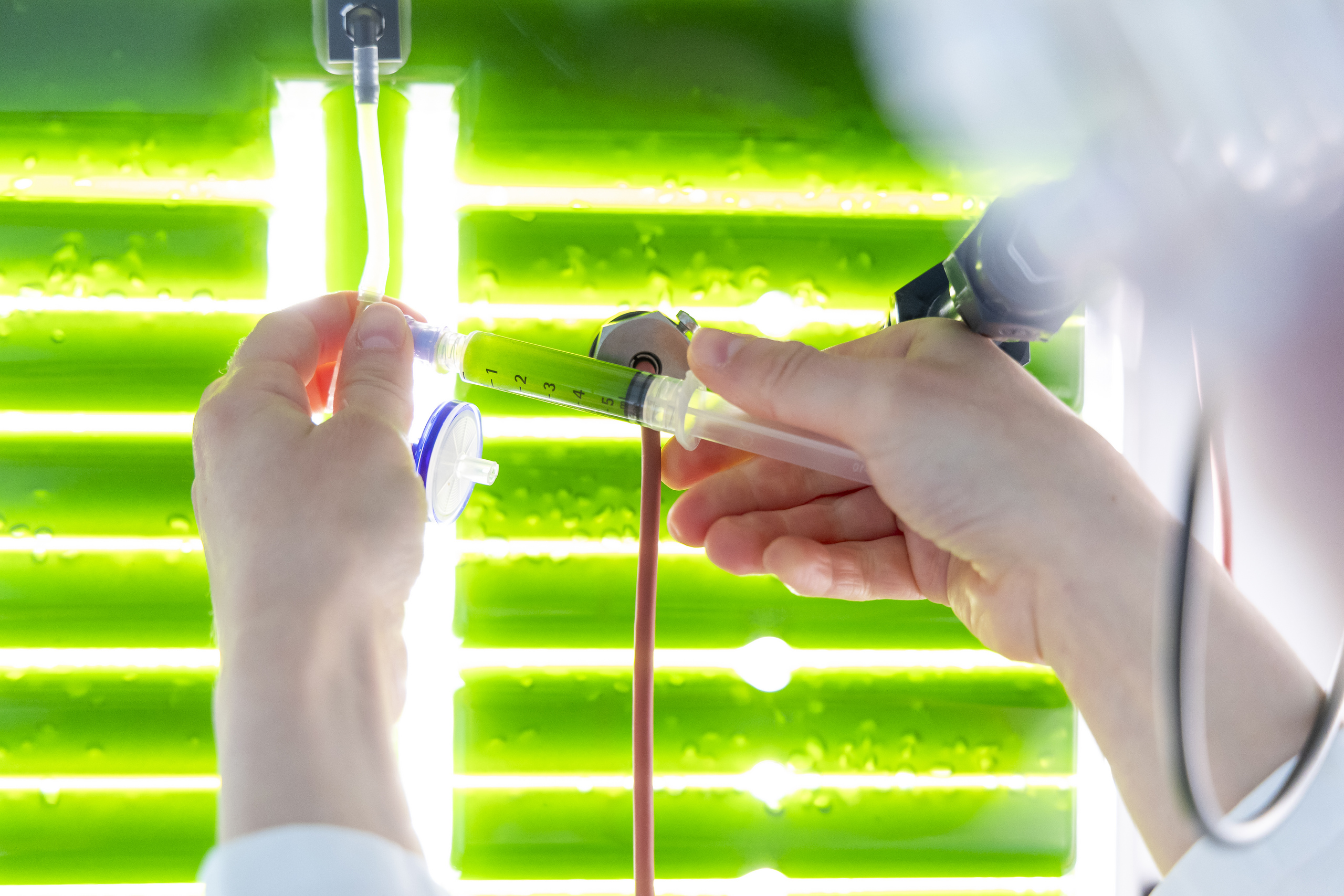
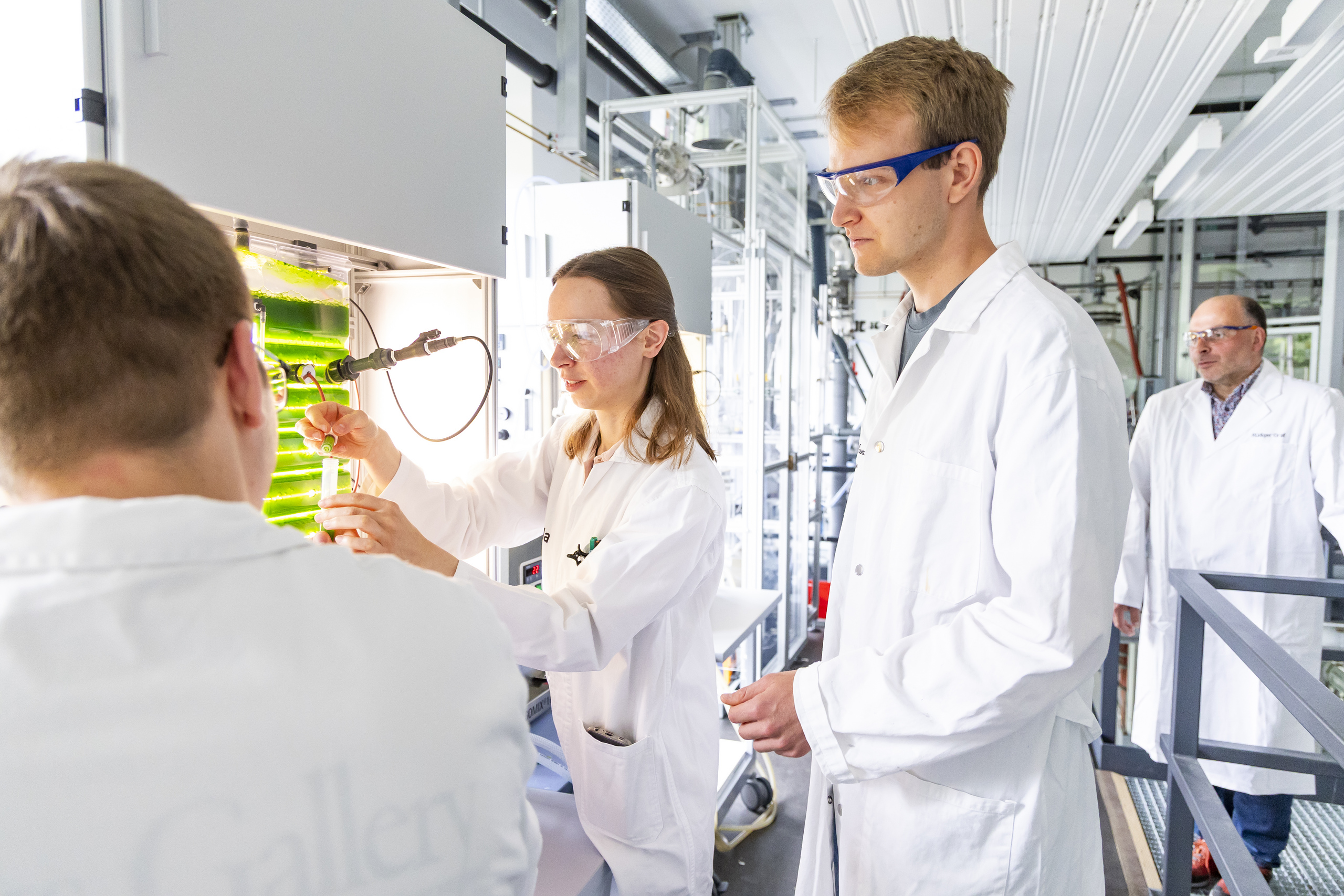
At the heart of the project outlined above is the microscopic freshwater alga Tetradesmus lagerheimii. The single-celled organism is nurtured and tended in photobioreactors at h_da’s Faculty of Chemical Engineering and Biotechnology. In the pilot plant facility, the faculty’s large, light-flooded laboratory, luminous green algae cultures, supplied with light and nutrients, bubble away in large vessels. What resembles a futuristic greenhouse could one day become part of an industrial or wastewater treatment plant.
Initially, the idea sounds simple: the tiny algae use light and carbon dioxide to grow, forming biomass and sequestering climate-damaging CO2 in the process. At the same time, they remove unwanted substances from the wastewater. And if done skilfully, they also begin to store large amounts of oil. In this way, a tiny single-celled organism performs four tasks at once – bringing sustainable benefits to both the environment and industry.
Bye-bye pollutants, hello raw materials
Together with partners from the paper industry and researchers from TU Darmstadt, the h_da team led by Professor Graf is investigating how microalgae can be used to treat industrial wastewater, with a focus on substances that can have hormone-like effects in the human body. These include, for example, substitutes for bisphenol A, which is meanwhile banned from use in food contact materials. They are used in plastics manufacturing, as well as in thermal and recycled paper, and can enter wastewater via industrial processes.
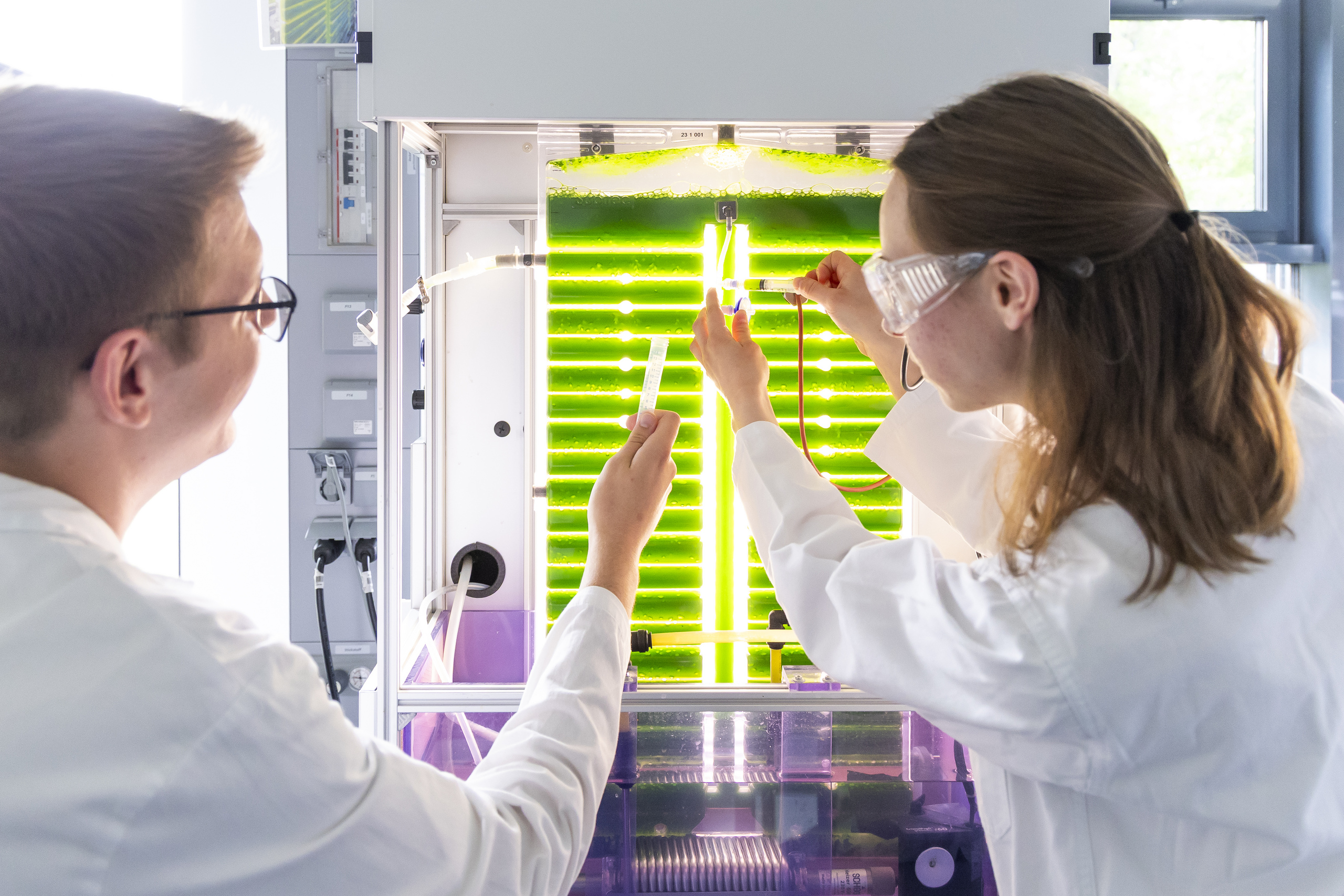
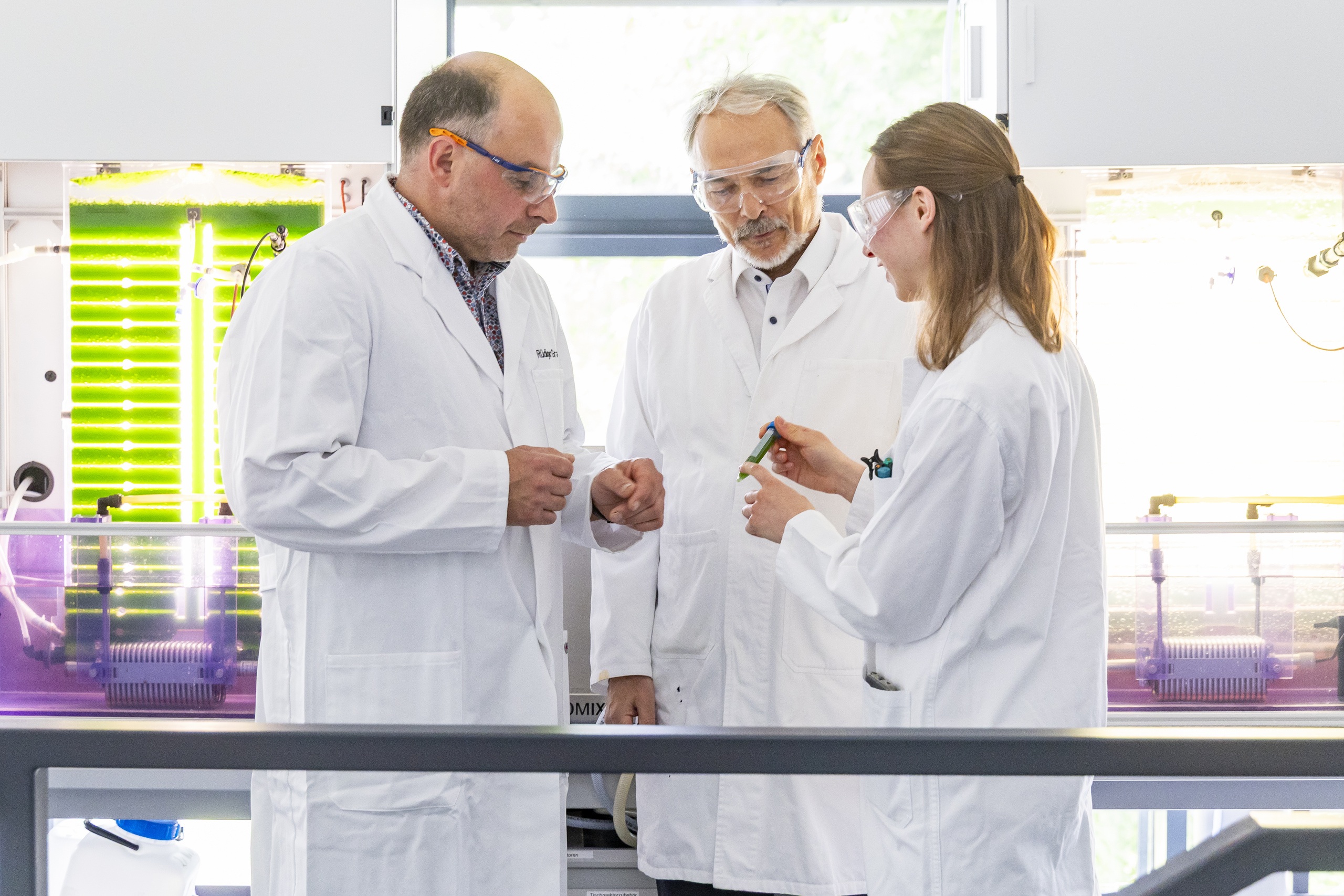
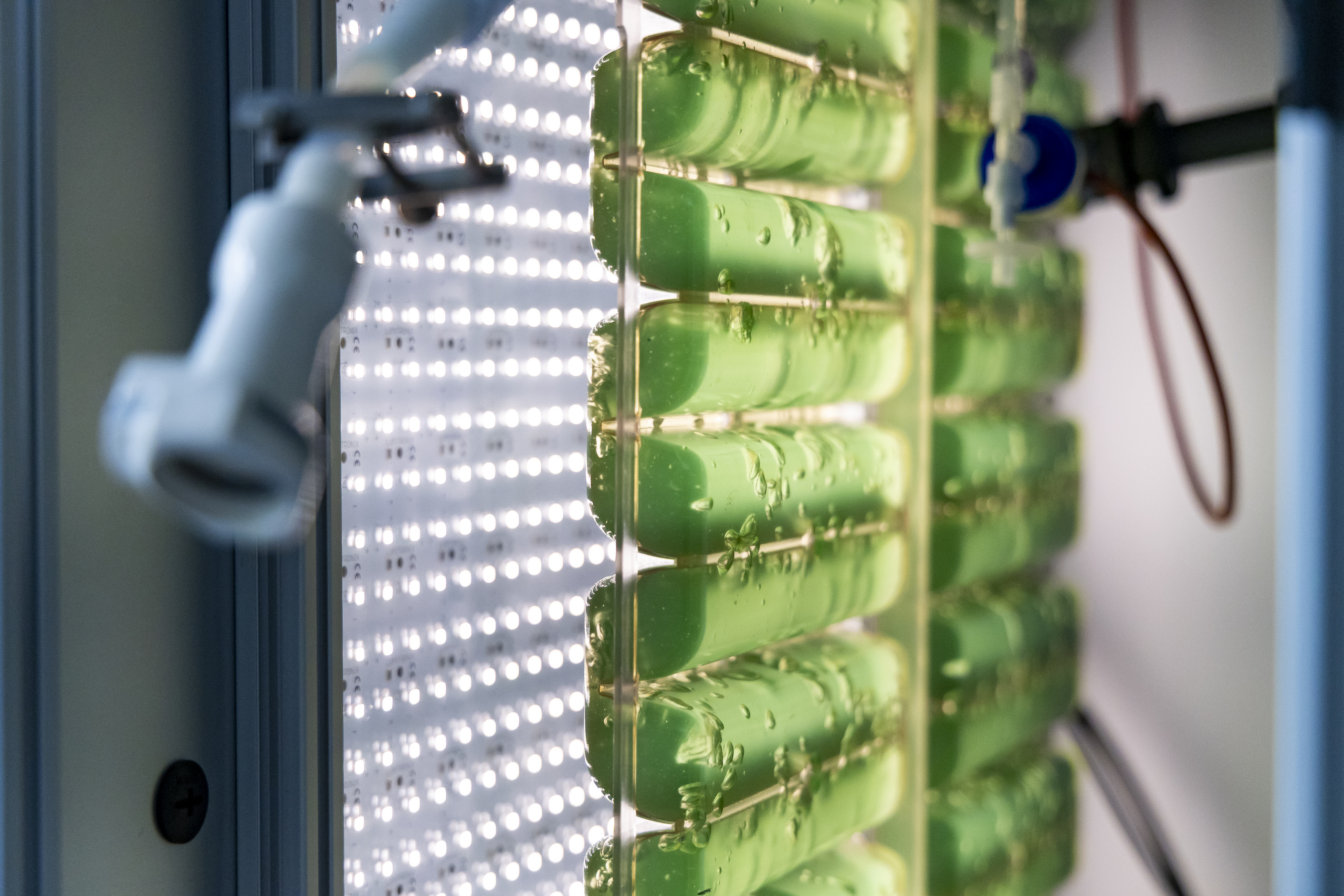
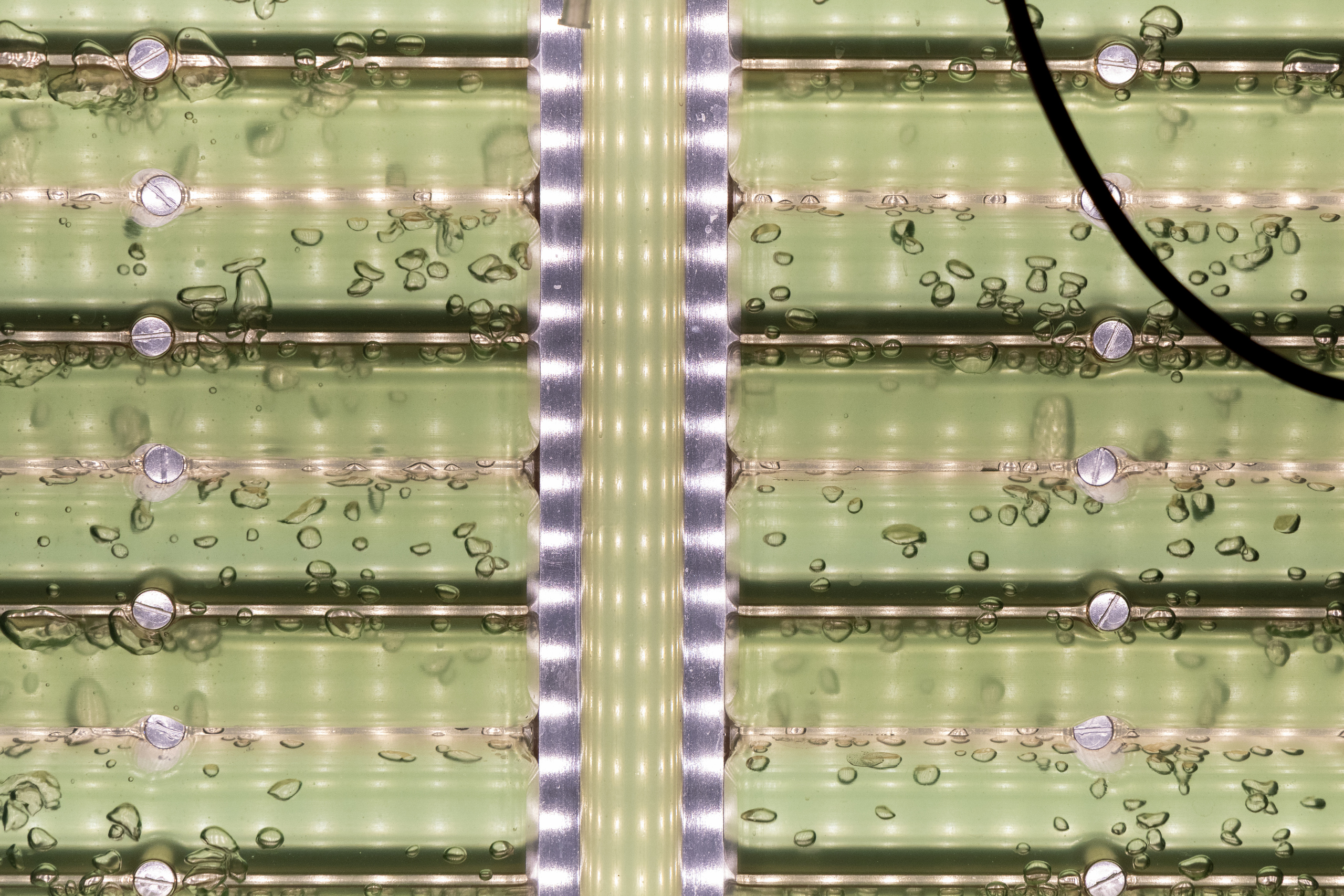
Before the wastewater – for example, from a paper mill – is discharged into a river, it already meets all the legal requirements. It may, however, nevertheless still contain small amounts of unsafe substances. The aim is to make these last remaining residues harmless as well. This is where the microalgae come into play: the microalgae cells can adsorb and accumulate these substances and, ideally, even degrade them completely. “Although the exact molecular mechanisms have only been partially studied so far,” explains doctoral student Samira Reuscher, “we do know that endocrine-active substances are filtered out of the wastewater.” Alchemy or “algemy”? The researchers are focusing on the practical benefits.
Co-habitation in the algae bioreactor
This does not, however, work entirely without side effects. Through their metabolism, the algae release organic substances into the water that increase what is known as the “chemical oxygen demand” (COD), an important indicator of wastewater quality. This means that the algae, although they indeed treat the wastewater, also produce new, undesirable substances that pollute it. The solution is to give them some “co-inhabitants” in the form of various bacterial strains. “They live in communities with other organisms in nature, too,” explains Dr Gerd Klock, a research associate at the faculty. “The different organisms simply have to adjust to each other.”
The distribution of labour is thus as follows: the algae take care of production, while the bacteria clean up. In the lab, the researchers are now seeking the best symbiotic balance within these co-cultures. To do this, they add activated sludge from the wastewater to the algae cultures and observe which combinations and mixing ratios work particularly well. What does this mean for their work in the lab? Measure, compare, adjust – and repeat.
Stress prompts oil production
Treating the wastewater is, however, just one chapter in the “algae story”. The second begins when they are subjected to stress. Under ideal conditions, the algae invest their energy above all in cell division or, in other words, in reproduction. This is what the researchers initially want, as the cultures should first produce as much biomass as possible. After that, however, it’s game over for such unbridled growth. “For the algae to understand that it’s time now to produce lipids instead of dividing non-stop, you have to subject them to stress,” says Graf, explaining the process. Under stress, the microorganisms switch to crisis mode. Nutrient deficiency and insufficient light worsen growth conditions. The single-celled organisms’ reaction to this is almost human – they build up energy reserves in the form of lipids, the much-coveted algal oil.
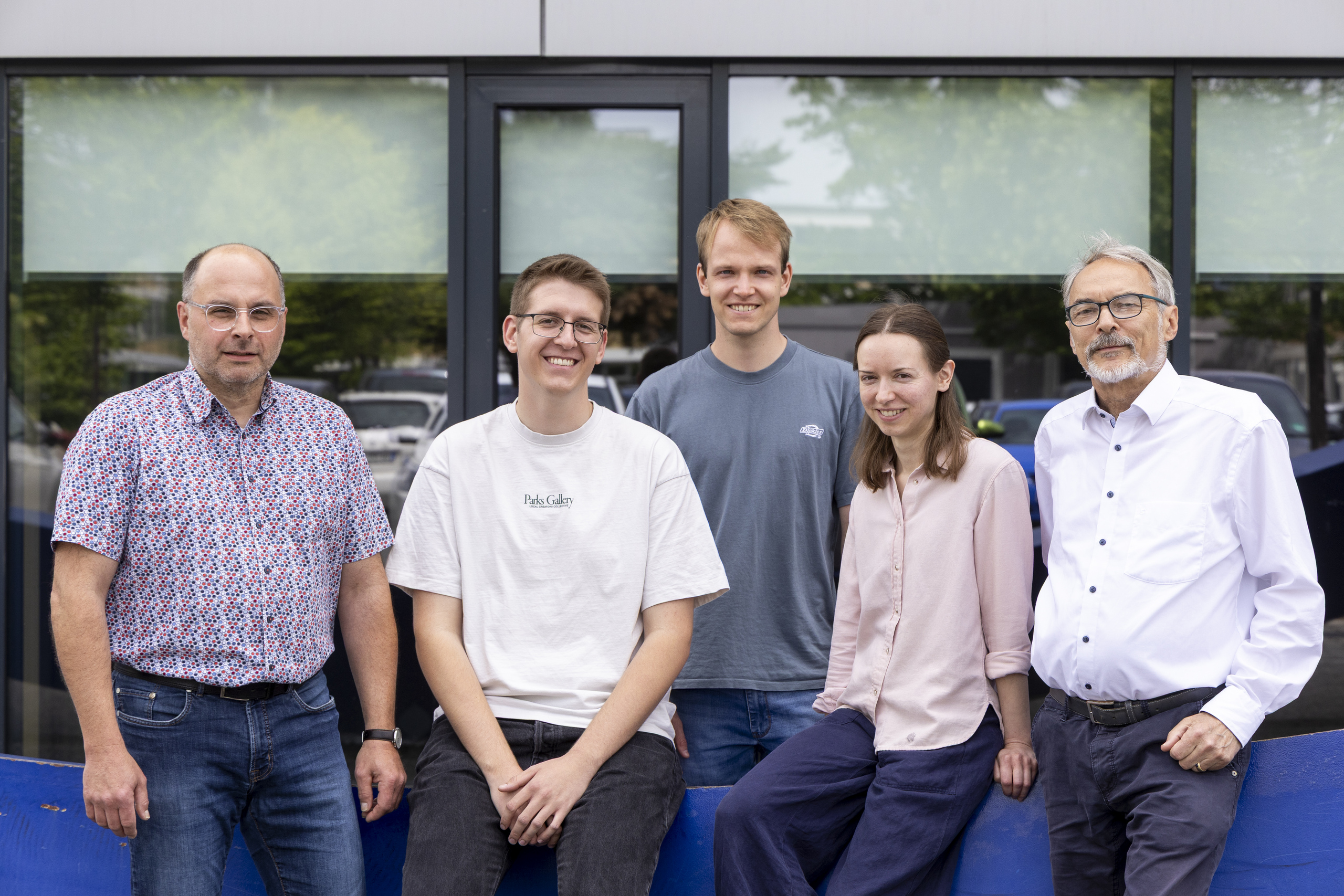
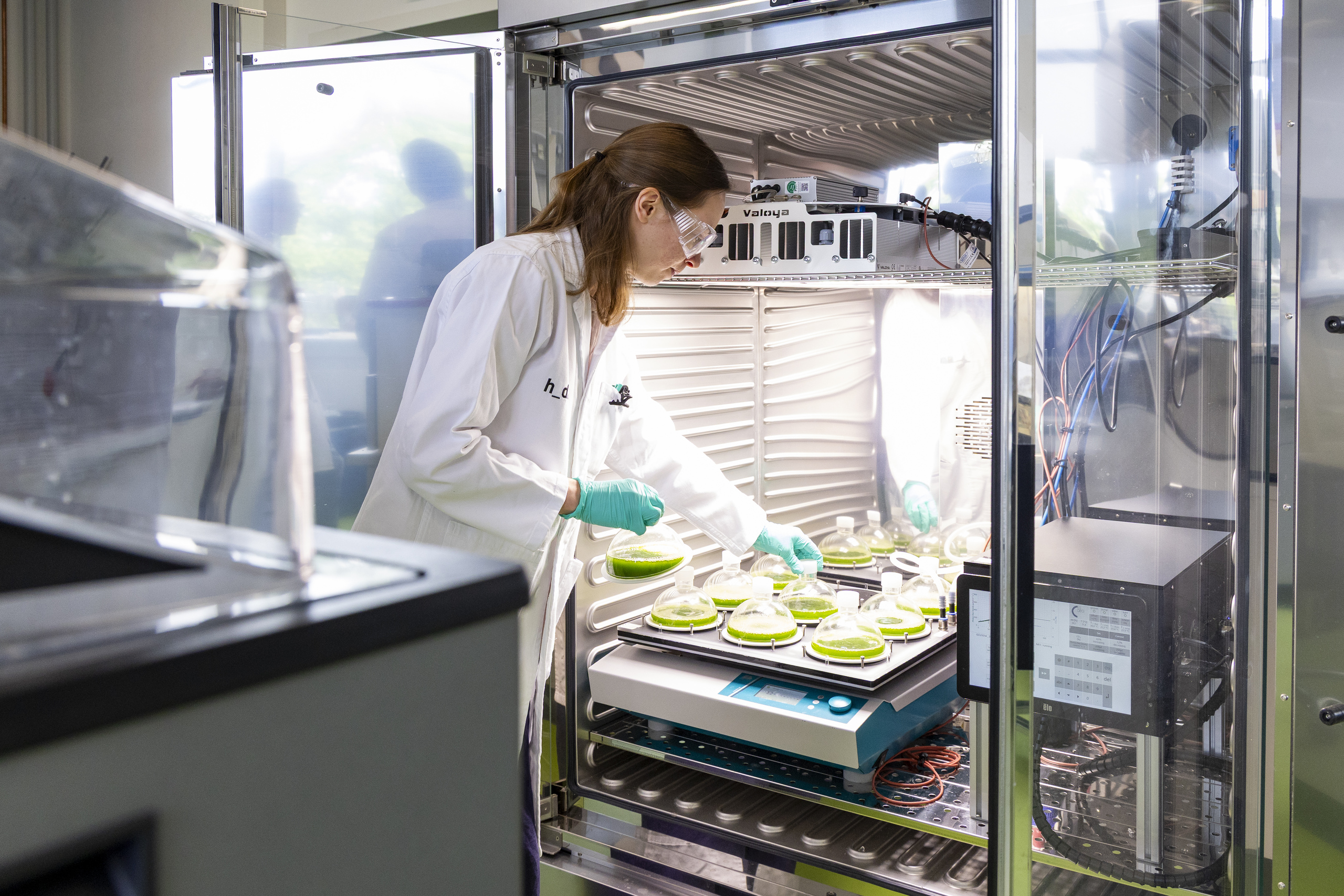
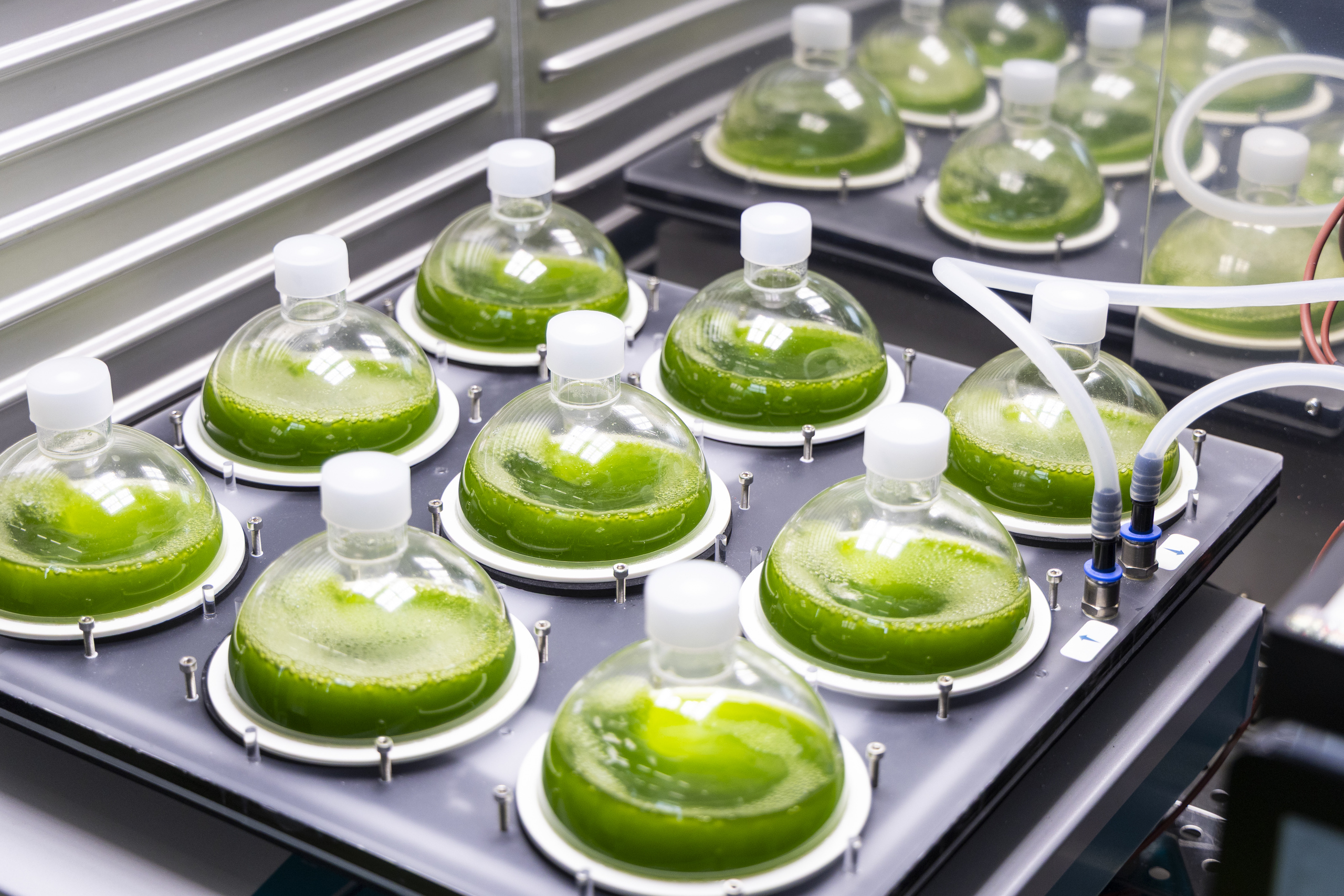
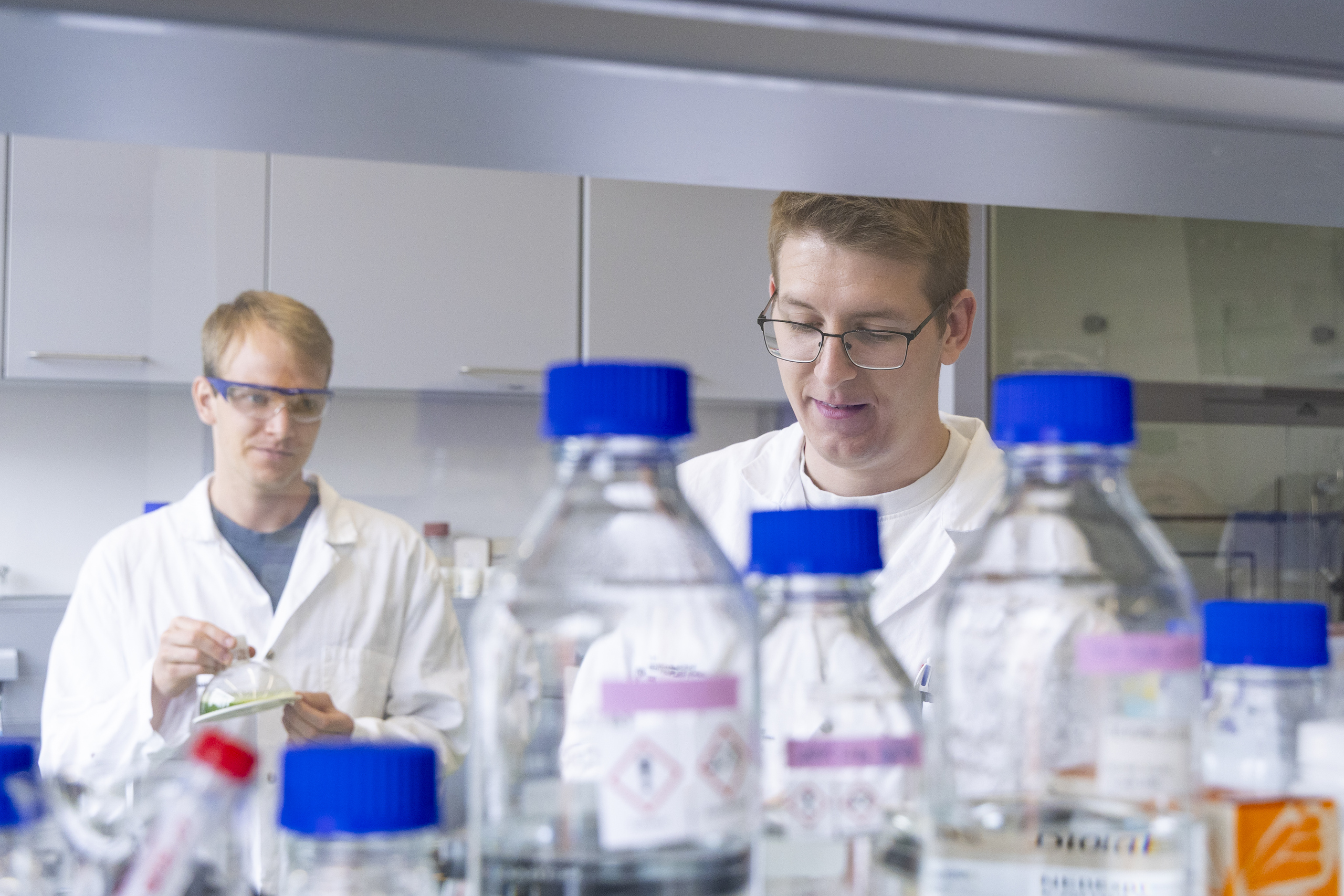
It is this oil that the researchers – who jokingly call themselves “algae farmers” – would like to harvest in large quantities, as it can serve as feedstock for chemical products and replace fossil-based raw materials in some areas. That is why Lars Wiesenfeldt, a Bachelor’s student at h_da, spent part of his internship semester analysing which conditions particularly stimulate oil production. And he was successful: his cultures achieved a lipid content of over 37%. “Compared to figures in existing literature, our overall lipid productivity is in the upper range,” doctoral student Samira Reuscher is pleased to report. The challenge, however, lies in finding the right balance. Too little stress leads to hardly any oil. Too much stress curbs growth. “We have to hit the sweet spot where the algae produce as much oil as possible without shutting down their productivity completely,” explains Wiesenfeldt.
Sustainability and economic viability
When scientists talk about microalgae, it’s not long before the conversation turns to economic viability. Due to insufficient sunlight in our latitudes, artificial lighting presents a major cost factor. “The barrier is still high,” points out Gerd Klock, which is why undergraduate Christian Chantre is exploring something called “light-dark cycles”. Instead of lighting the reactors artificially 24/7, different strategies are being tested – for example, lighting during the day but not at night. The goal is to produce as much algae biomass as possible with as little energy input as necessary.
Production costs are still far higher than those of established methods. According to the team’s calculations, one kilogram of “h_da algal oil” currently costs about €153 to make, depending on the setup. Scientific papers report that some “competitors” manage to produce it for about €33. But die-hard “algemists” are undaunted by such figures. “Crops such as rapeseed or maize compete with food production for agricultural land,” explains Dr Klock. “That’s an ecological problem.” Algae, by contrast, “can be cultivated on any kind of poor soil in the semi-desert or anywhere else.” From an environmental perspective, the algae already have a clear advantage.
The enemy wears slippers
In addition to the tricky questions about energy costs, bacterial co-habitation and metabolic stress, there is, however, another problem – or is it just a “teeny-weeny problem” because the cause is so small? Enter: Paramecium, popularly known as the “slipper animalcule” because of its shape. Many remember this single-celled organism from their biology lessons at school. In the algae lab, however, it receives a less enthusiastic welcome. “I would never have thought that the slipper animalcule would plummet so far in my personal ranking,” says Professor Graf. He is half-serious, half-joking. “But we really don’t like it devouring our algae.”
Especially freshwater systems are inclined to be fragile because unwanted organisms can settle in them more easily than in saltwater cultures. That is why the researchers must keep a constant eye on their reactors and think about “how we can ward off the slipper animalcule as an enemy.” In any case, the algae themselves make no secret of their condition. If they are bright green, they are fit and healthy. If they turn yellowish or brownish, the stress is too great. The scientists must then intervene.
Small organisms, big tasks
For now, the algae bioreactors are solely for research purposes. But the h_da team has long been thinking beyond the laboratory. In the future, modular systems connected directly to industrial facilities or wastewater treatment plants are conceivable, where they would treat wastewater, remove pollutants, utilise carbon dioxide and simultaneously produce biomass for new products.
For organisms smaller than a speck of dust, that would be a remarkably big task. The team’s enthusiasm is evident among the students, too. “When I first heard ‘microalgae’, I just thought ‘Hmm’. But then I found it extremely interesting,” says Christian Chantre. “I’m really impressed that you can use them to build up so much biomass from CO₂ and a salt medium.” And then there’s another surprise: on harvest days, when the reactors are opened, a pleasant scent pervades the “algemistry” lab: “The cultures smell like freshly mown grass,” explains Chantre, “and perhaps a little bit like matcha too.” In any case, much better than factory wastewater. Another plus for the tiny algae.
Related articles
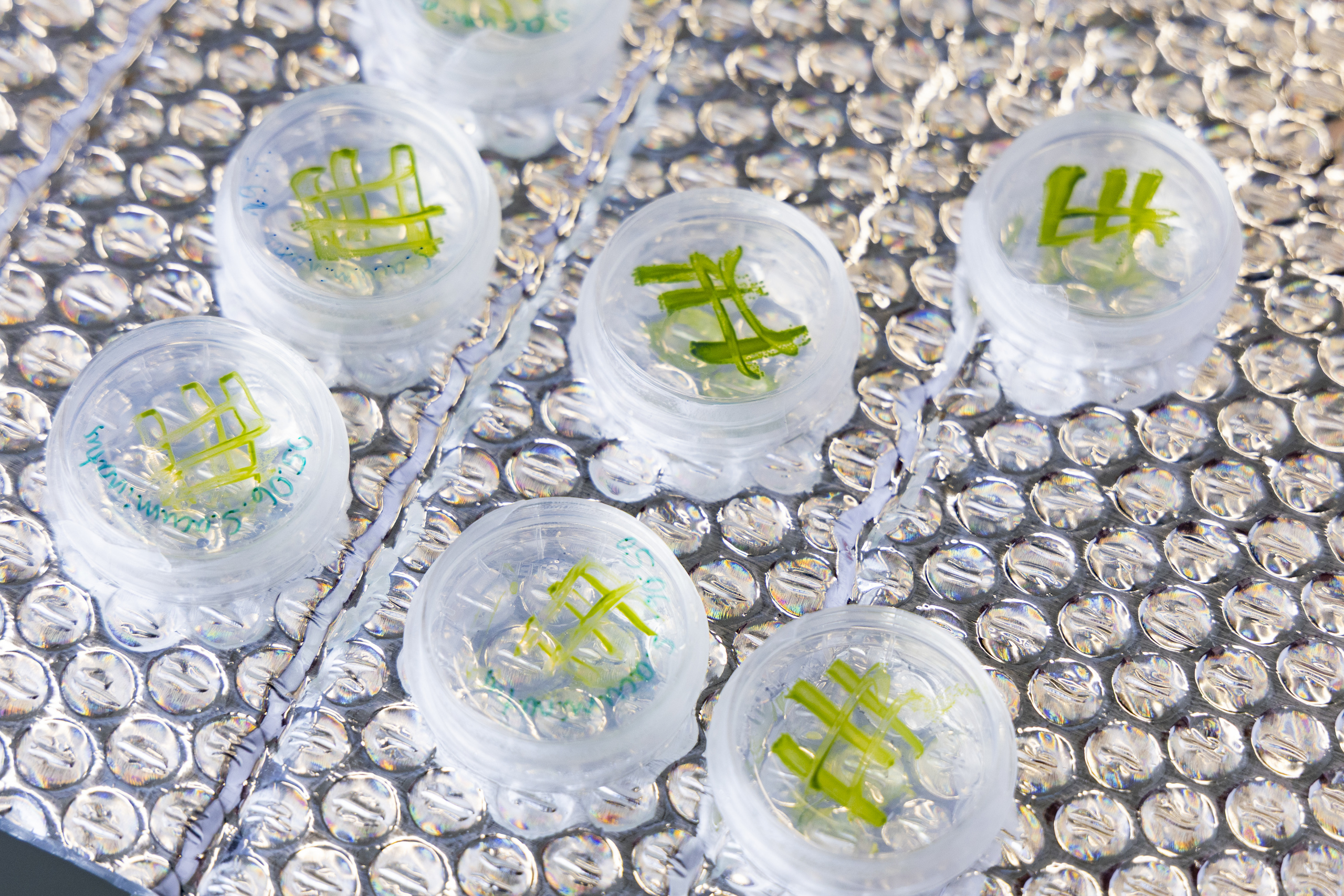
impact, 20.01.2020: BIOTECHNOLOGY: MULTI-TALENTED MICROALGAE
impact, 24.06.2025: TURNING OLD CHIP FAT INTO NEW HOUSE FAÇ ADES
impact, 13.12.2024: JUST HOW CUNNING CAN FUNGI BE?!
Contact our Editorial Team
Christina Janssen
Science Editor
University Communications
Tel.: +49.6151.533-60112
Email: christina.janssen@h-da.de
Translation: Sharon Oranski
Photography: Samira Schulz
Study programmes
MSc in Chemical Engineering and Biotechnology
BSc in Biotechnology (in German only)
BSc in Industrial Chemistry (in German only)
Dual Study Programmes (in German only)