


How EUT students are preparing to set up start-ups
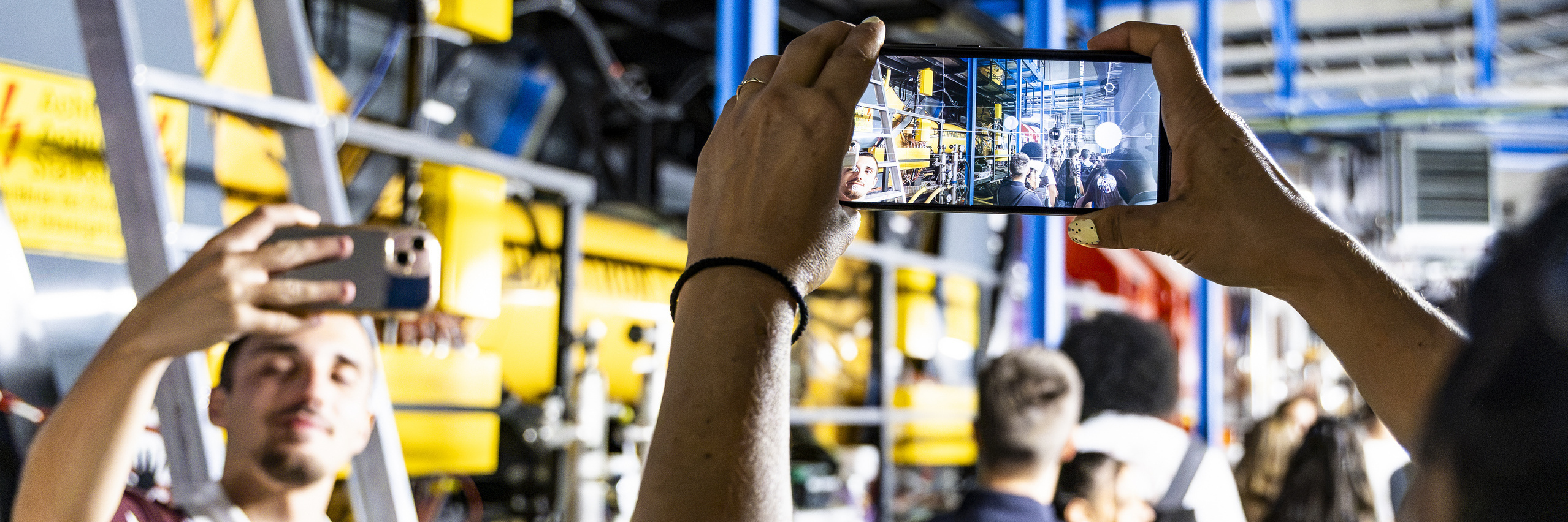
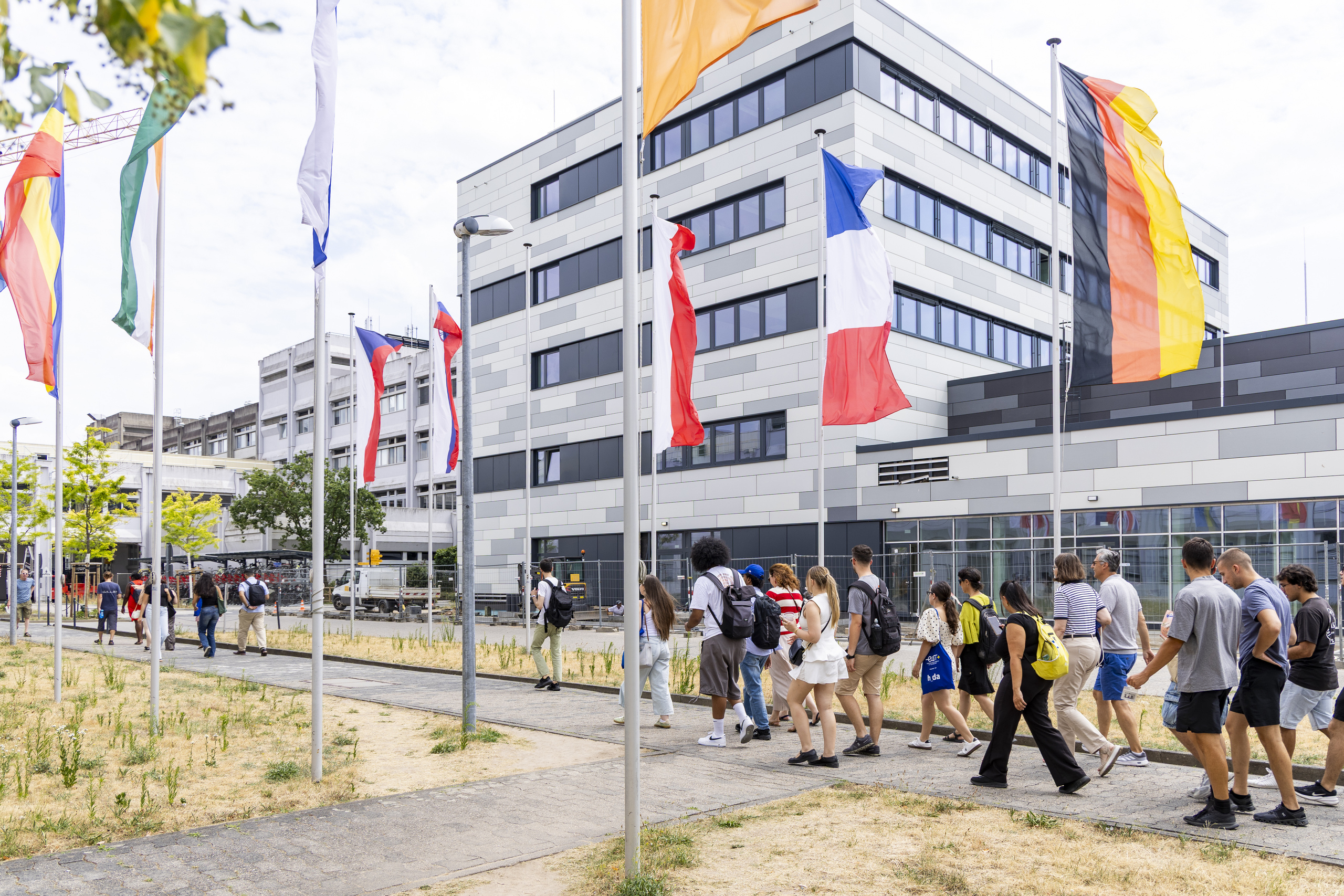
For the ninth time, Darmstadt University of Applied Sciences (h_da) hosted a Blended Intensive Programme (BIP) and brought together students and teaching staff from the European University of Technology (EUT+). These programmes combine virtual learning with a one-week practical phase at one of the partner universities in the Europe-wide EUT+ alliance. In July, 29 students and five lecturers from six universities visited h_da and examined how artificial intelligence influences the start-up process. Programme leaders were Stefan Kohn, Professor of Management & Organisation, with a focus on Entrepreneurship, at Darmstadt Business School, and Jacqueline Nyalwal from EUT+ Management.
By Annette Wannemacher-Saal, 14.8.2026
When Stefan Kohn talks about “Dragon’s Den”, it sounds intimidating. But the mood at the pitch presentations concluding the five-day “BIP” at the university was anything but that. Stefan Kohn welcomed each of the nine teams tasked with presenting their start-up idea to the audience in ten minutes with words of encouragement, and they were seen off with frenetic applause from the audience. “It’s been a busy week with fantastic results,” says Kohn, praising the students at the end of the event on h_da’s campus.
Artificial intelligence is replacing career beginners’ jobs
But first things first. In 2026, as in previous years, the university once again hosted a BIP – a “Blended Intensive Programme” funded by Erasmus+ as part of the EUT+ alliance. The aim of BIPs is for students to network across national borders within Europe. The theme this year was “AI & Entrepreneurship in Innovation Ecosystems”. “Artificial intelligence is replacing many jobs, particularly for career beginners,” says Kohn, who specialises in entrepreneurship, explaining why this topic was chosen. “We want to teach students the necessary expertise and give them the confidence to start their own business.” This requires skills that they can learn in a BIP.

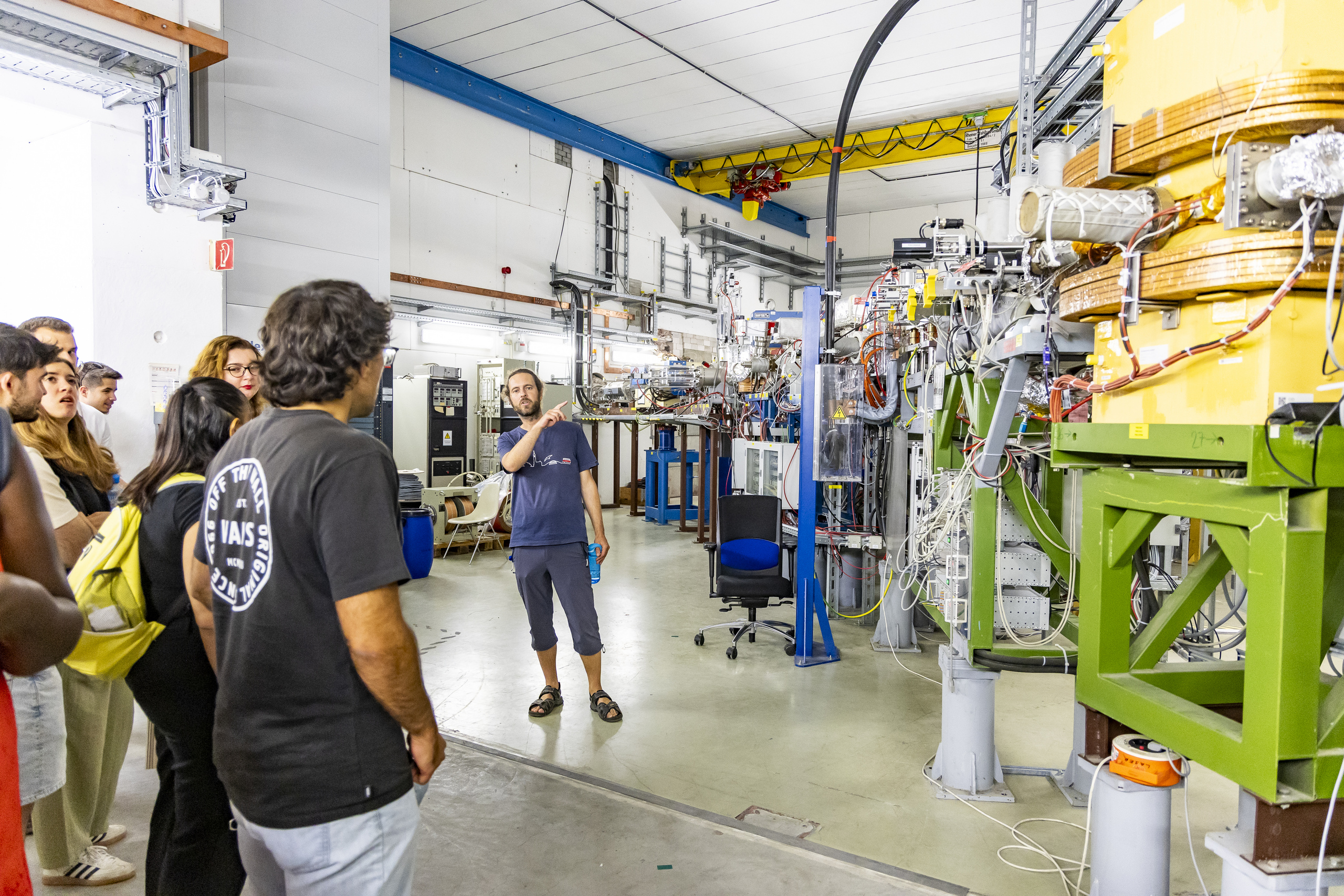
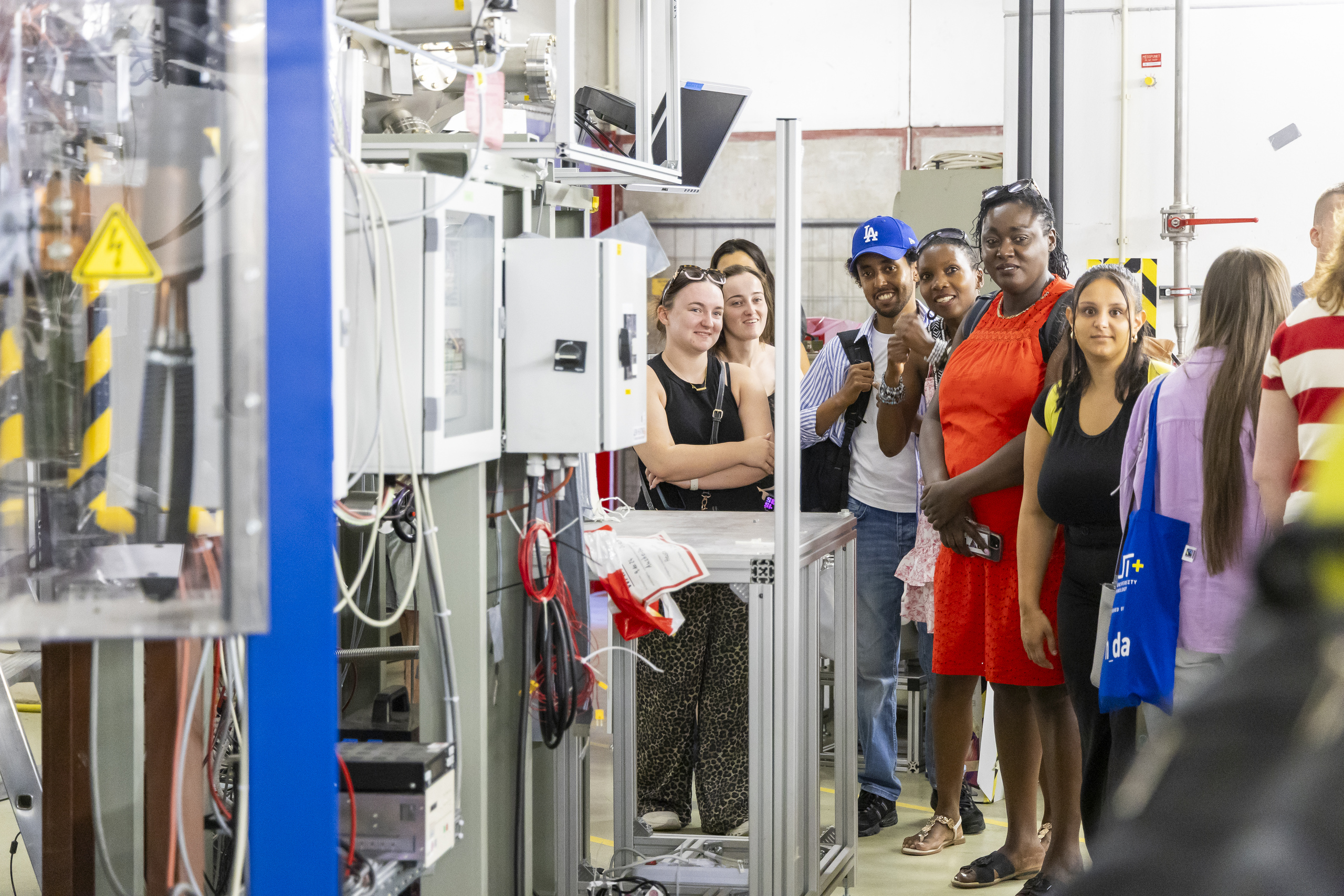
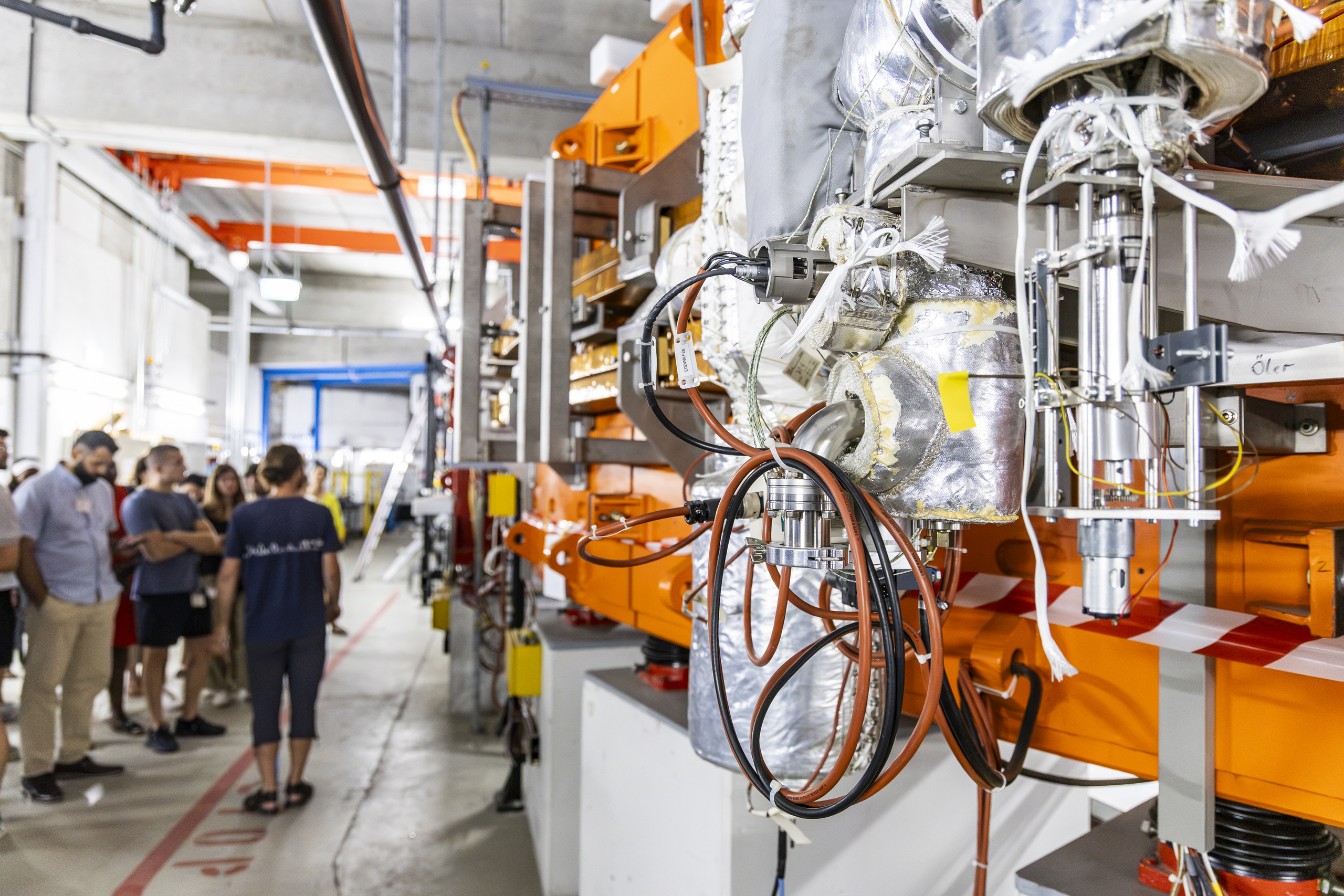
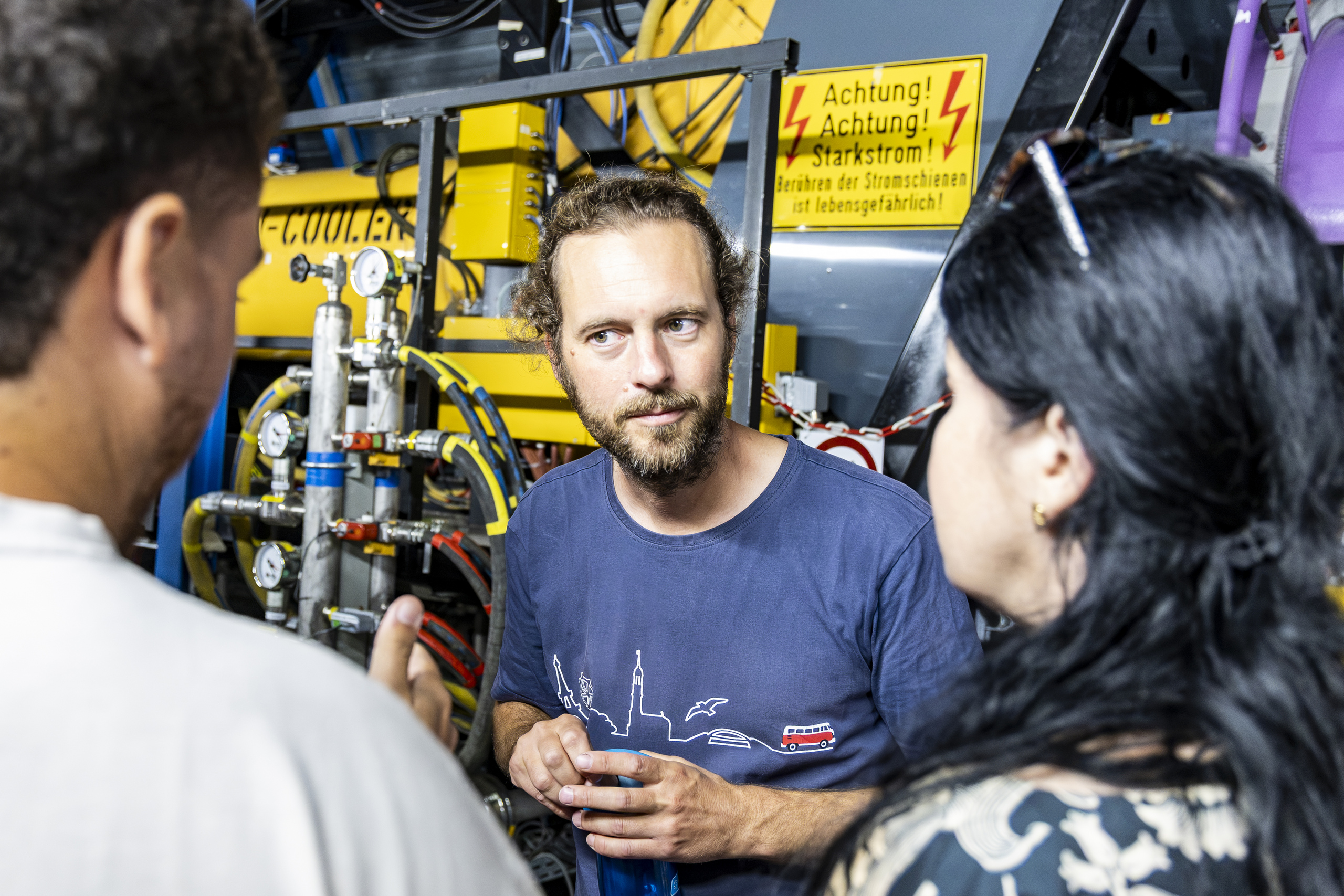
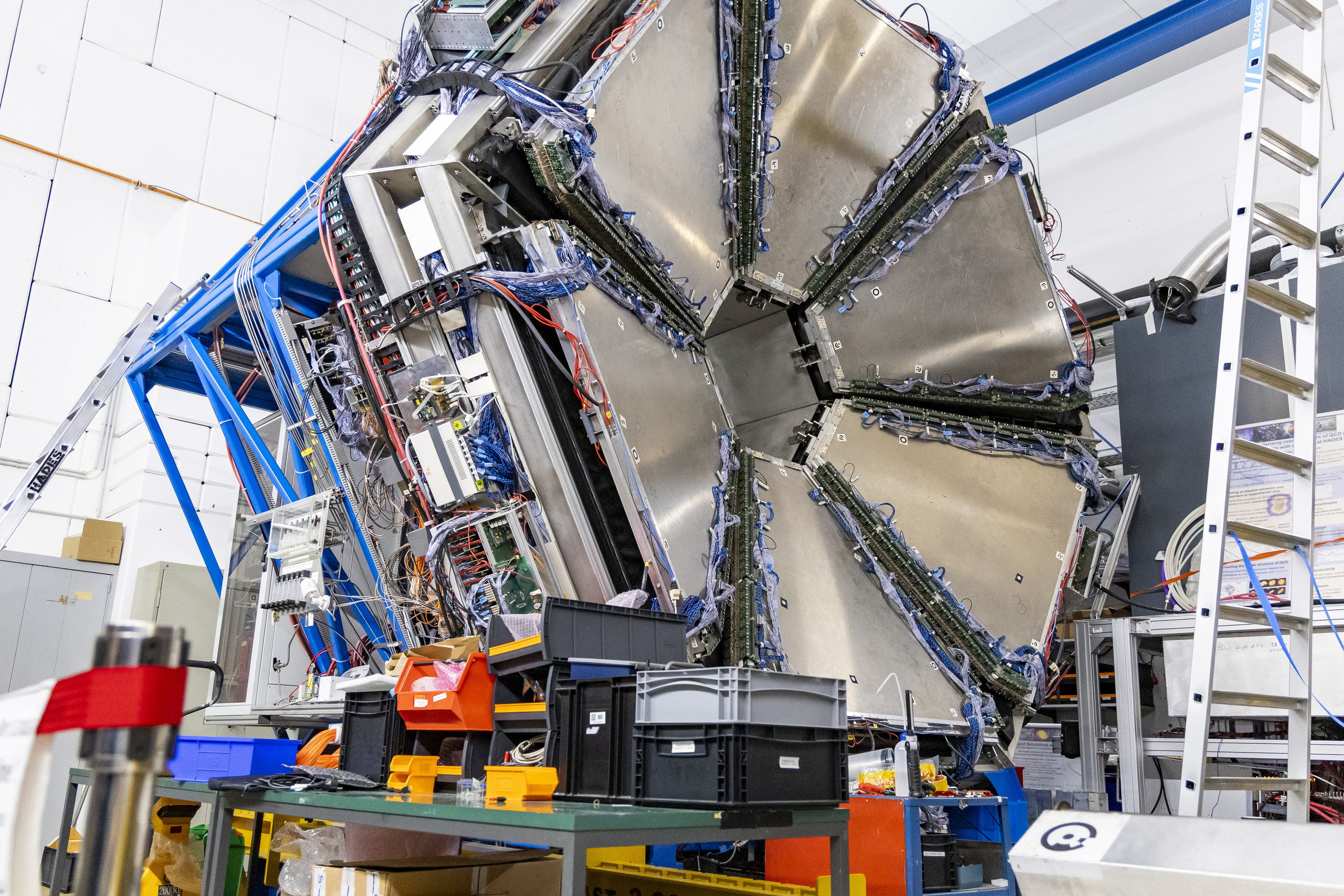
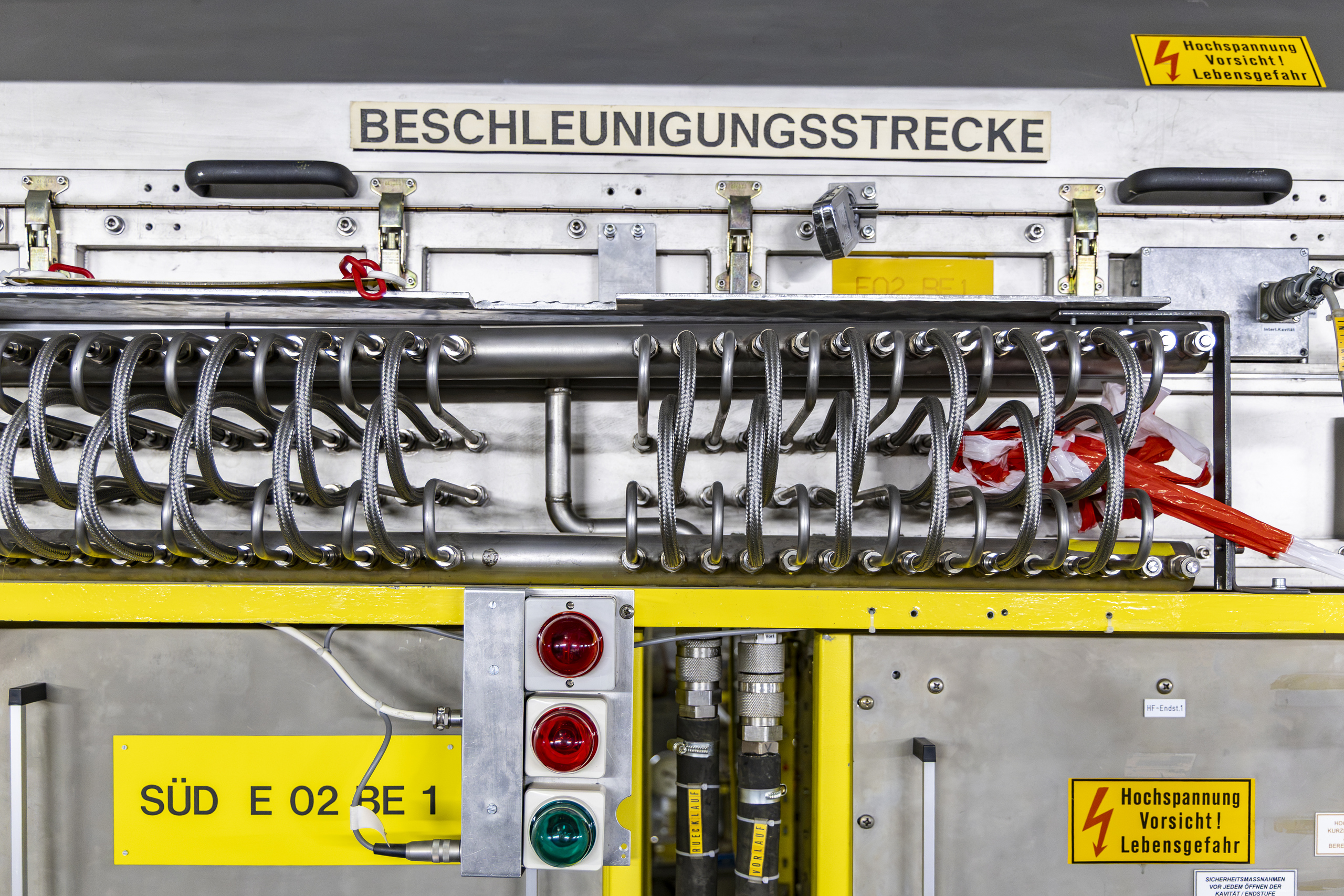
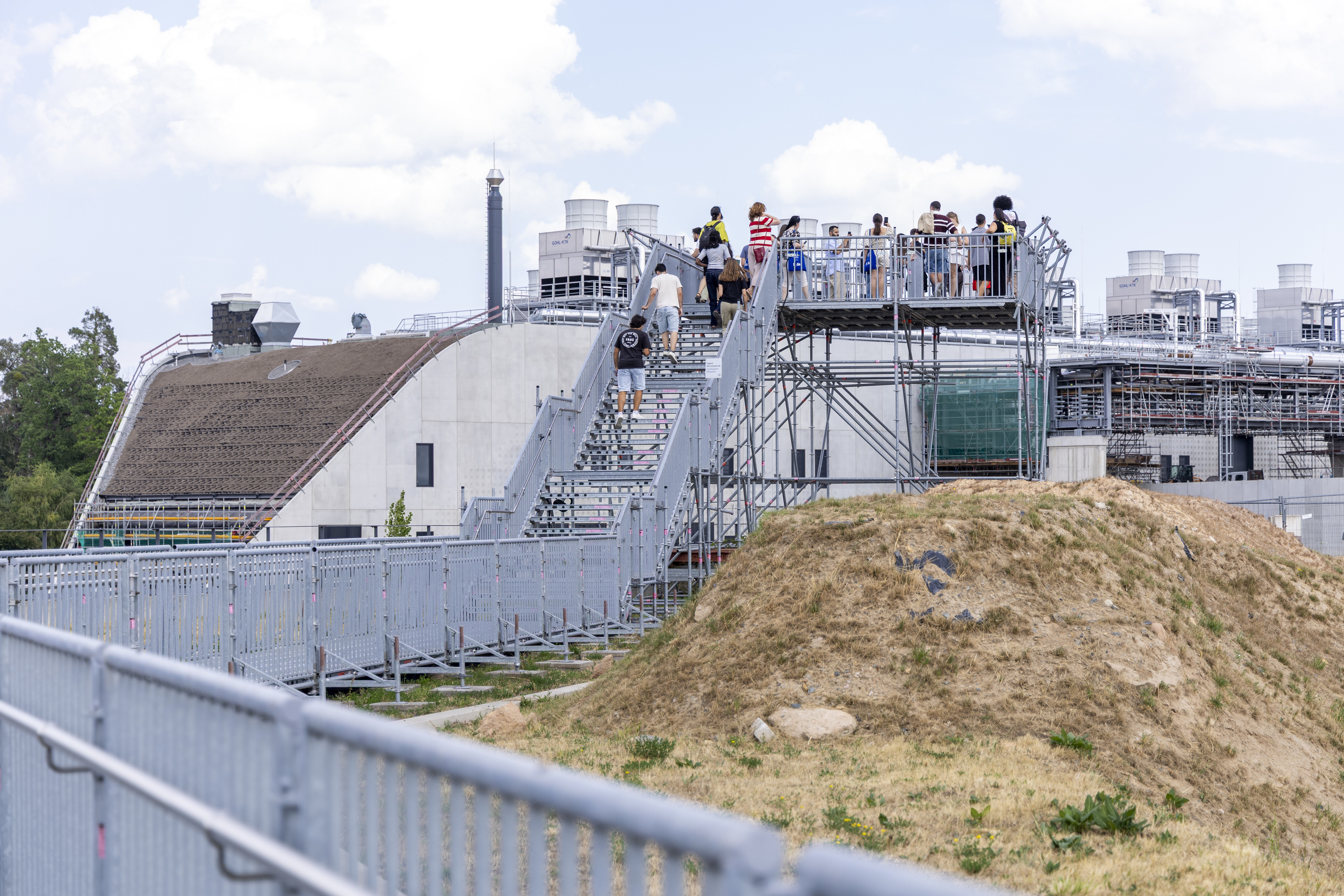
Highlight of the EUT+ practical week in Darmstadt: The visit to GSI with the FAIR particle accelerator (Facility for Antiproton and Ion Research) – a large-scale research facility, unique worldwide, which is currently under construction at the GSI Helmholtzzentrum für Schwerionenforschung (GSI Helmholtz Centre for Heavy Ion Research). All photos: h_da / Samira Schulz
Just under 30 students from seven (of the nine) EUT+ countries registered for the programme, which began online and ended in mid-July with an in-person event at the university. Alongside subject-related contents such as design thinking and pitches, the agenda also included a tour of the city, company visits and talks at the HUB31 technology and start-up centre, the GSI Helmholtzzentrum für Schwerionenforschung, the pharmaceutical and chemical company Merck, Frankfurt Airport and the House of Logistics and Mobility (HOLM). “It was a great programme,” concluded the participants from Italy, Romania, Ireland, Bulgaria, Cyprus, Germany and Spain. That the Spanish guests saw to a particularly exuberant atmosphere at the evening get-togethers during the World Cup goes without saying – and is an entirely different story.
Packed agenda and clear tasks
But while the evenings were spent partying and deepening contacts, the daytime agenda was packed and included, among other activities, a visit to HUB31, where the international guests were able to discuss with representatives from various start-ups. “First-hand information,” says Kohn. This was of elementary importance for the students, as they were expected to have developed their own start-up by the end of the week to the stage where it could hold its own in the market. “What does the business model encompass?” “How can you sell the idea?” “Where can AI come in useful?” “What about the finances?” are questions that needed to be clarified in the process.
Climate change, parking problems, help with moving house
Out of 18 proposals at the beginning of the week, nine crystallised that were then further developed by groups of three or four students. The topics included climate change, parking problems, support for mental health issues and help with moving house. Each team had exactly ten minutes for their pitch, followed by five minutes for questions from the audience. With the words, “Bong! Ten minutes and counting!”, Kohn sounded an imaginary bell and sent the teams into the race; a jury, comprising local experts and lecturers from other universities who had accompanied their students to Darmstadt, awarded marks at the end for the presentation and the content. Because it was, of course, all about learning and earning important credit points, too.
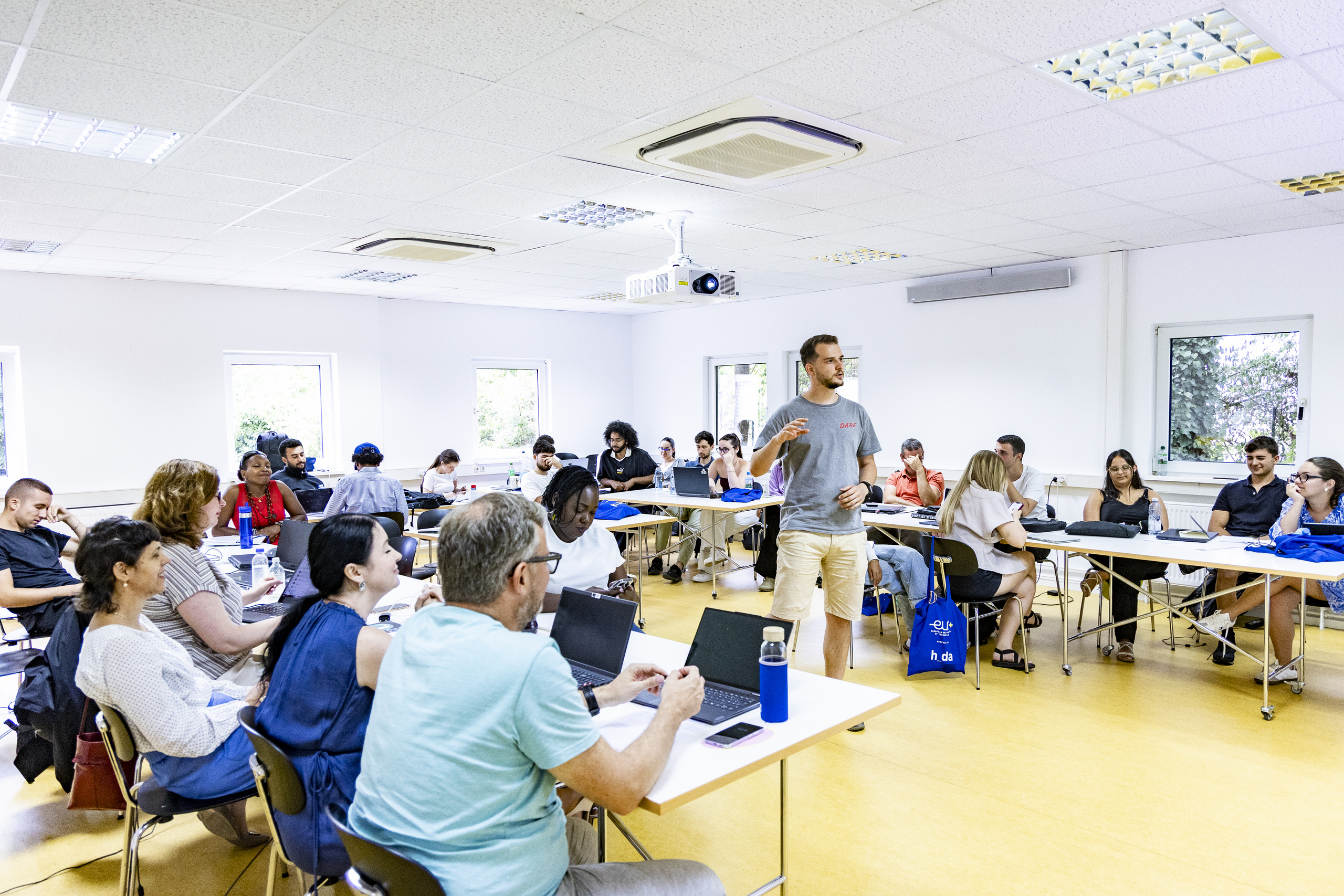
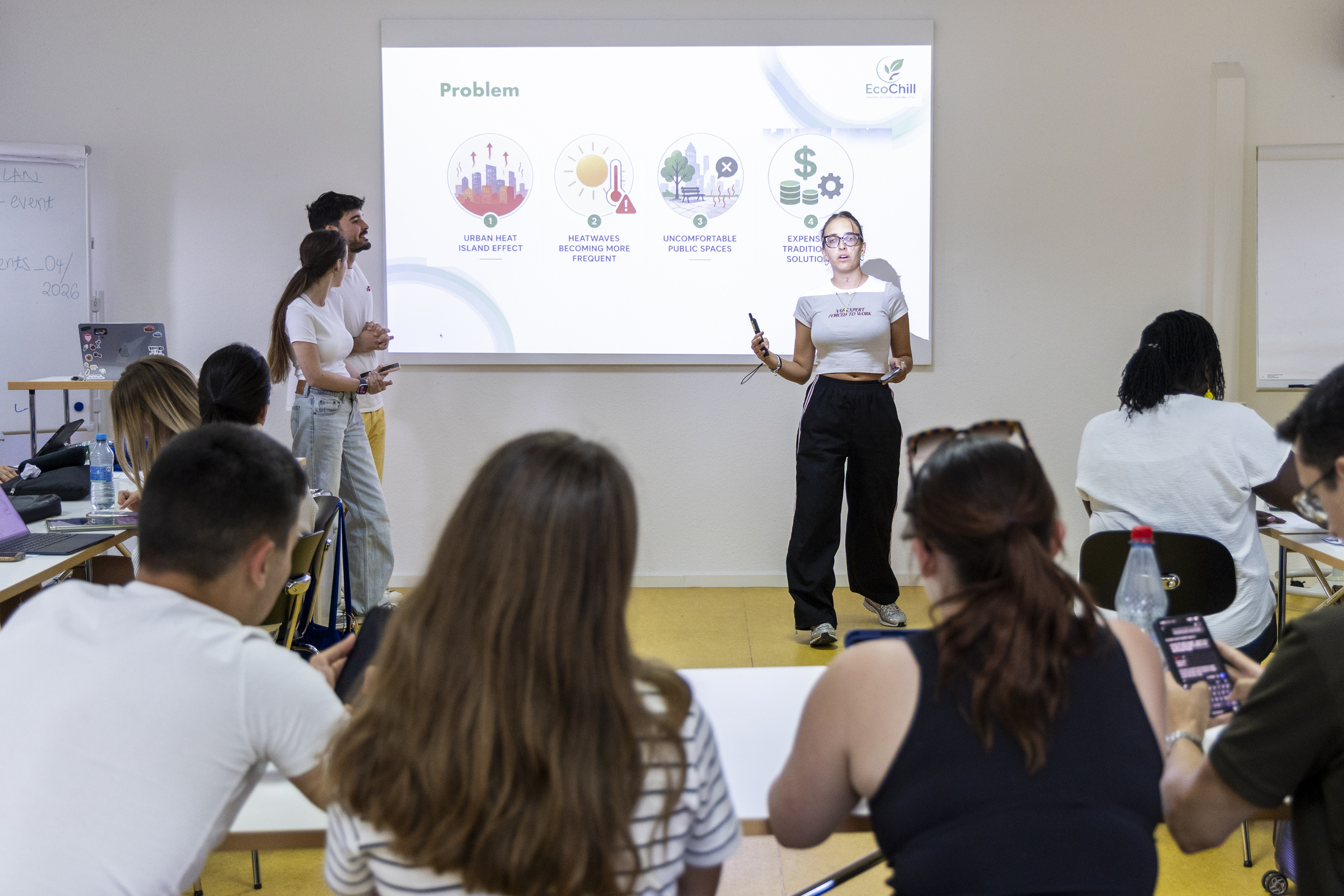
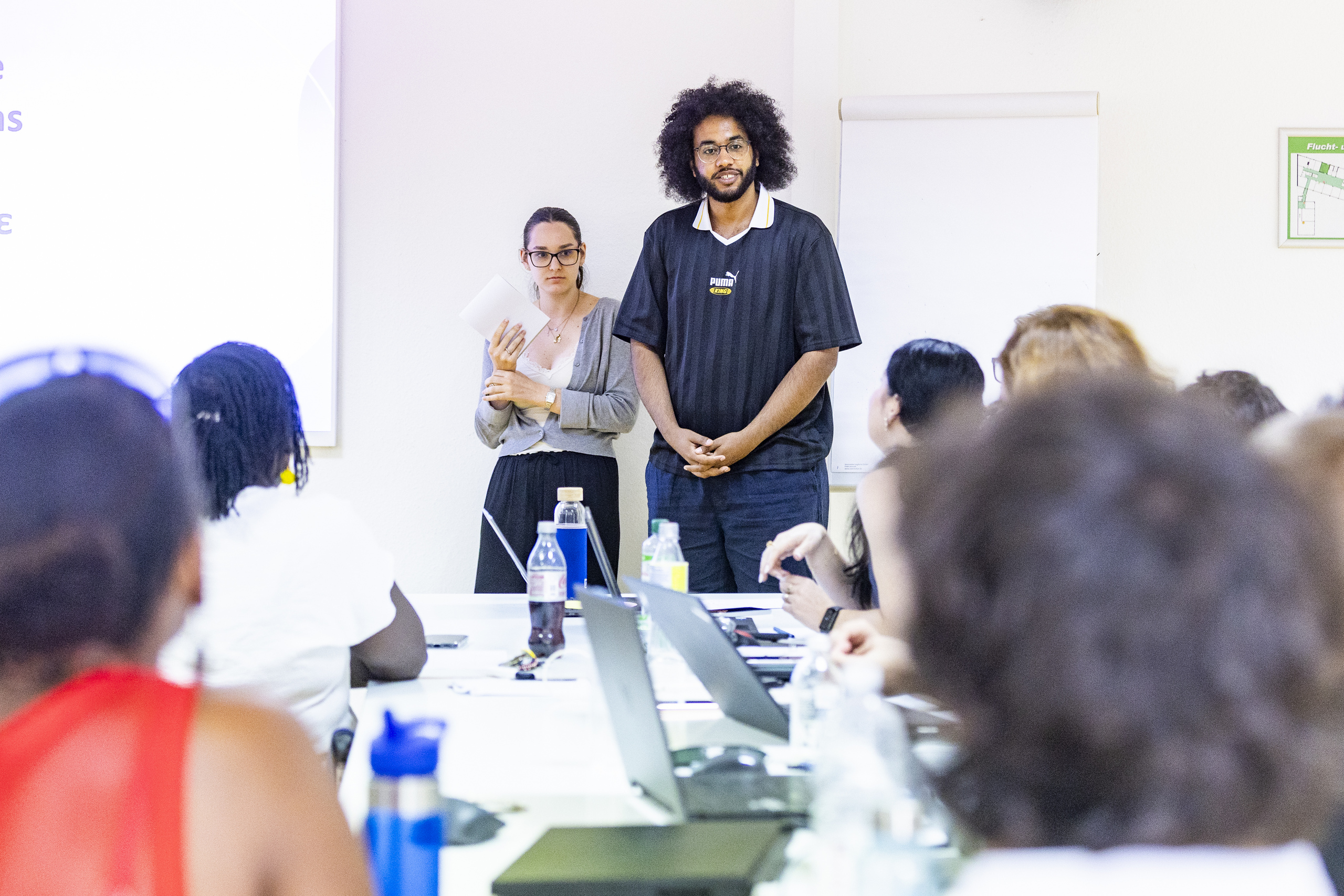
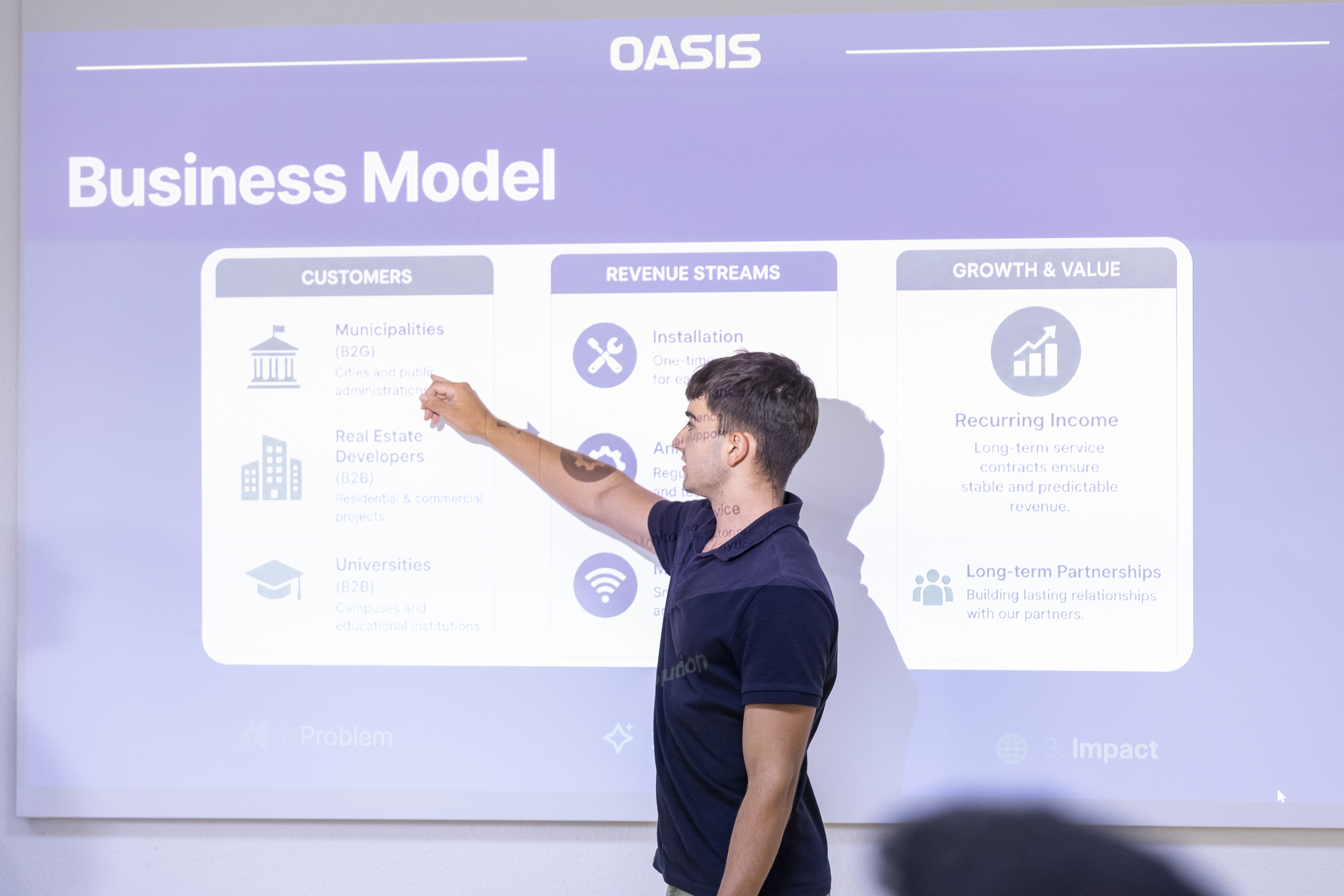
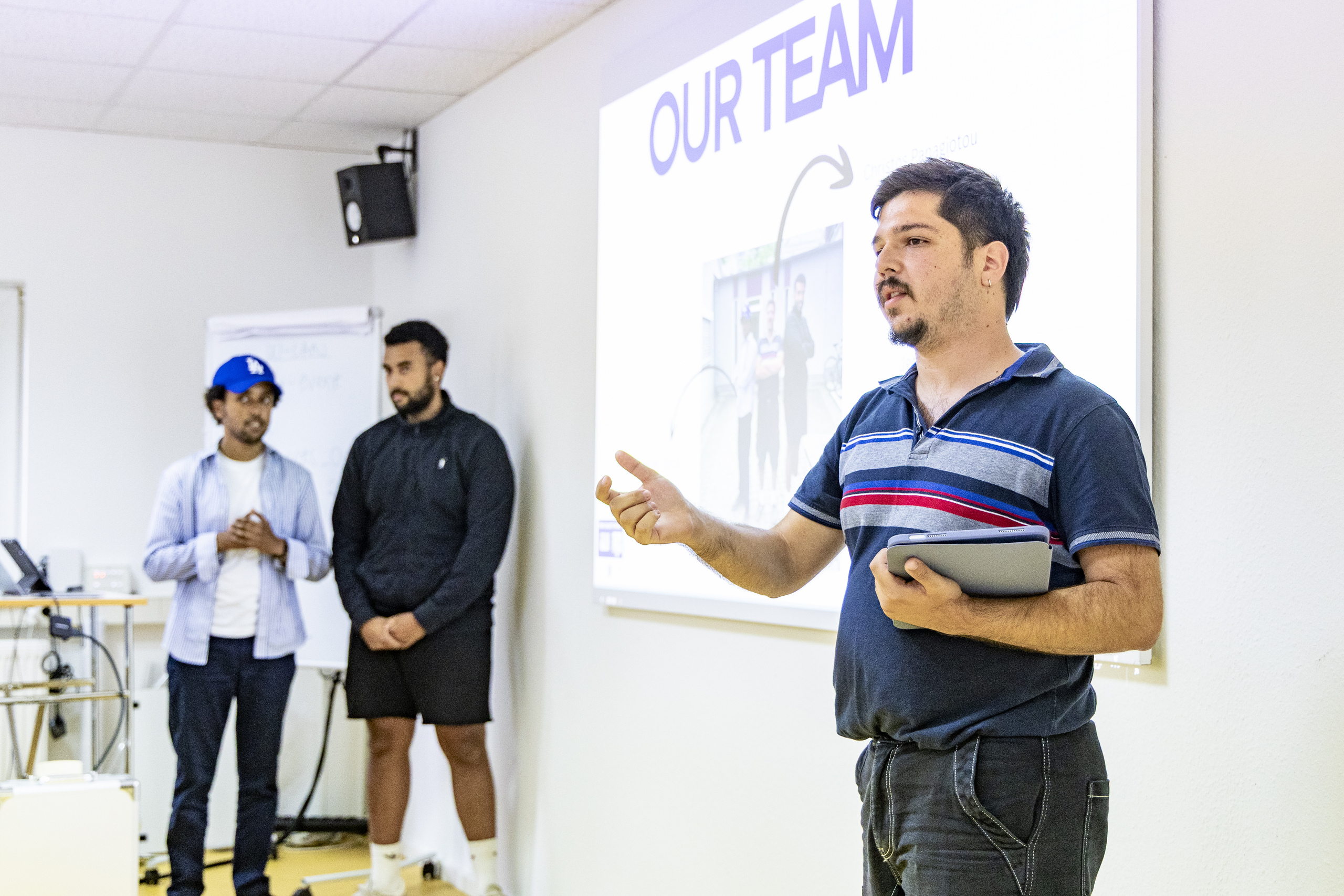
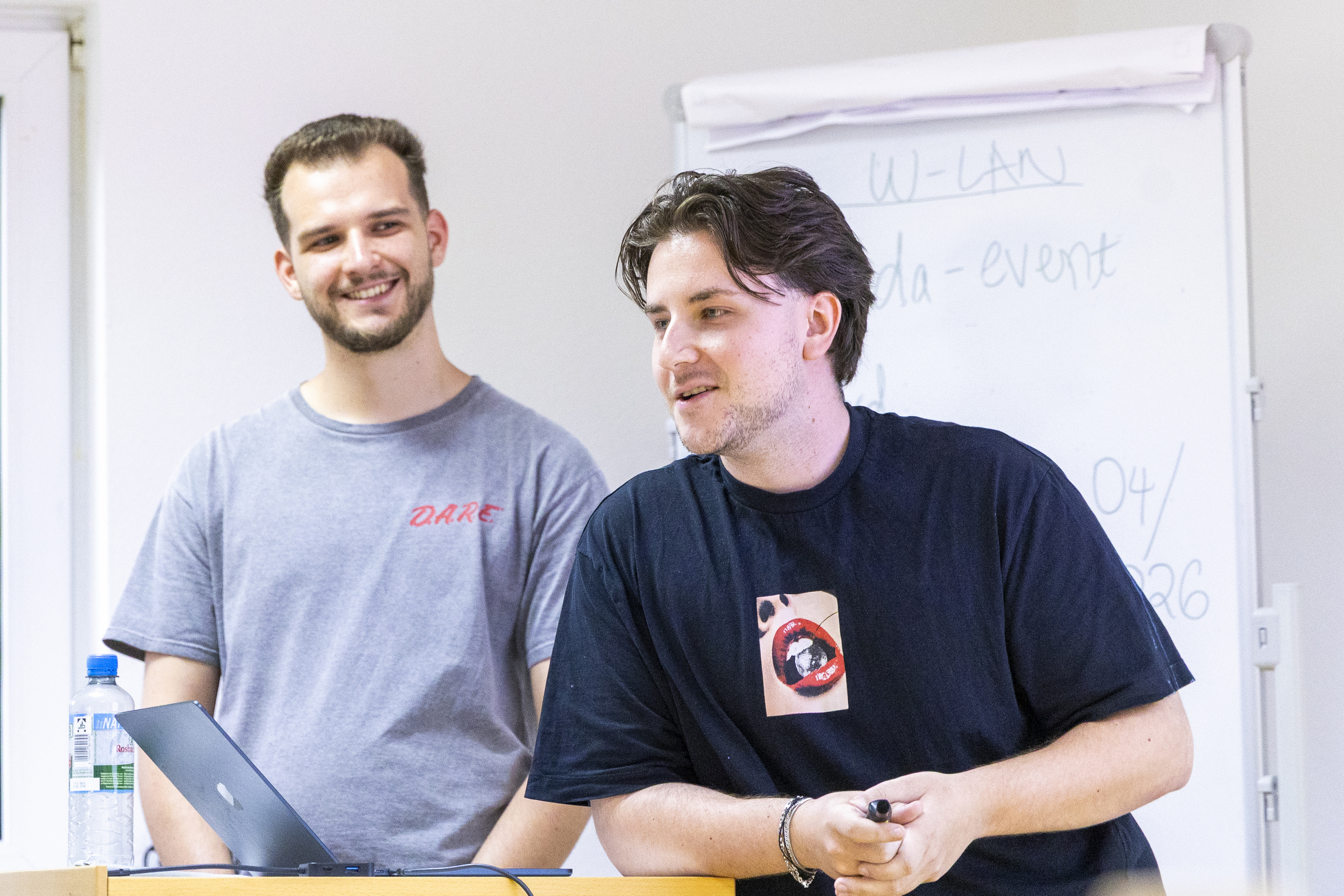
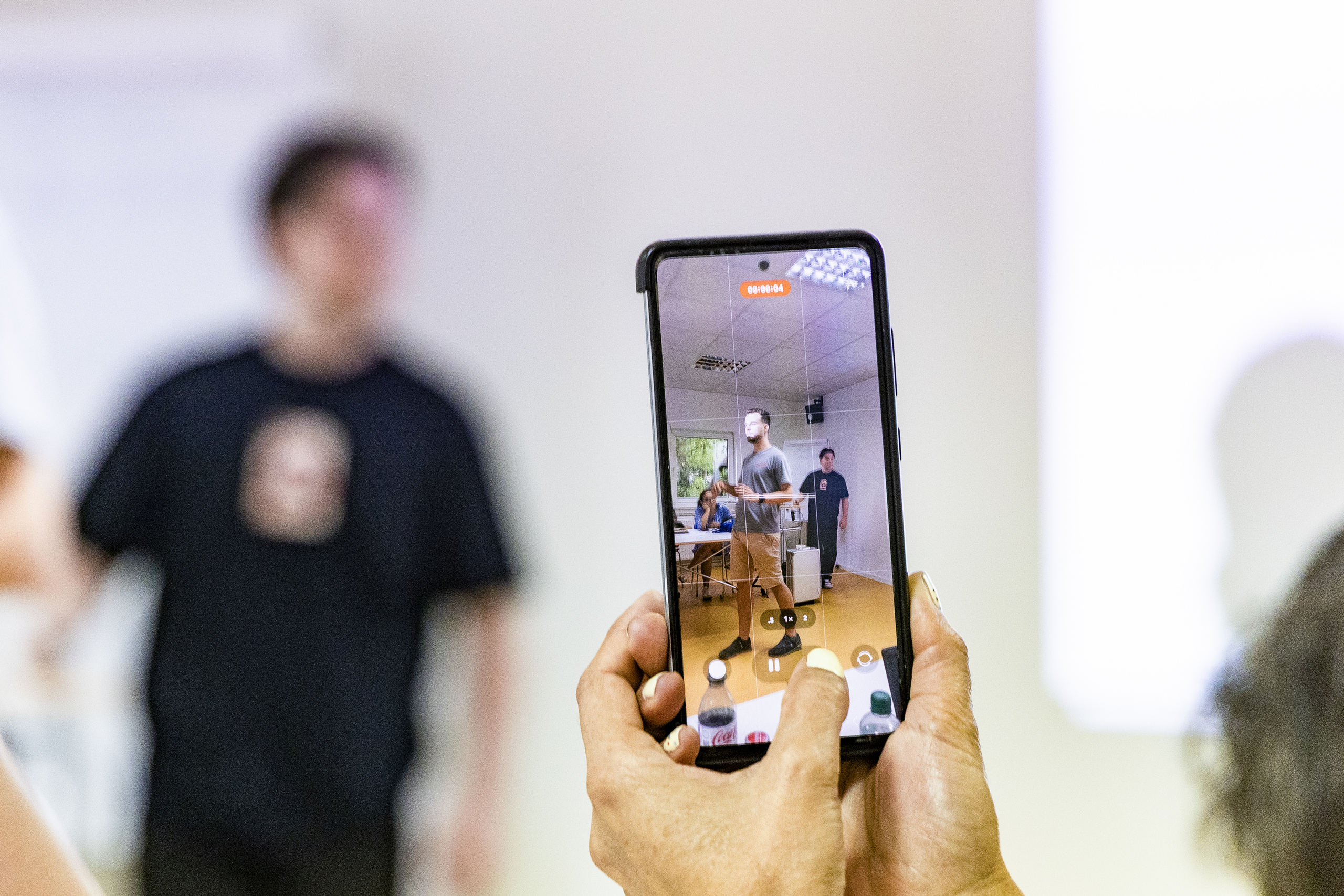
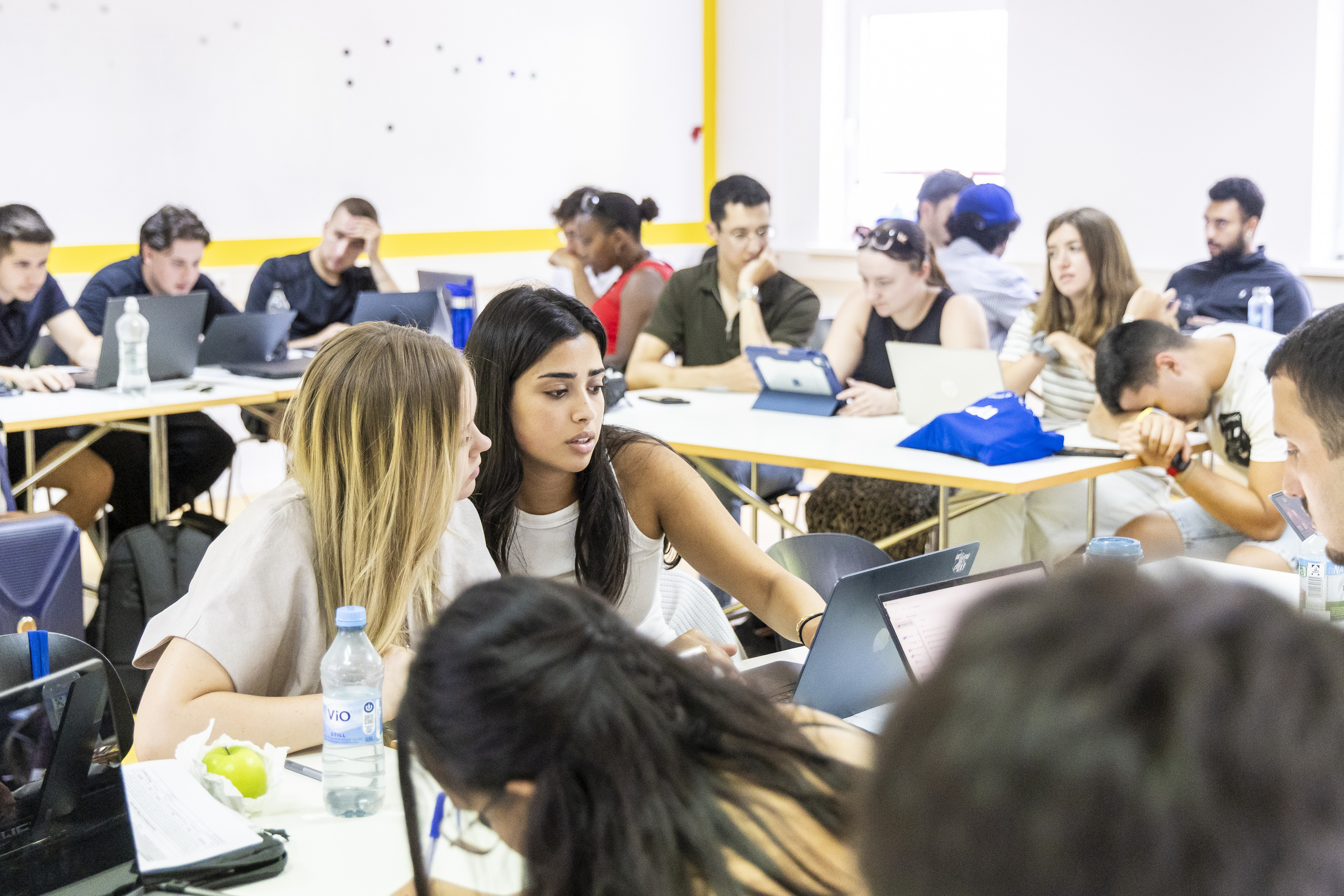
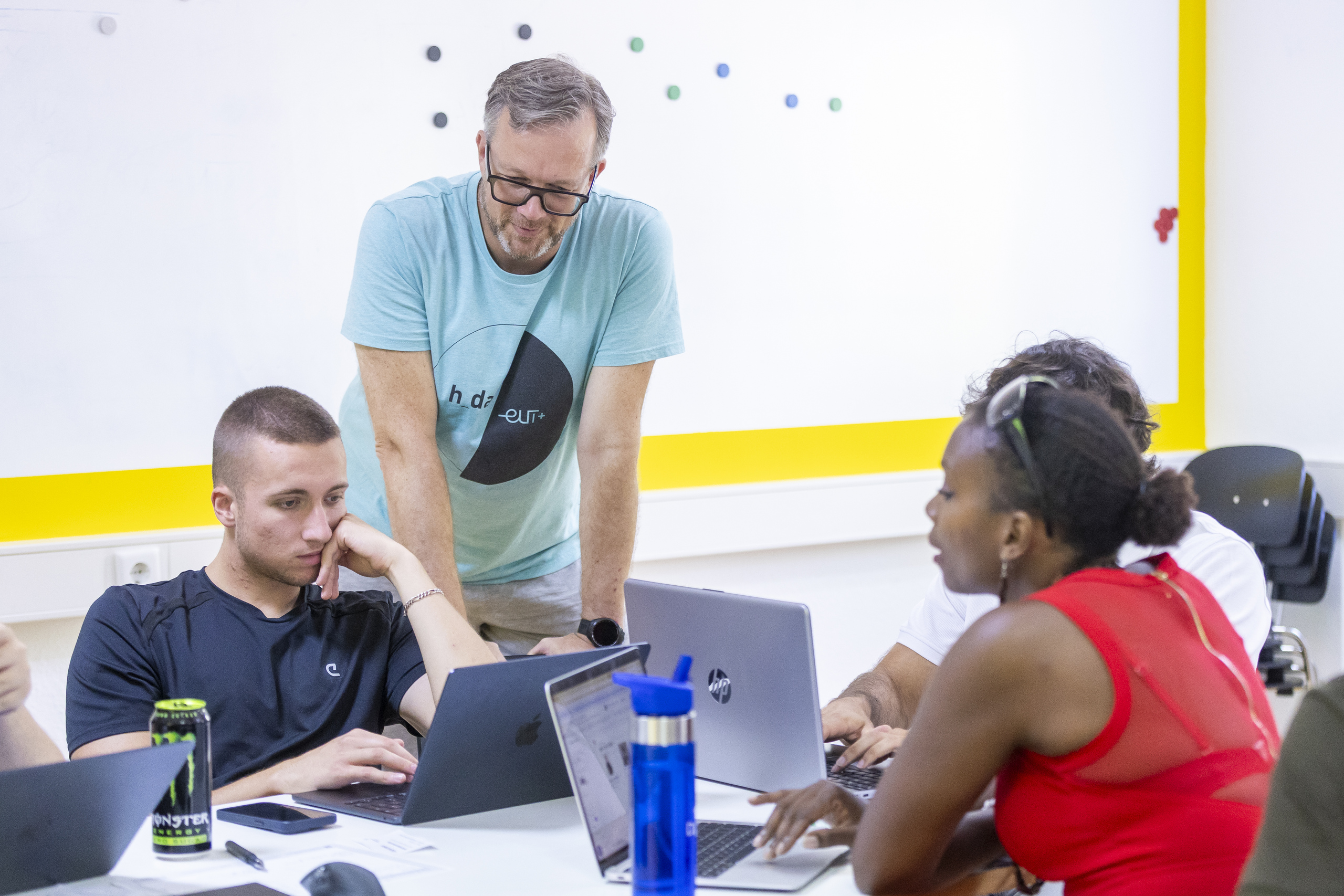
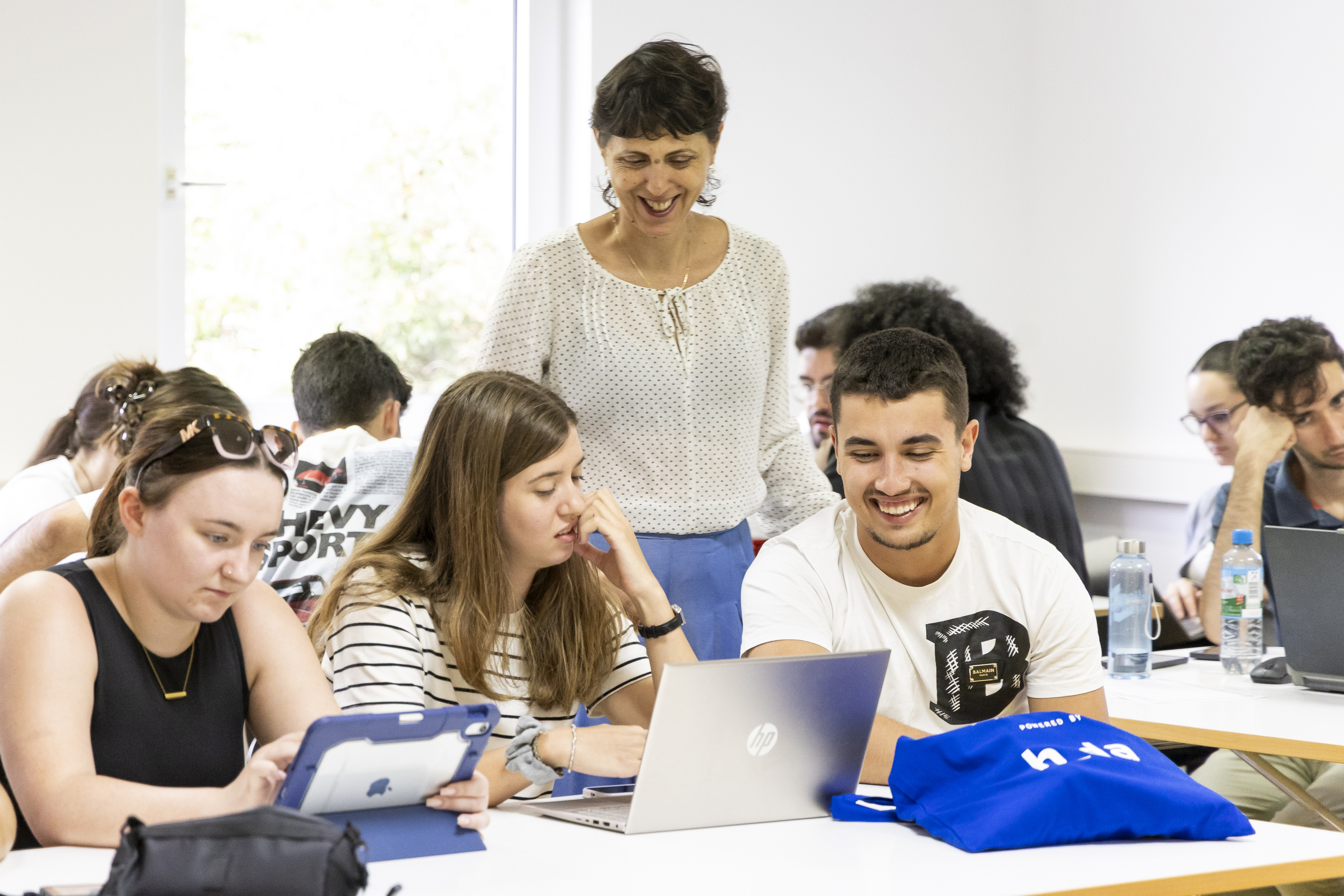
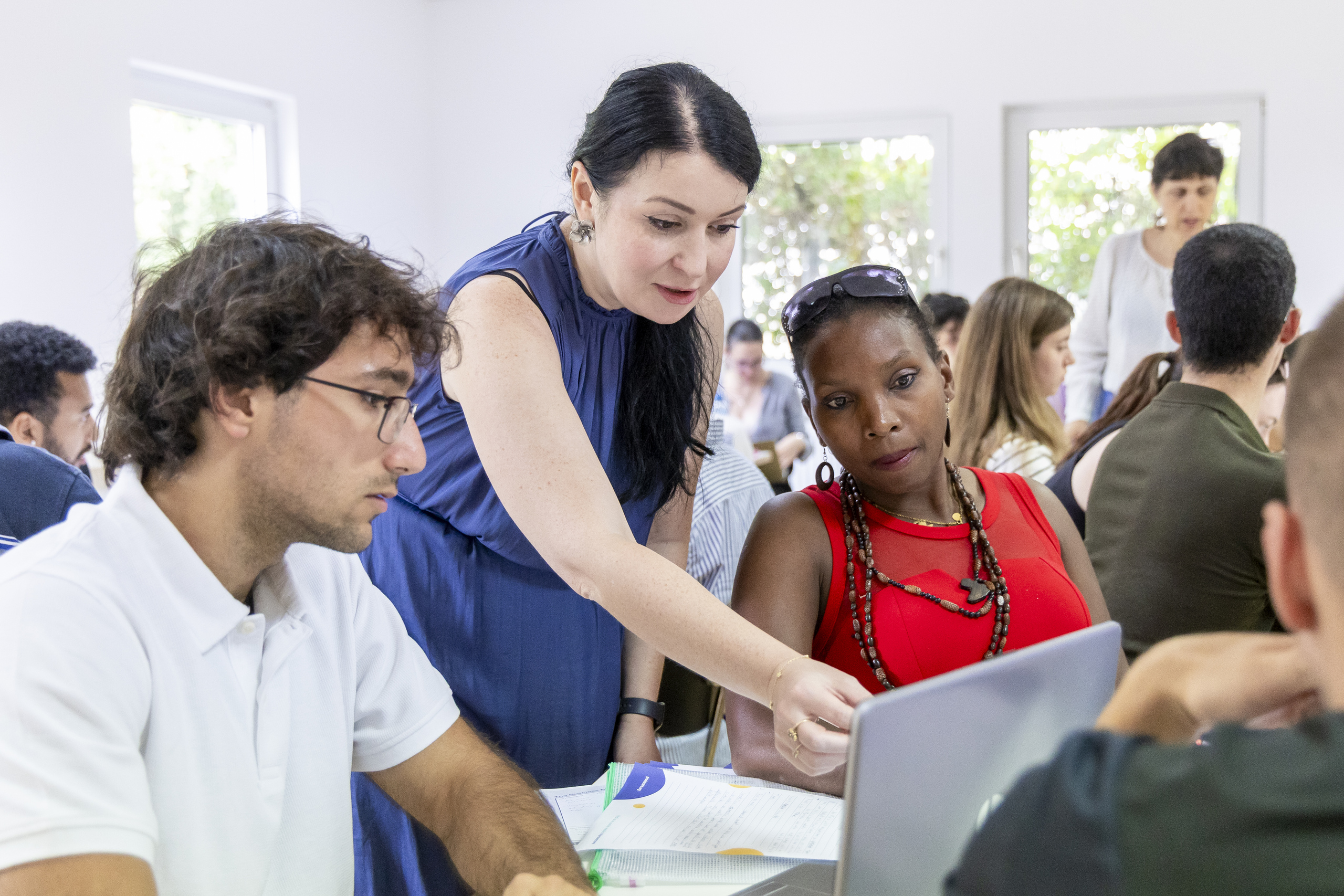
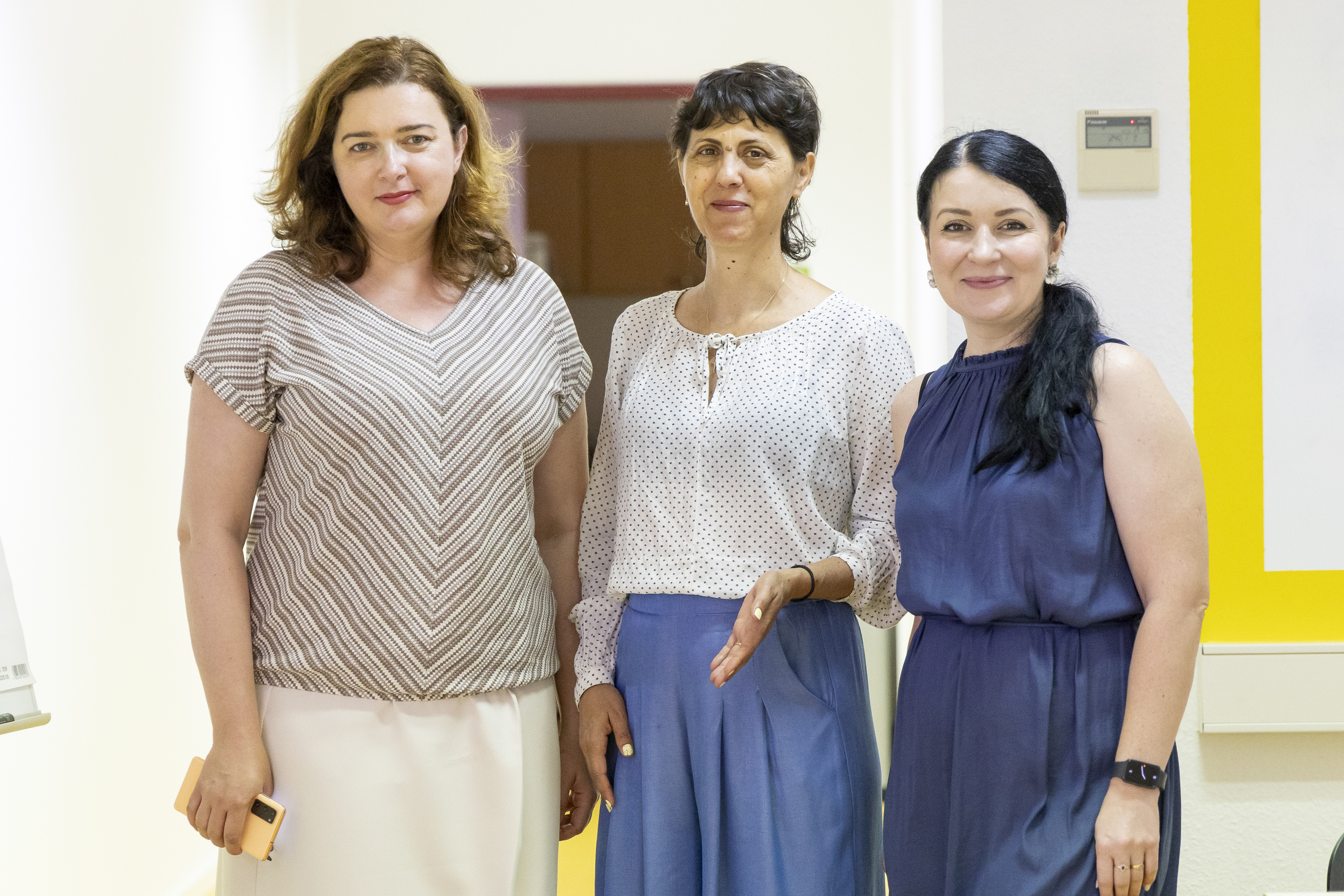
Exciting last day: The teams present their business ideas and receive further intensive coaching from Stefan Kohn as well as Adriana-Mirela Sava, Anca Constantinescu-Dobra and Veronica Maier, his three colleagues from the Technical University of Cluj-Napoca (UTCN), who accompanied the Romanian students to Darmstadt. All photos: h_da / Samira Schulz
One of the teams wanted to counteract urban heat by means of climbing plants on lampposts and roofs; another group’s solution was shady green pavilions; others planned to design a car-parking app into which users feed information about free spaces and share it with everyone else. Still others wanted to use modern motion detectors to reduce light pollution, while another team’s goal was to enable easier access to mental health help.
Two start-ups both thought about how to make moving house easier and developed apps designed to provide support not only on a functional level but also on an emotional and social one. Finally, two teams dealt with specific AI topics: one team examined AI in relation to staff recruitment, while another’s objective was to help users choose the right AI tool.
AI as “threat” and “enabler”
Artificial intelligence played an important role in all the pitches. “On the one hand, AI is a threat; on the other, it’s an enabler,” says Stefan Kohn, who gave each team some brief feedback after their pitch. After all, presenting is a skill that needs to be learnt, too! “Always do several practice runs so you don’t have to improvise!” is one piece of advice. “Speak loudly and clearly!” “Don’t overload your slides!” he advises. Nevertheless, Kohn was very pleased with the students, who clearly got on well outside the classroom too and were generous with their applause – even if things didn’t always run smoothly in the heat of the moment.
Focus on teamwork
Above all, however, they all share one key takeaway: the confidence that they can launch a start-up and have acquired the necessary skills to do so. Whether as a lone warrior or part of a team. “I’ve gained more self-confidence and benefited from exchanging ideas with students from other countries,” says Georgi Ivanov from Sofia. “Teamwork is very important: four people from four EUT+ universities, four approaches – and then ultimately a common solution; that’s great.” Angela Peters from Dublin also appreciated the team’s inspiring ideas: “Different countries, different perspectives, different experiences, one result,” she says. “The programme has given me a toolbox and with it the confidence to set up my own business.” But she has also learnt, she says, how AI can help her to use those tools.
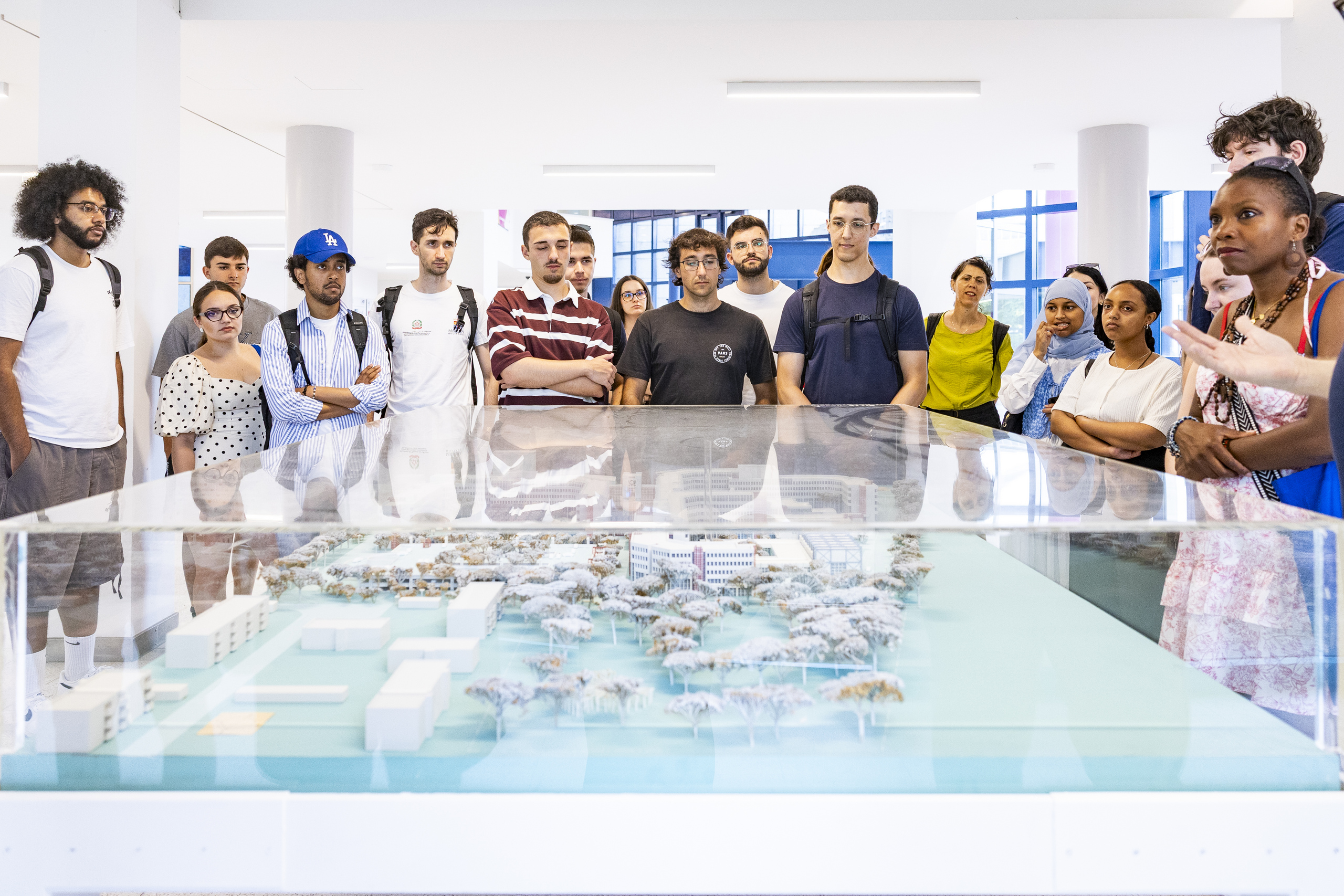
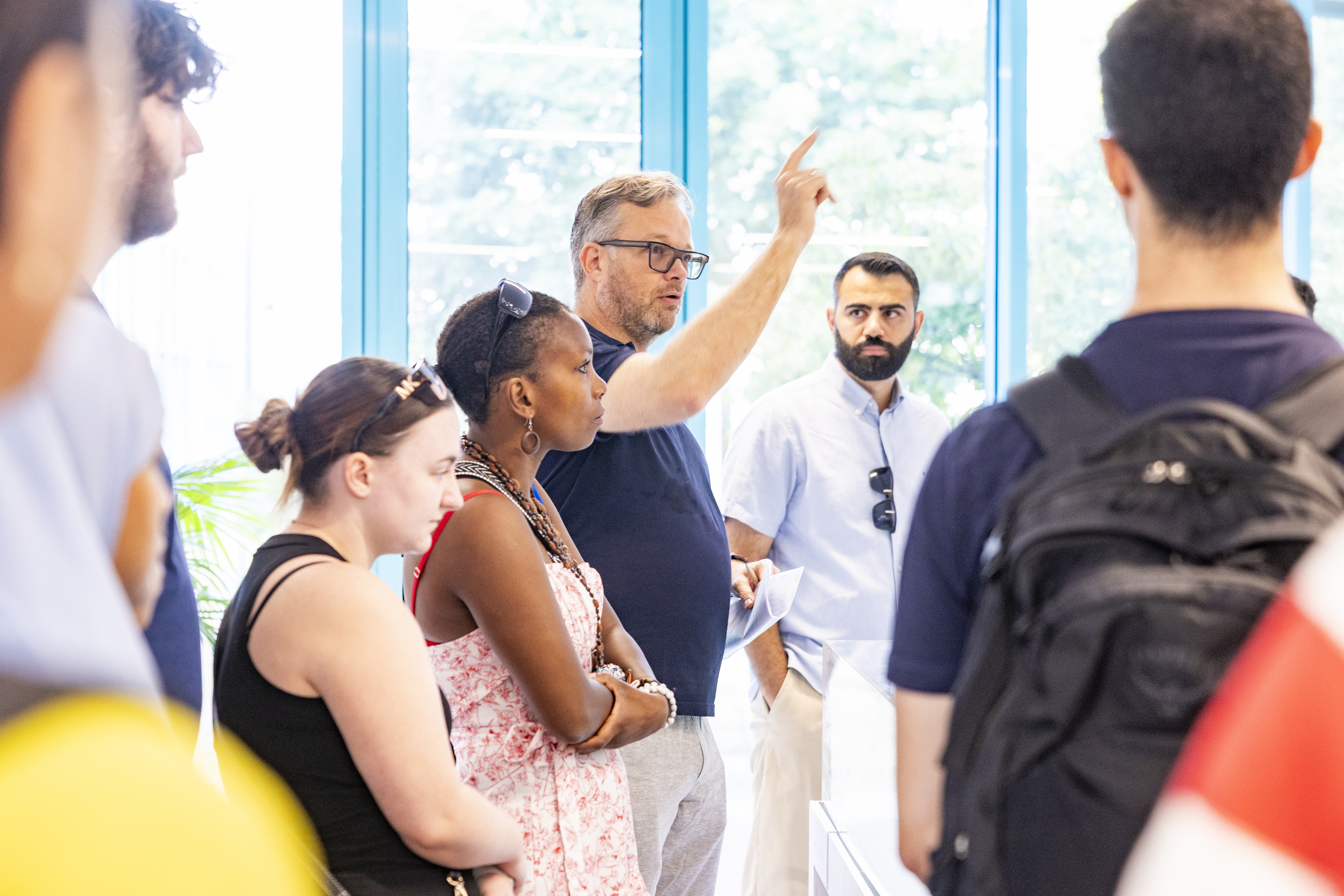
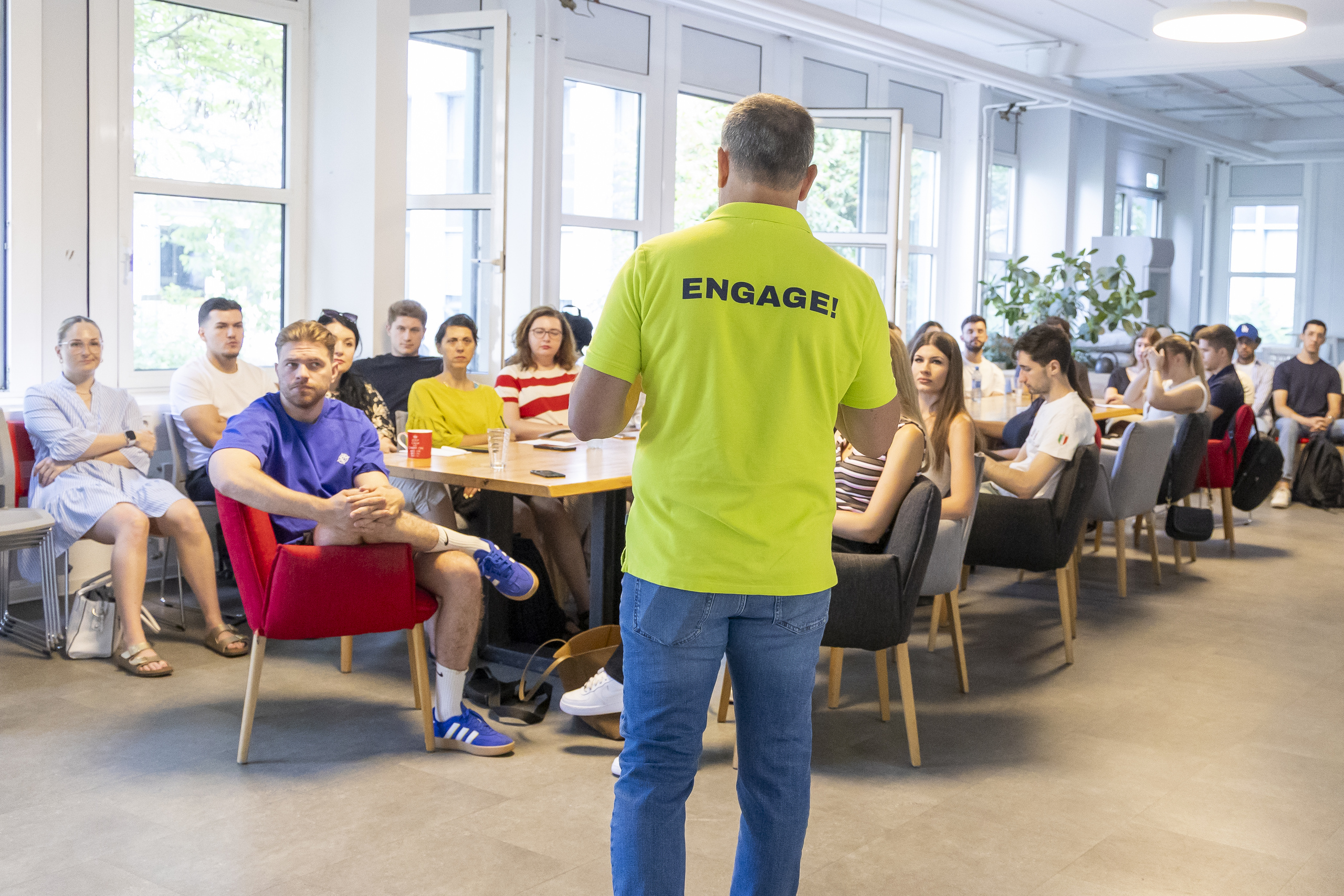
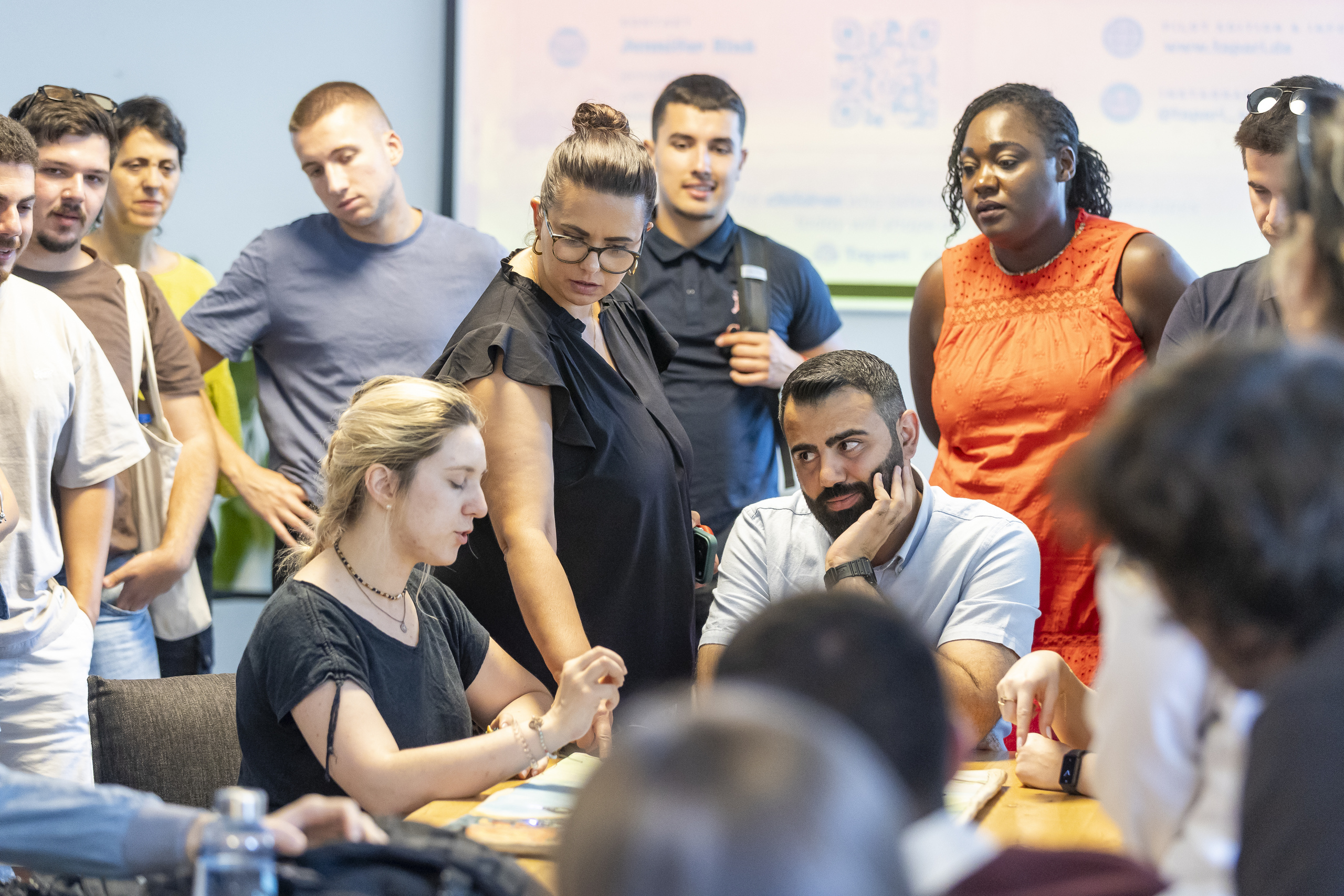
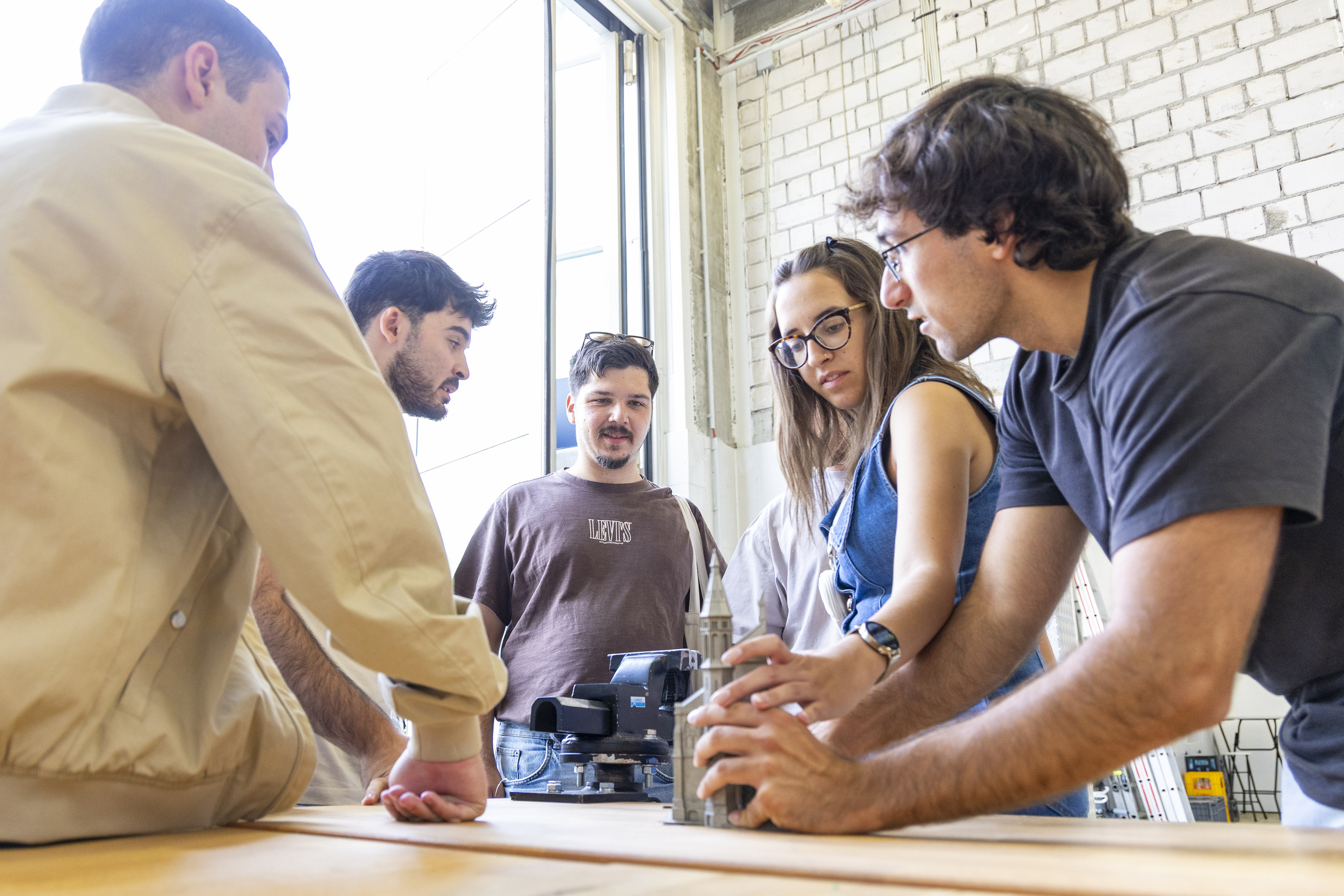
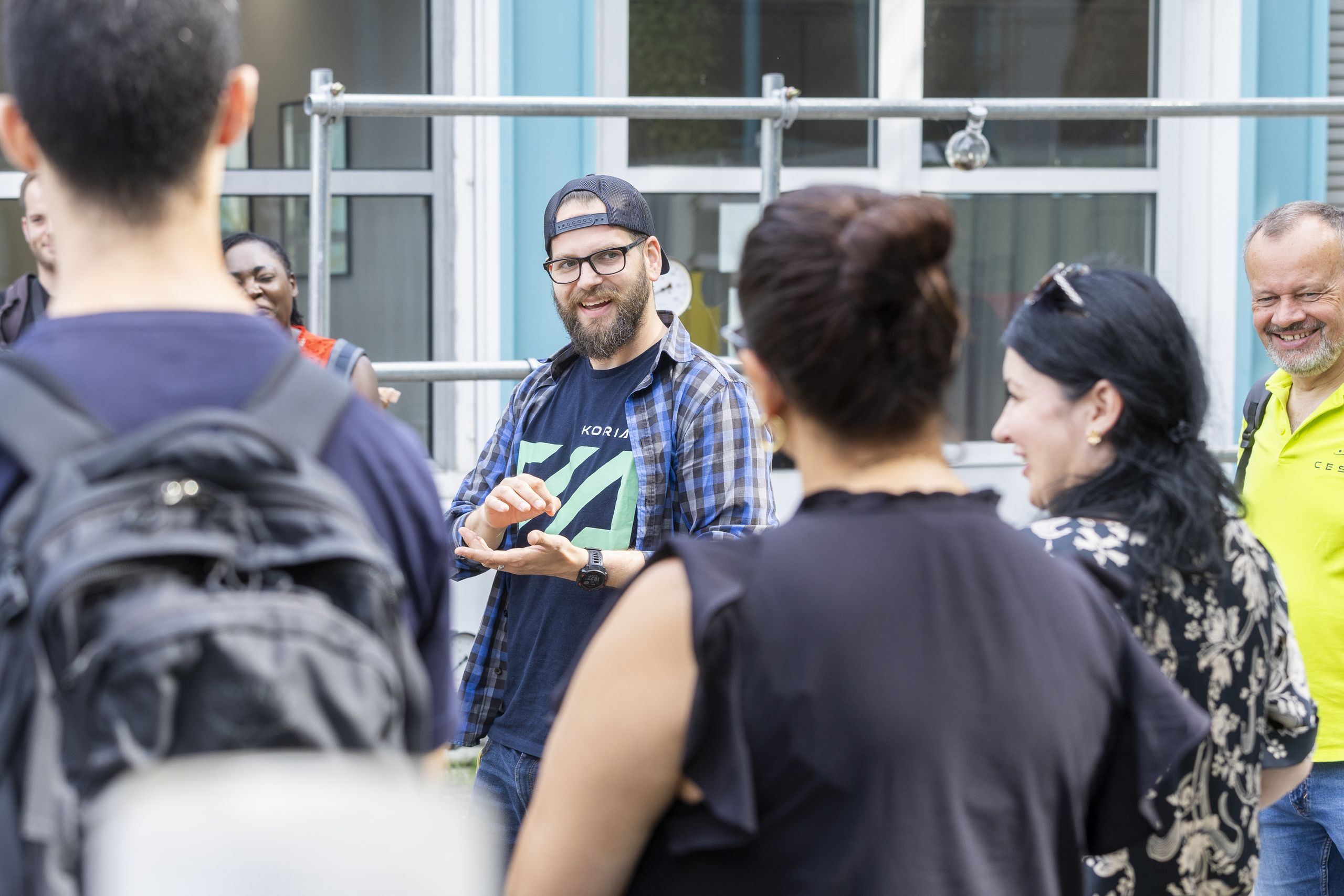
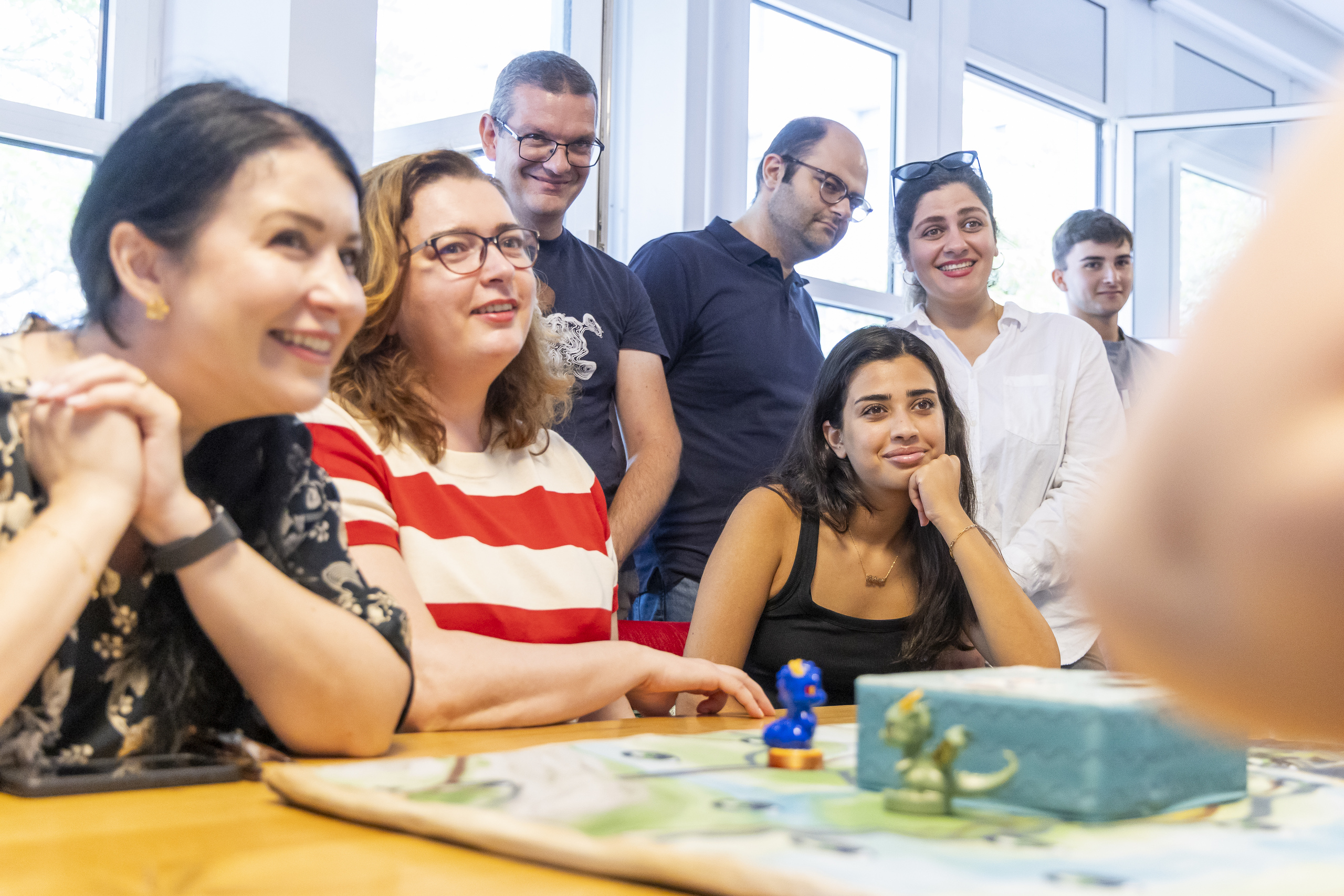
Discussion with representatives from various start-ups in the Rhine-Main region: Visit to HUB31 in Darmstadt. All photos: h_da / Samira Schulz
Viviana Dohi from Romania praises the structured and dynamic programme, but above all the opportunity to gain an insight into research institutions such as GSI and international companies such as Merck on the one hand and start-ups on the other. The teams complemented each other through their diversity, she says: “The Spaniards are creative, the Germans are organised and the Romanians see to good vibes.”
Yannik Woldetsadik from h_da gives similar feedback about his team: “The Bulgarians are energetic and zealous; they’re always five steps ahead.” He says that the Irish member of his team was organised and meticulous, his Spanish colleague contributed some strong graphic design concepts, while he himself provided general guidance. “Overall, I really enjoyed the mix of excursions and the knowledge we learnt.” For Alejandro Martinez Guillermo from Spain, the mix of nationalities and temperaments was a real advantage on a personal level. Above all, however, “I now feel ready to start my own business,” he says.
Creative and innovative together
Presian Siderov from Bulgaria is convinced: he would not dare to do this as a lone warrior, but only as part of a team. He says that the programme and encounters with participants from the other EUT+ universities exceeded his expectations: “It was so rich and varied, and we were very productive.” He can now imagine starting his own business: “Idea, planning, implementation – we practised everything in a secure environment.” However, he would only take the step towards setting up his own company as part of a team. “All the greatest innovations evolved out of groupwork. Only together can we be creative and innovative.”
Related articles
impact, 23.04.2026: EUT+: "THE SENSE OF BELONGING IS SO IMPORTANT"
impact, 02.02.2026: "HEAR, HEAR!"
impact, 09.06.2025: "BIG IMPACT IN THE ROBOTICS COMMUNITY"
impact, 06.06.2025: "A PEACE AND DEMOCRACY PROJECT"
impact, 05.06.2025: EUT+: EUROPEAN FIREWORKS OF IDEAS
impact, 09.07.2024: FROM BEER TO BROCCOLI
impact, 18.03.2024: FANCY A RAIL ADVENTURE ACROSS EUROPE? COME ON BOARD!
Contact our Editorial Team
Christina Janssen
Science Editor
University Communications
Tel.: +49.6151.533-60112
Email: christina.janssen@h-da.de
Translation: Sharon Oranski
Photography: Samira Schulz
Would you like to organise a BIP?
h_da’s International Office is happy to help you with the planning and implementation.
Contact:
Katharina Niederhacke
+49.6151.533-60661
erasmus-bip@h-da.de
international.h-da.de/
Links
EUT+ website
GSI
HOLM
Professor Kohn’s website (in German only)
DAAD – Erasmus+ (in German only)
HUB31 (in German only)