


Research into wealth tax
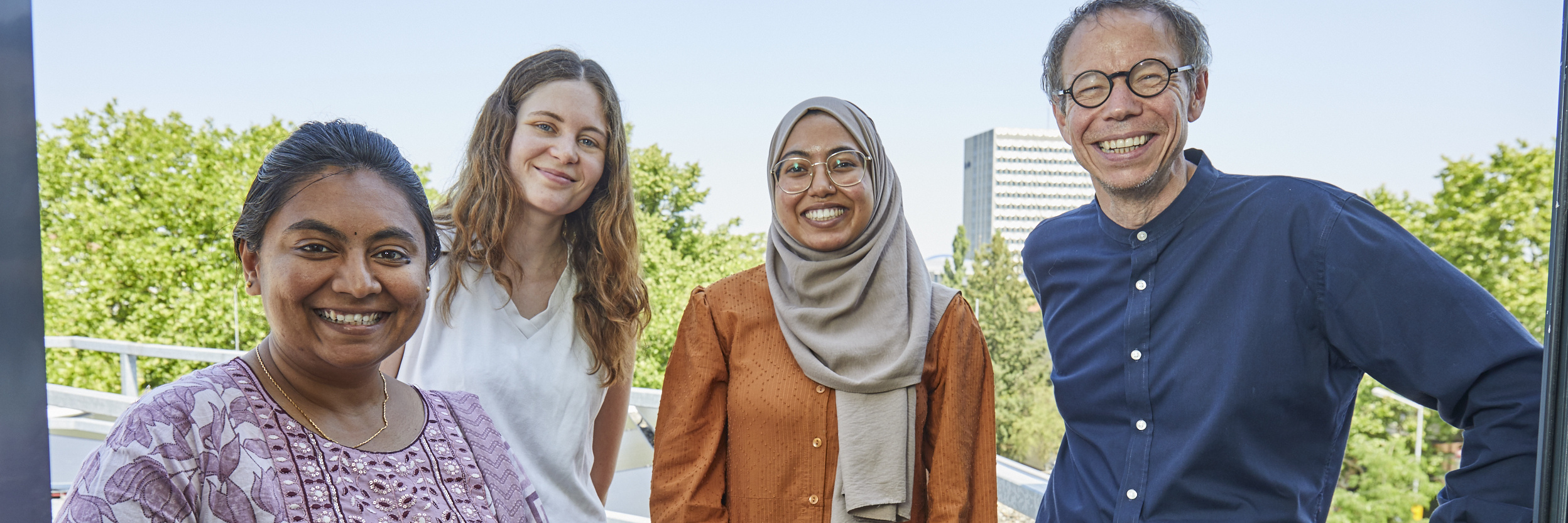
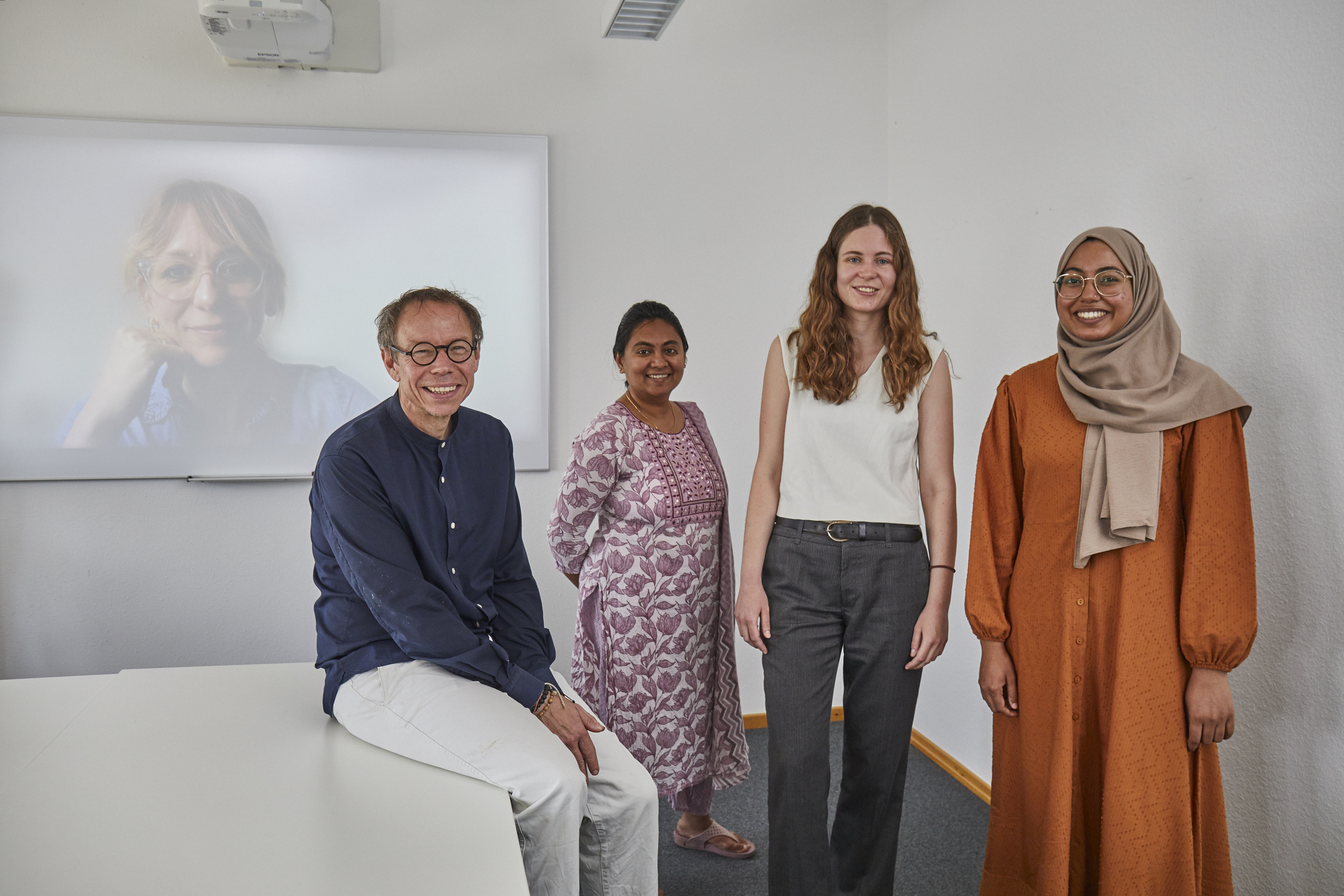
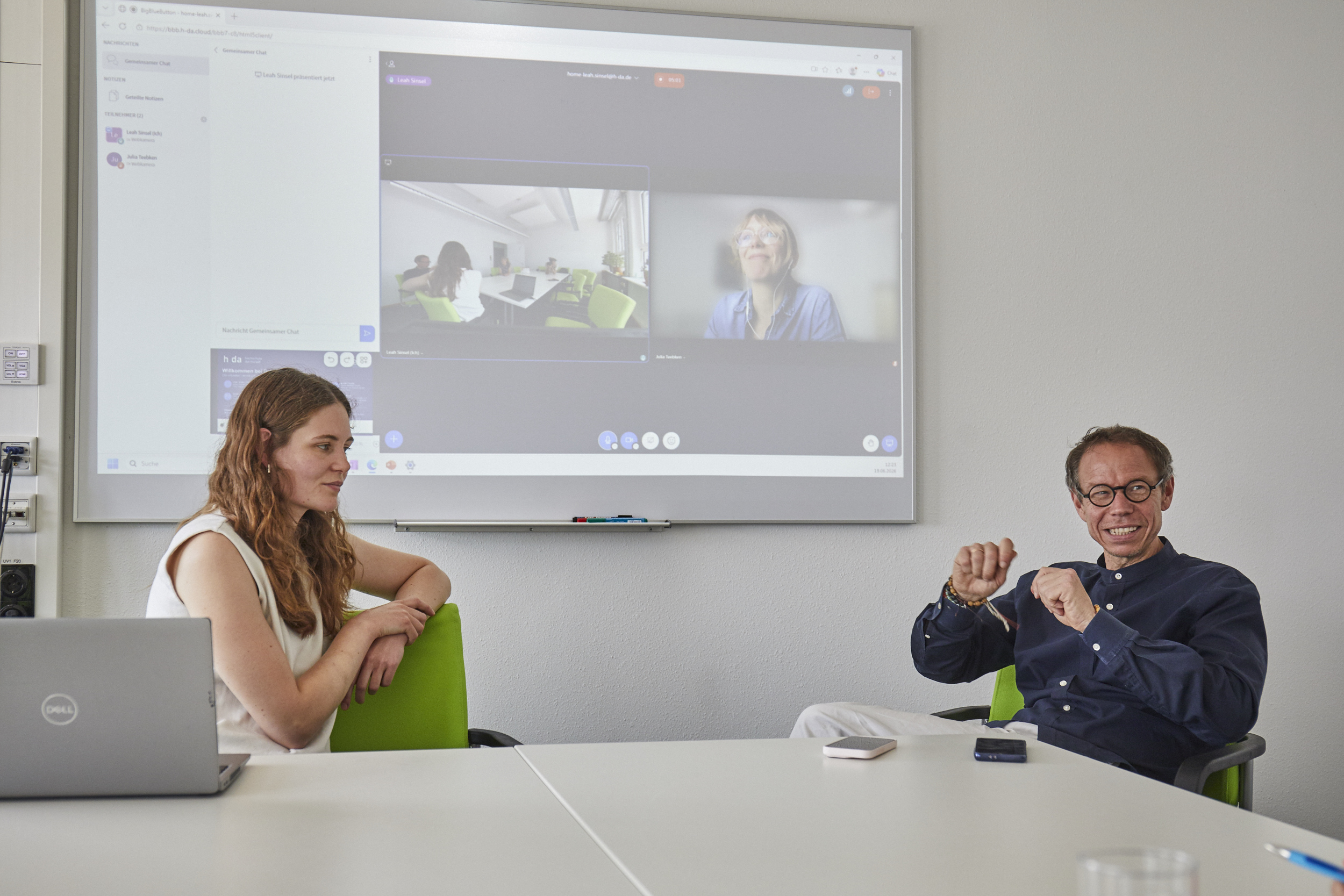
Most of the time, climate crisis, social inequality and cash-strapped public coffers are discussed as separate issues. However, “The Role of Wealth-Related Taxes in Socio-Ecological Transformation”, a research project at Darmstadt University of Applied Sciences (h_da) funded by the Hans Böckler Foundation, shows that wealth-related taxes could finance socio-ecological transformation, set the political course and reduce distributional conflicts. Another finding is that many of these instruments meet with broad consensus, yet they have so far scarcely been used to achieve political goals. In this interview for impact, Professor Ulrich Klüh, project leader, and Leah Sinsel from Darmstadt Business School at h_da, together with Dr Julia Teebken from the Leibniz Institute for Research on Society and Space (IRS), present their research results.
Interview: Christina Pfänder, 29.6.26
impact: What was the motivation for your research project – and what was the key question that guided you?
Professor Ulrich Klüh: We have examined the contribution that wealth-related taxes can make to socio-ecological transformation – that is, to restructuring the economy and society in light of climate change, loss of biodiversity and other ecological challenges. The motivation behind our project was that wealth-related taxes have so far attracted surprisingly little attention in three key areas: financing this restructuring process, its political governance and the associated distributional issues. After all, this transformation spawns both winners and losers.
impact: You describe the current situation as a “polycrisis”. What makes this term so important for your project?
Klüh: Many people consider that the transformation has ground to a halt. It is more the case that we are experiencing a greenlash or a backlash – in other words, a backward step. That is why we no longer wanted to talk only of transformation, but to make it clear that we are dealing with numerous different yet closely interwoven crises. Against this backdrop, we were particularly interested in why the interconnection between climate, financial and distributional issues has so far only rarely been translated into concrete political strategies.
impact: What are your project’s key findings?
Klüh: Our project shows that wealth-related taxes are far more than just a financial instrument. They can also set the political course and show how close the connection is between questions about distribution and ones regarding environmental change. One example is property tax. By levying heavier taxes on large and land-intensive properties, it would, in principle, be a very suitable method for reducing land consumption. This would create incentives for a more economical use of land.
impact: In your opinion, how could the socio-ecological transformation be financed?
Klüh: A general wealth tax is an effective instrument here. We know that more and more wealth is being amassed in the hands of very few people. A wealth tax on particularly wealthy individuals could be used specifically to fund ecological and social projects in the healthcare sector, for example, where it is already evident that climate change calls for substantial additional investment.
impact: In May, you organised a final workshop to conclude your research project. What specific topics did you discuss?
Klüh: In the first instance, the workshop examined which wealth-related taxes are appropriate for different political goals and how they might take shape in practice. The question of whether an inheritance tax or a general wealth tax is the more suitable approach was discussed, for example. It was interesting in this context that the public tend to endorse a general wealth tax, whereas the academic and political communities frequently favour inheritance tax. Another of the issues debated was whether total wealth or specific assets – such as large properties, yachts or private jets – should be taxed more heavily. Also worth noting was the fact that there was significantly more consensus among the participants than expected – but this consensus is so far scarcely reflected in politics.
impact: The aim was to draw together perspectives from climate, labour market, economic and social policy. Did you succeed?
Julia Teebken: Yes. What was particularly valuable was the exchange between stakeholders from areas who otherwise only rarely discuss with each other. First, we examined the various crises from their respective angles, and then we talked about individual policy areas in increasing detail. This revealed that the tax instruments discussed can produce very different effects: while property tax, for example, can provide incentives for a more economical use of land, a general wealth tax could finance specific environmental and social investments. Often, too little consideration is given to this distinction in the political debate. We would, however, have liked to see more perspectives from everyday practice – particularly from local authorities and people dealing with labour market or environmental policy.
Klüh: In addition, the workshop showed that people working in environmental and climate policy often do not take finance into account – and vice versa, although these issues are closely interconnected and ought to be discussed together.

impact: Were there any topics or areas of conflict where there was a particularly wide difference of opinion?
Klüh: What especially surprised me was that the differences with regard to wealth-related taxes were smaller than expected. It was less the goals that were hotly debated than the question of which instruments – such as an inheritance tax, a general wealth tax or the higher taxation of certain assets – are the most suitable for achieving them.
Leah Sinsel: The greatest differences manifested themselves in conjunction with the question of economic growth. Some were convinced that economic growth will still be possible in the future – albeit under different conditions and with more sustainable ways of doing business. Others held the view that socio-ecological transformation and further growth are incompatible in the long term. There were many slightly varying opinions in between, but this debate was a common thread throughout the whole workshop.
impact: Your aim in the workshop was to discuss not only individual tax instruments but also how social change can succeed overall. What insights can be drawn from this for political practice?
Teebken: It amazed me that many of the approaches we discussed – from inheritance tax and the targeted taxation of particularly wealthy individuals to levies on very resource-intensive luxury goods – meet with broad approval, but still no changes are implemented. That is why we need to gain a better understanding of where change is being blocked and what interests are behind it. Political processes are often geared towards avoiding conflict. In fact, however, we ought to bring distributional conflicts and different interests out into the open.
Sinsel: Our media analysis revealed that those in favour of wealth-related taxes tend to use fairness as their argument, while those against them raise economic or practical objections – such as bureaucracy, capital flight or less investment. We can derive from this that we need to address these arguments more thoroughly and respond to them with concrete ideas.
impact: In your view, what arguments are there against the frequently expressed assumption that wealth-related taxes harm the economy?
Klüh: A few years ago, a Wealth Tax Commission in England examined these arguments very thoroughly. In summary, it found that many of these problems can be solved, under the proviso that wealth-related taxes are not so high that they are perceived as expropriation. For example, there is something called exit tax: anyone who transfers assets abroad is taxed a second time when they leave the country. Beyond that, various possibilities exist for structuring wealth-related taxes effectively. Meanwhile, researchers have even concluded that the high concentration of wealth in the hands of a few people tends to slow down economic dynamism. To that extent, wealth-related taxes can, under certain conditions, even foster economic development.
impact: What will happen now with the project results – and what would you do differently next time?
Teebken: There will be two publications based on the findings from the workshop. One addresses stakeholders working in everyday practice and is intended to demonstrate the role that wealth-related taxes can play in various policy areas. The second looks at policy options and which strategies can be derived for handling the polycrisis. Especially the second day of the workshop showed how productive the discussions were. We would like to give even more room to this next time.
Klüh: As far as content is concerned, our next research projects follow on from this one in several areas. One topic is macroeconomic models, which we are further developing as part of Leah Sinsel’s doctoral thesis and a European research project, among other things.
Related articles
impact, 20.04.2026: ROBUST AND RESILIENT – BUT DEMANDING
impact, 02.02.2026: WHEN DEMOCRACY COMES UNDER PRESSURE
impact, 19.04.2024: Dialogforum Postwachstumsökonomie (in German only)
impact, 03.01.2023: FUNDING THE FIGHT AGAINST CLIMATE CHANGE
Contact our Editorial Team
Christina Janssen
Science Editor
University Communications
Tel.: +49.6151.533-60112
Email: christina.janssen@h-da.de
Translation: Sharon Oranski
Photography: Jens Steingässer