


German-Ukrainian cooperation in social work
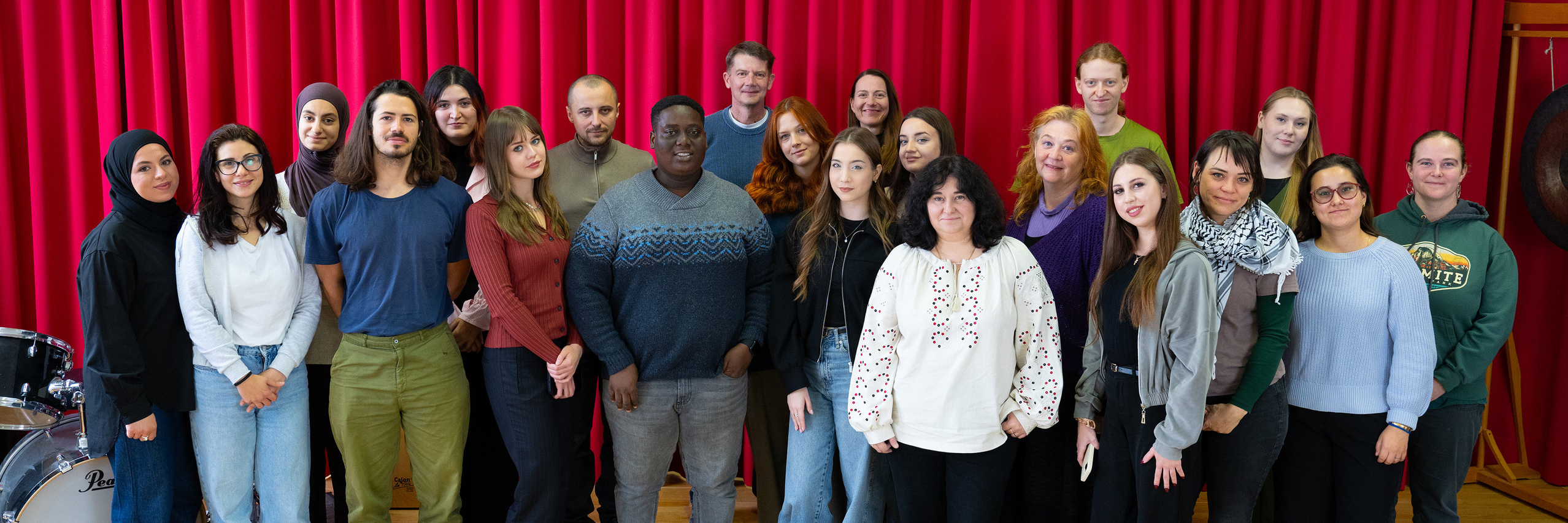
The war poses enormous challenges for social workers. At an International Autumn School in Darmstadt, Ukrainian and German experts and students discussed support measures and trauma management. It highlighted how much both sides can learn from each other – and the importance of all kinds of help.
By Kilian Kirchgeßner, 2.11.2026
When Ruslan Zhylenko talks about the wave of emotions that sometimes overwhelms him, it is the following image that immediately comes to his mind: the thousands and thousands of people from throughout Ukraine, internally displaced persons seeking refuge in Uzhhorod, a city in the far west of the country. Children and adolescents who arrive traumatised, some scarred by the war, others recently orphaned. “We work like in a field hospital,” says Professor Zhylenko, a pioneer of social work in Ukraine: “First we take care of those who need our help most urgently.” Together with colleagues and some of his students, he came to Darmstadt to take part in an International Autumn School – a very intensive exchange that has altered how many participants perceive their discipline.
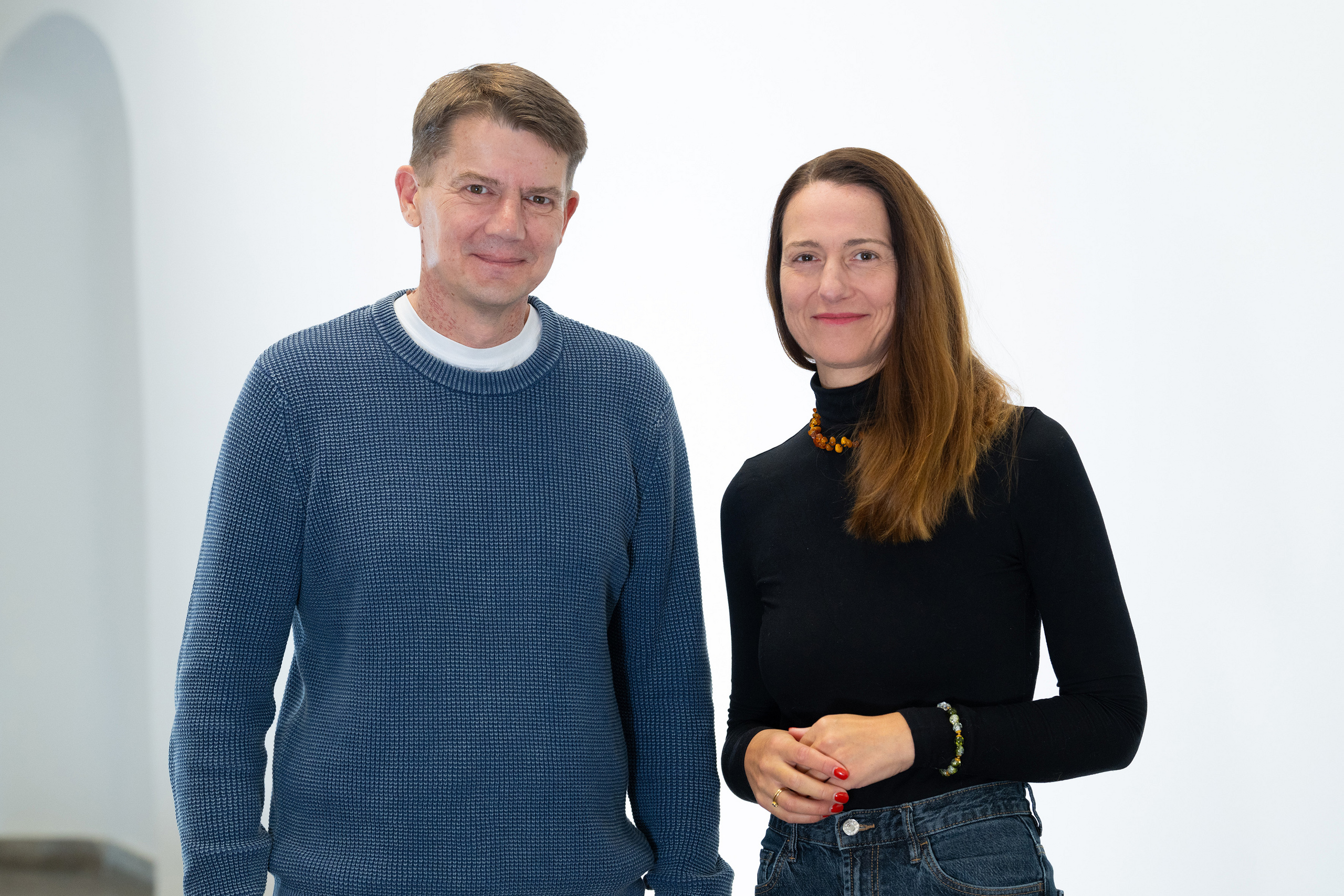
However, the connection between h_da and Uzhhorod University goes back further. The two institutions have been partners since 2013, and Professor Katrin Luise Läzer visited her university’s Ukrainian counterpart for the first time in 2017 – five years before Russia’s full-scale invasion. Läzer specialises in clinical child and adolescent psychology and heads the Bachelor’s study programme “Social Work PLUS Migration and Globalisation”. “Uzhhorod University was the first institution in the whole of Ukraine to offer a degree programme in Social Work,” she says, looking back at how the partnership began: “In many countries, Sociology or Psychology programmes are offered, but Social Work as a separate profession is not widespread everywhere.” This formed the basis for a close connection between the universities. Students took part in summer schools and spent exchange semesters in each other’s countries. At an international conference organised by h_da’s Faculty of Social Work in 2021, Ruslan Zhylenko gave a memorable talk about Ukrainian war veterans who had been wounded as long ago as 2014 during the Russian invasion of Crimea. Zhylenko and his colleagues campaigned for years for state recognition of a social rehabilitation programme for these veterans and their families. Zhylenko spoke about this in his talk – unaware at the time that this issue would acquire an entirely different dimension just a few months later.
“All kinds of help are needed”
Indeed, the figures currently circulating in Ukraine are virtually ungraspable: Russia’s invasion has left over 10,000 children and adolescents orphaned and, even if the war were to end immediately, around one million people – a conservative estimate – would require social workers’ help to reintegrate into society, cope with trauma, deal with injuries and return to their families. This is what Ruslan Zhylenko is alluding to with his metaphor of a field hospital: “All kinds of help are needed for children and adolescents alone,” he says. Some need to process what they experienced when they fled their homes, others have been victims of violence, and still others were forced to witness unimaginable scenes at first hand, as well as death and mutilation within their immediate family circle.
Ruslan Zhylenko is actively involved in several areas: As a professor at the university, he trains future social work professionals. At the same time, he is the director of the Carpathian Foundation-Ukraine, which financially supports numerous civil society initiatives. “We cover several regions in western Ukraine,” he says, adding that the foundation has given dozens of projects the necessary tailwind. When he talks about his work, it becomes clear again and again that comprehensive aid is required and how much Ukrainians are forced to improvise in their daily lives to support each other and cope with the situation: At the height of the crisis, Uzhhorod University temporarily housed over 2,000 internally displaced persons in its lecture theatres, and there are currently still around 400. Improvisation is the order of the day – and one of the disciplines that Ukrainians have been obliged to master.
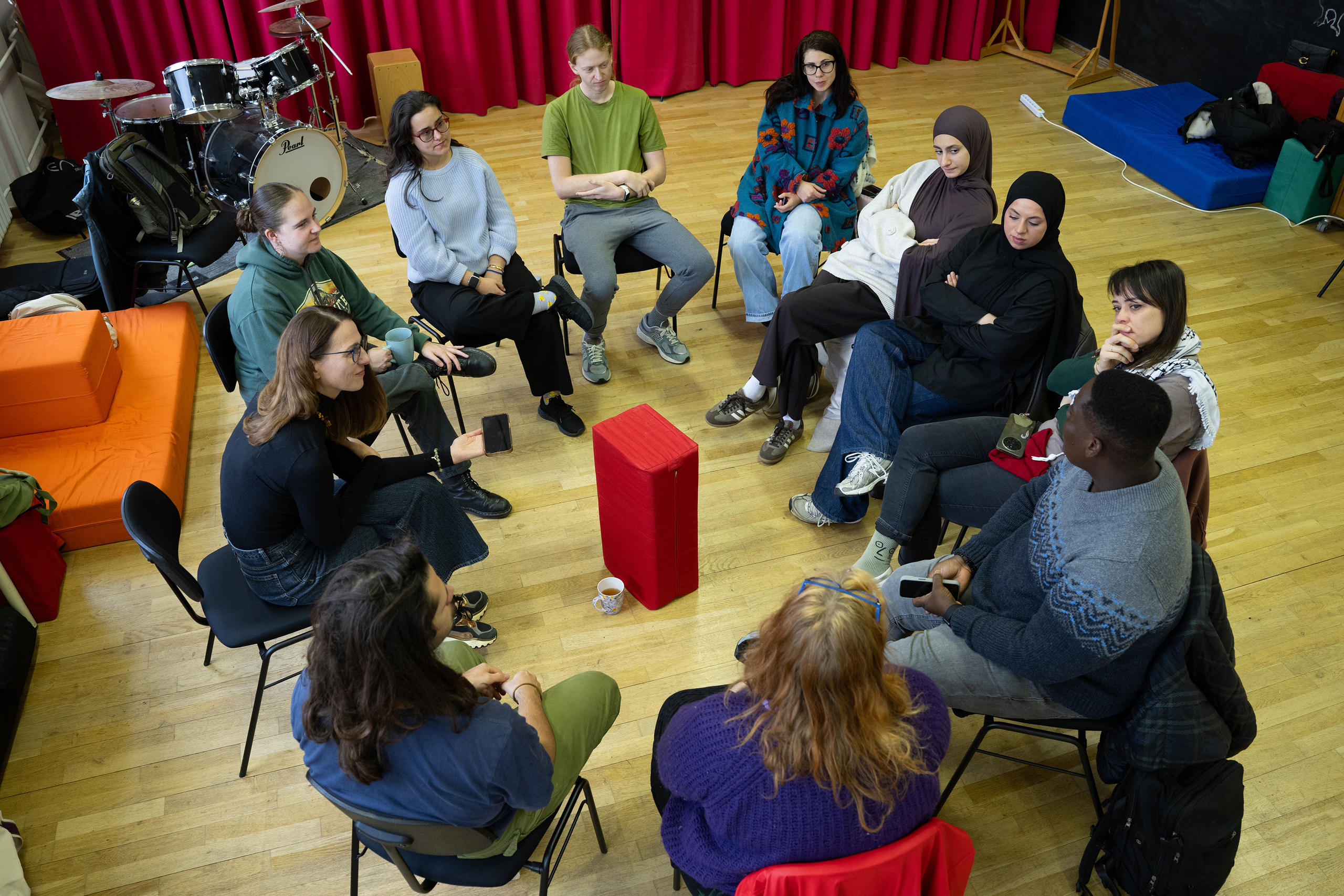
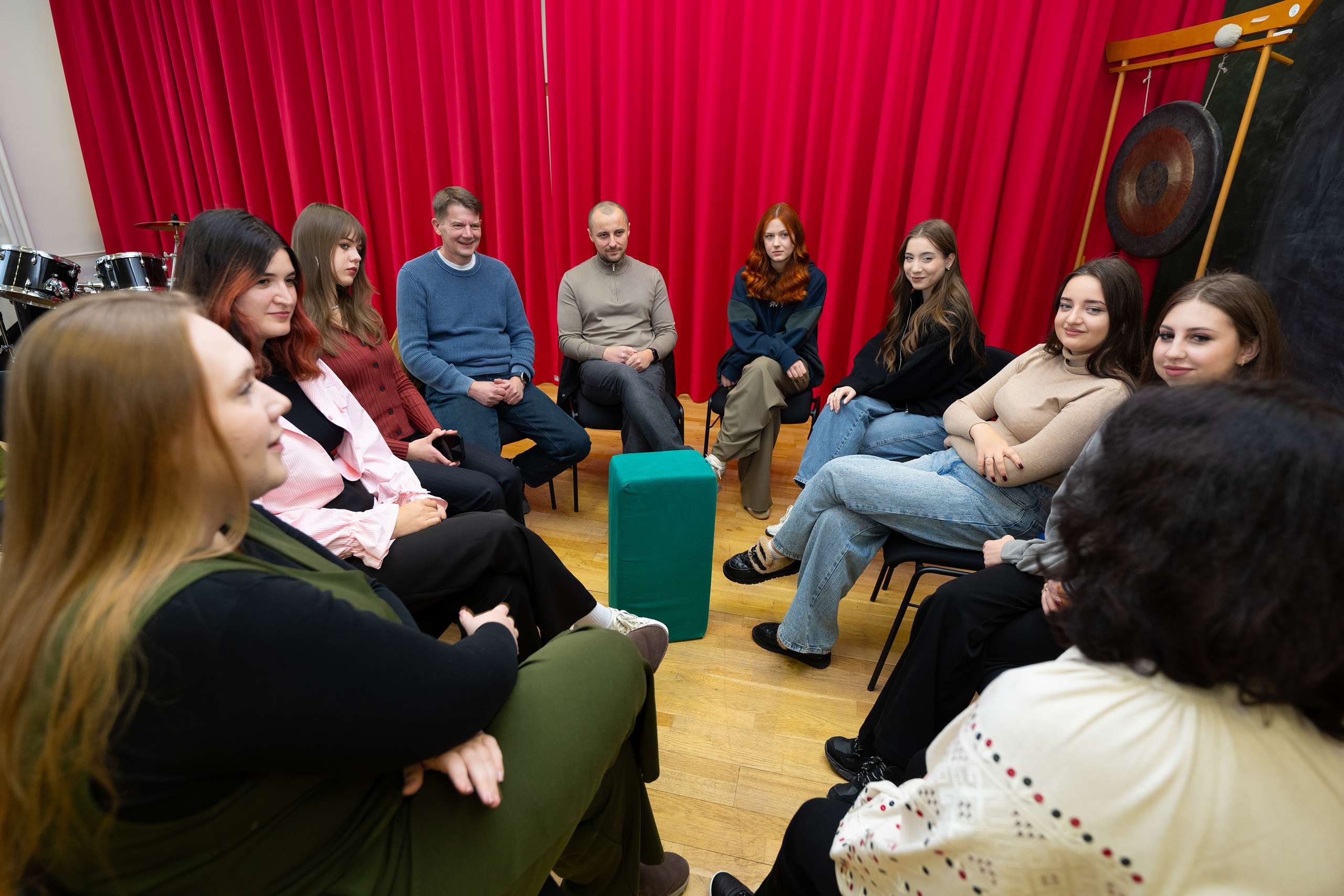
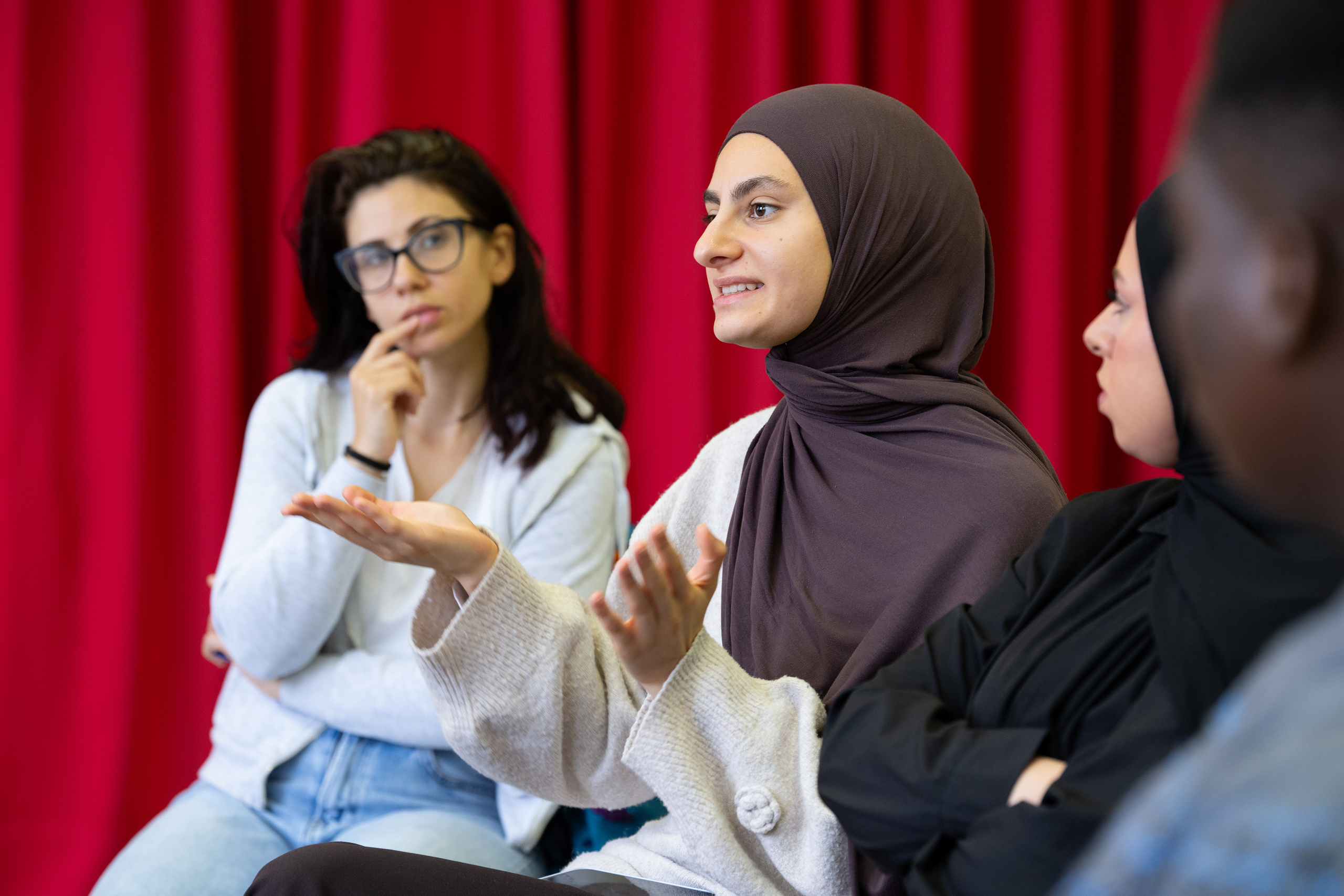
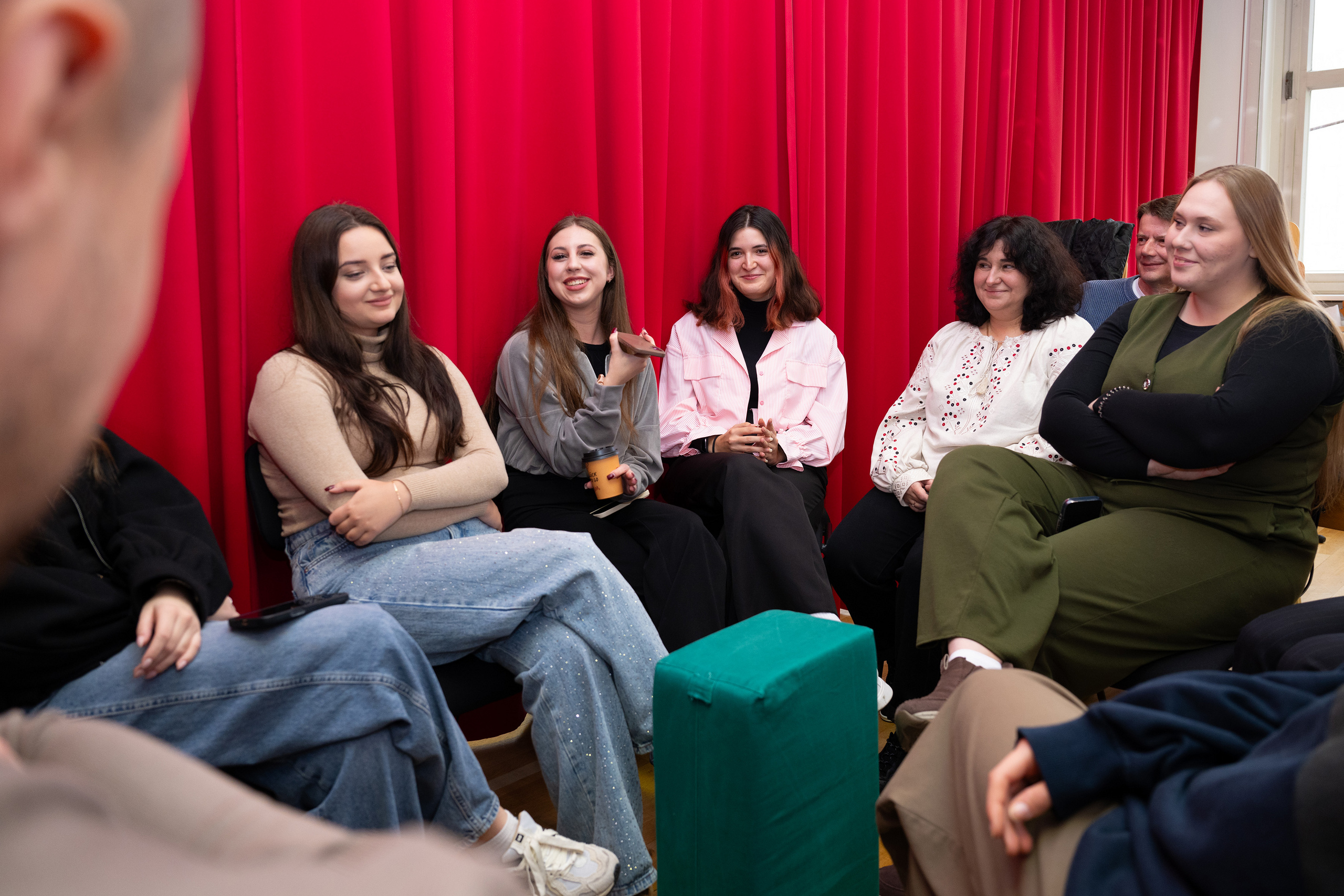
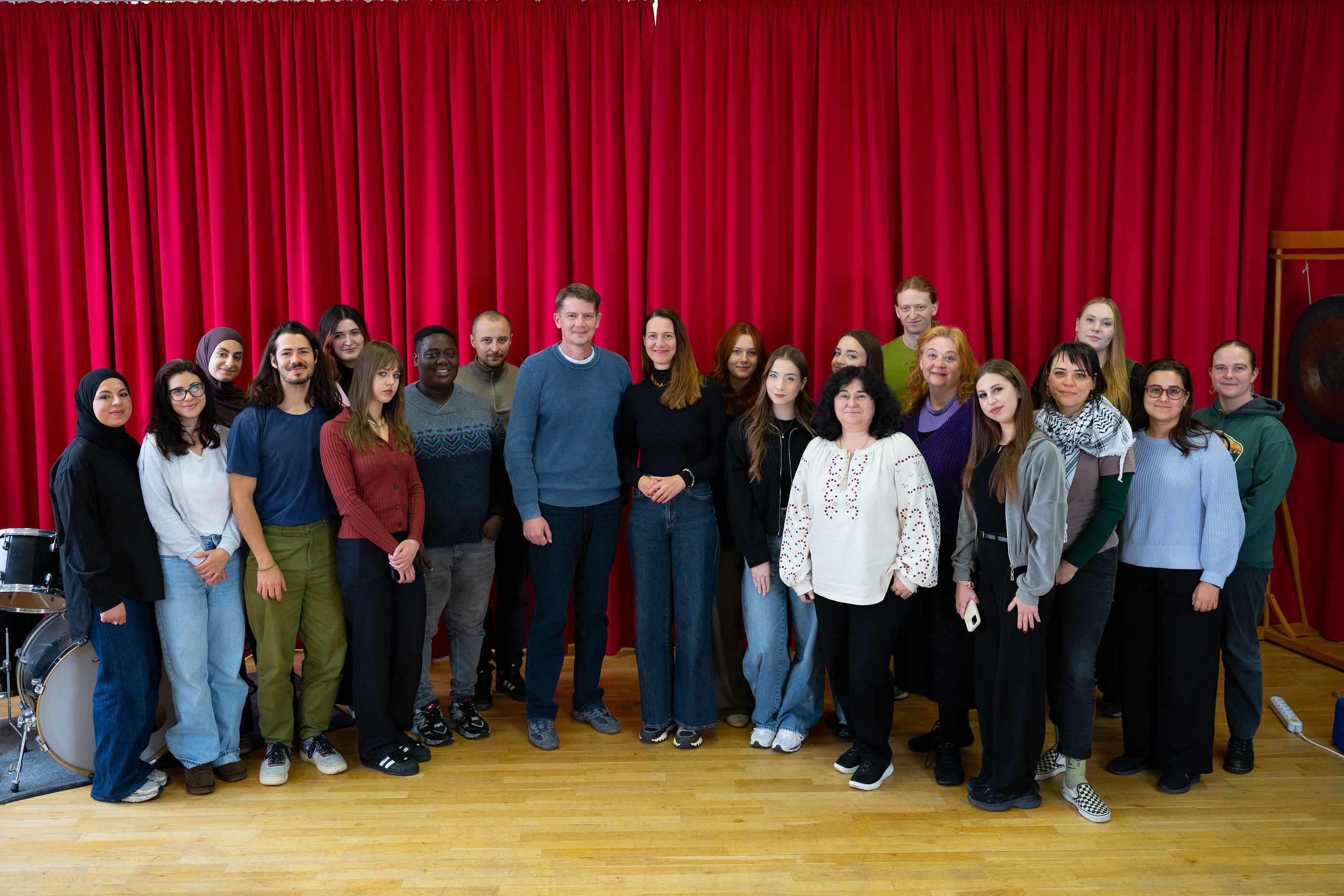
Intensive exchange – during the International Autumn School and at institutional level: h_da and Uzhhorod University have been partners since 2013.
Learning in both directions: How students benefit
This improvisation also impacts on numerous areas of social work, and precisely this was one of the topics discussed at the meeting in Darmstadt. De-institutionalisation is an important keyword in this context. While all matters in Ukraine relating to adoption, foster care and the placement of children and adolescents who cannot live with their biological parents previously came under the jurisdiction of the government, these responsibilities are now being delegated to local authorities, as they are better placed to assess the situation and the available resources. This is a model that has been common practice in Germany for many years. One of the objectives of the International Autumn School in Darmstadt was for the Ukrainian participants to familiarise themselves with the legislative principles on which local authority responsibilities are based. To gain some practical insights, they also glimpsed behind the scenes at the respective authorities.
Conversely, the German participants were able to learn a lot from their Ukrainian colleagues, says Katrin Luise Läzer. Her observation: “Social work in Ukraine is incredibly dynamic.” Civil society is highly committed, and a suitable framework for corresponding activities is in place. Läzer is amazed that it is possible, for example, to set up an association or organization within three days via an app. This flexibility and speed would be unthinkable in Germany. As an experienced psychotherapist, she has observed at the same time how, in Ukraine, the latest research in trauma management is combined with creative ideas to help those in need in the best possible way. The demand can hardly be met, which is understandable in view of the many millions of people affected, “but the most important thing is that nobody feels there is no help on hand. Every encounter, every offer of help is crucial, even if it’s just a small, human gesture, just taking notice and listening.” This has been acknowledged in research for many years, but everyday life in Ukraine shows it is the right approach. Ruslan Zhylenko tells the story of a colleague who was evacuated from her home one night and is still unable to return. She never tires of recounting: “Not once in my life has a cup of coffee tasted as good as the one a volunteer at the refugee shelter gave me the next day.”
Fast track Ukraine: The latest research combined with creative ideas
During the one-week International Autumn School, it became clear just how important the meeting in Darmstadt was. Initially, the students from Germany were cautious and reserved in their interactions with their fellow students from Ukraine – always mindful of finding the right words and not hurting anyone with heedless comments. “How do you speak of the unspeakable?” was the question that hung over the meeting and no one voiced. And then, after the first few days, the German participants were astonished at the high level of commitment and willingness to help evident in Ukraine – and realised how contagious and invigorating it is.
Related articles
impact, 07.08.2025: MUSIC DOES PEOPLE GOOD – AND CONNECTS THEM
impact, 16.05.2025: "SOCIAL WORK IS A SCHOOL FOR DEMOCRACY"
impact, 29.04.2025: BUILDING BRIDGES FOR GENDER EQUITY
impact, 24.04.2025: STRONG IN THE STORM “THINK ABOUT THE CHILDREN AS WELL"
impact, 12.02.2025: „Junge Menschen wollen selbstwirksam sein“ (in German only)
impact, 16.11.2024: „Einsamkeit betrifft alle Menschen“ (in German only)
Contact our Editorial Team
Christina Janssen
Science Editor
University Communications
Tel.: +49.6151.533-60112
Email: christina.janssen@h-da.de
Translation: Sharon Oranski
Study programmes
Links
Professor Katrin Luise Läzer’s website (in German only)
Faculty of Social Work (in German only)