


Heavy rain prevention Mühltal
There is no doubt about it. Extreme weather events are a consequence of climate change. Again and again, the towns along the Waschenbach, a brook that flows through Mühltal in the rural district of Darmstadt-Dieburg, have to battle severe flooding after heavy rainfall. In a practical project, environmental engineering and public management students at Darmstadt University of Applied Sciences (h_da) have developed concepts for and with local residents that aim to prevent and counteract heavy rainfall events. They also looked at how local authorities can implement suitable measures in the best possible way. The students presented their results at a town hall meeting in Frankenhausen.
By Astrid Ludwig, 24.2.2026
The road from Nieder-Ramstadt curves and winds its way via Waschenbach up to Frankenhausen. For around five kilometres, it leads through a narrow valley, past old mills, a huge quarry, fields, meadows and wooded slopes. But the beautiful scenery can become a problem if there is a violent thunderstorm or a cloudburst. Water gushes out of the woods, carrying soil down the slopes and into the towns, which are unable – due to the narrow valley and limited retention basins – to absorb and drain the vast masses of rapidly accumulating water and mud. The Waschenbach brook, or the River Modau further down the valley, bursts its banks, and water flows into cellars and floods the roads. The most recent occurrences were in the autumn of 2025 and the summer of 2024.
A damp start to the project
Birte Frommer and Jochen Hack, professors at h_da’s Faculty of Civil and Environmental Engineering, remember it well. At the start of the 2025/26 winter semester, they had just assigned the project “Water in Motion, Concept for Heavy Rain Resilience for the Modau Climate Region 2045” to their Bachelor’s students when the Waschenbach brook turned roads in Mühltal into lakes after heavy rainfall in October. A by all means realistic introduction to the study project for h_da’s budding environmental engineers.
Frommer and Hack consciously chose this practice-oriented topic because of its importance for the region. A local citizens’ initiative had drawn their attention and that of their colleagues Professor Friederike Edel and Dr Karin Bugow from the Public Management study programme at Darmstadt Business School to the issue. Participants in the project “Modau Climate Region 2045” contacted the researchers after hearing about the “Climate Adaptation in Public Management” (PuMaK) project on the radio and asked the university for ideas and support.
Tremendous interest among local citizens
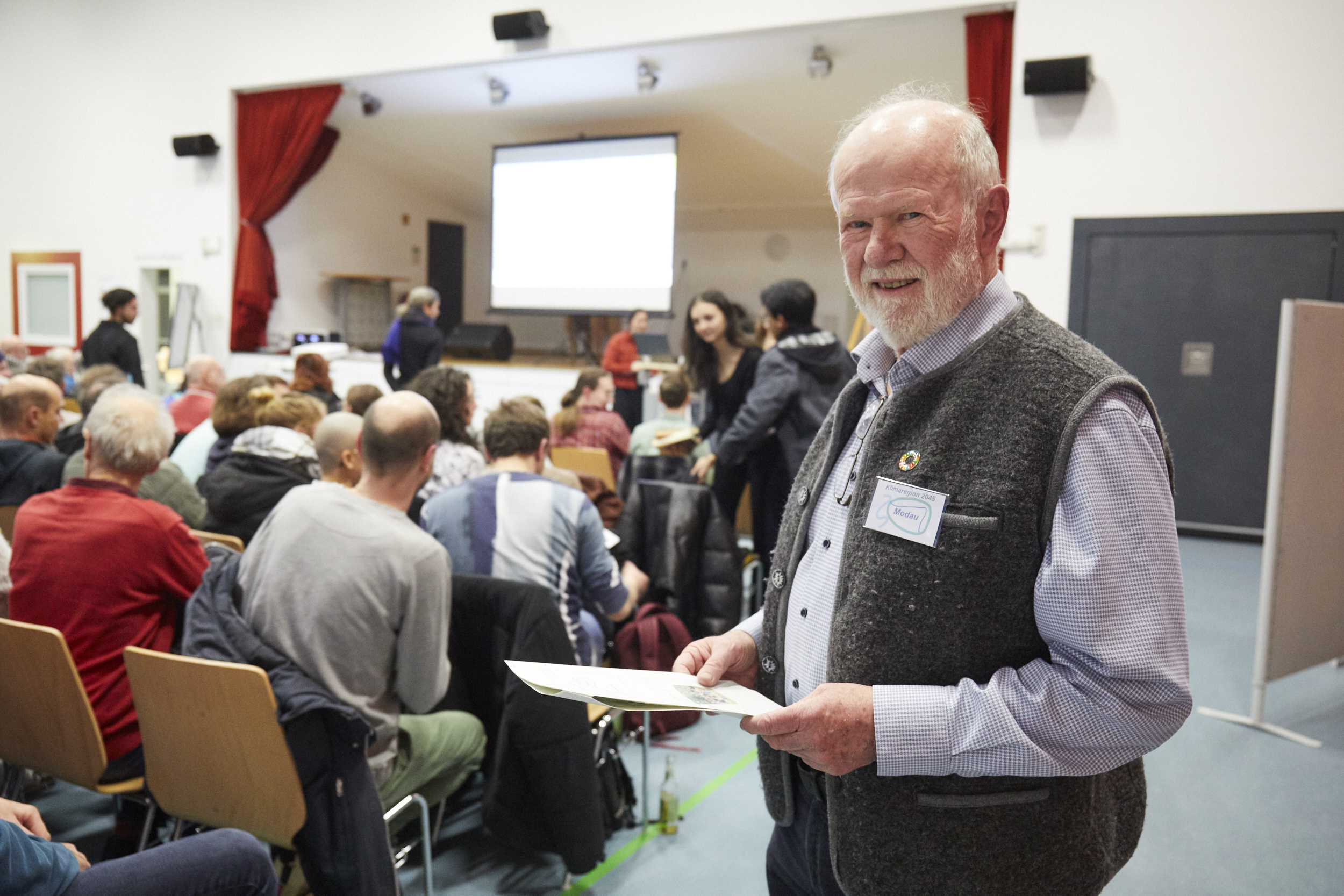
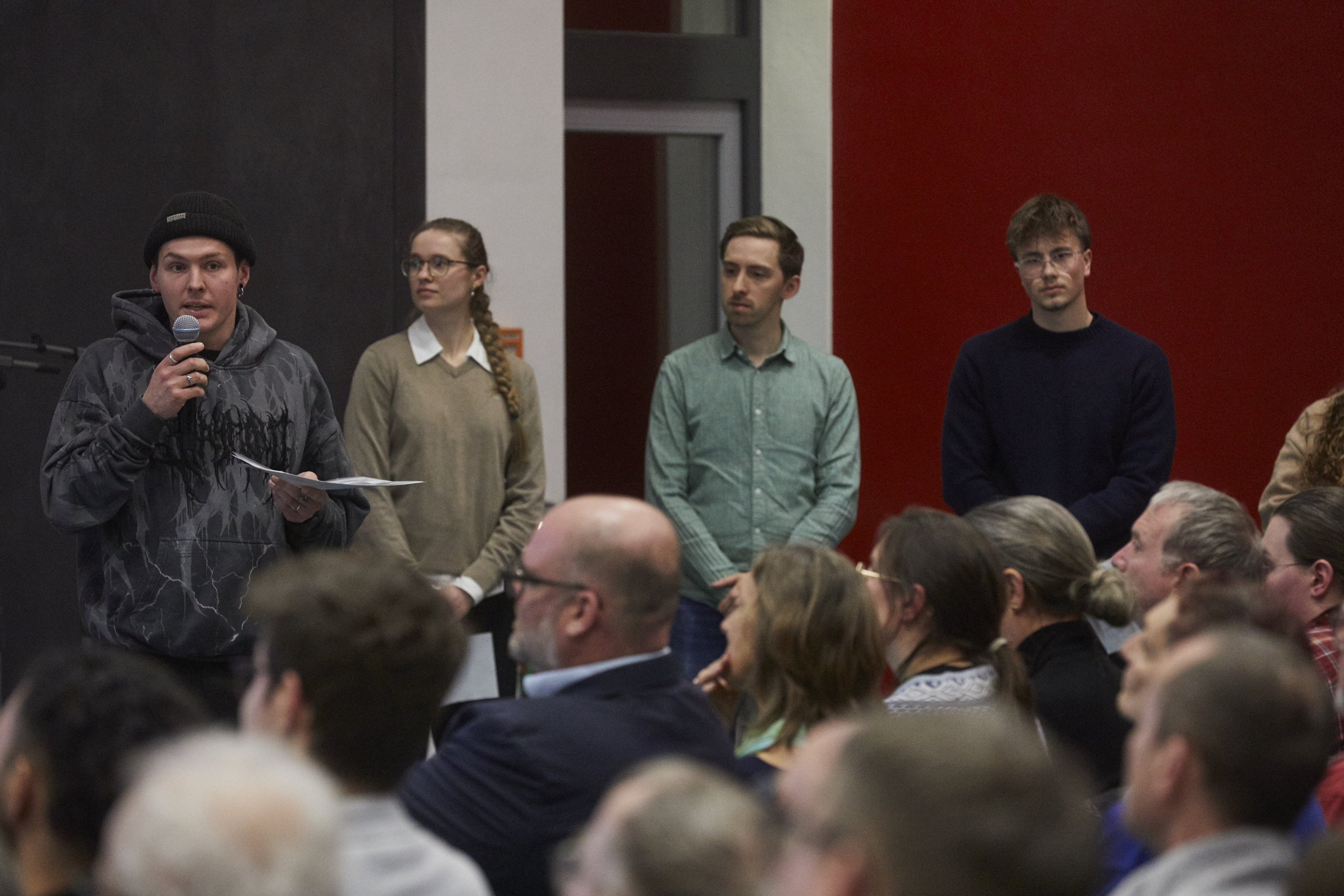
On an evening in mid-February, the students presented the results of their work at a town hall meeting in Frankenhausen’s community centre. Almost every seat was taken. Residents from all the towns in Mühltal were eager to hear the students’ proposals. Niels Starke, Mühltal’s mayor, was delighted with the high attendance. After all, flood protection is something that concerns everyone, he said. Here, the local authority already has something to show: Mühltal has a heavy rain hazard map, which the students could draw on for their concepts. The mayor praised the “fantastic service” that h_da’s project work is providing. “A lot of bright minds have given considerable thought to this,” said Starke.
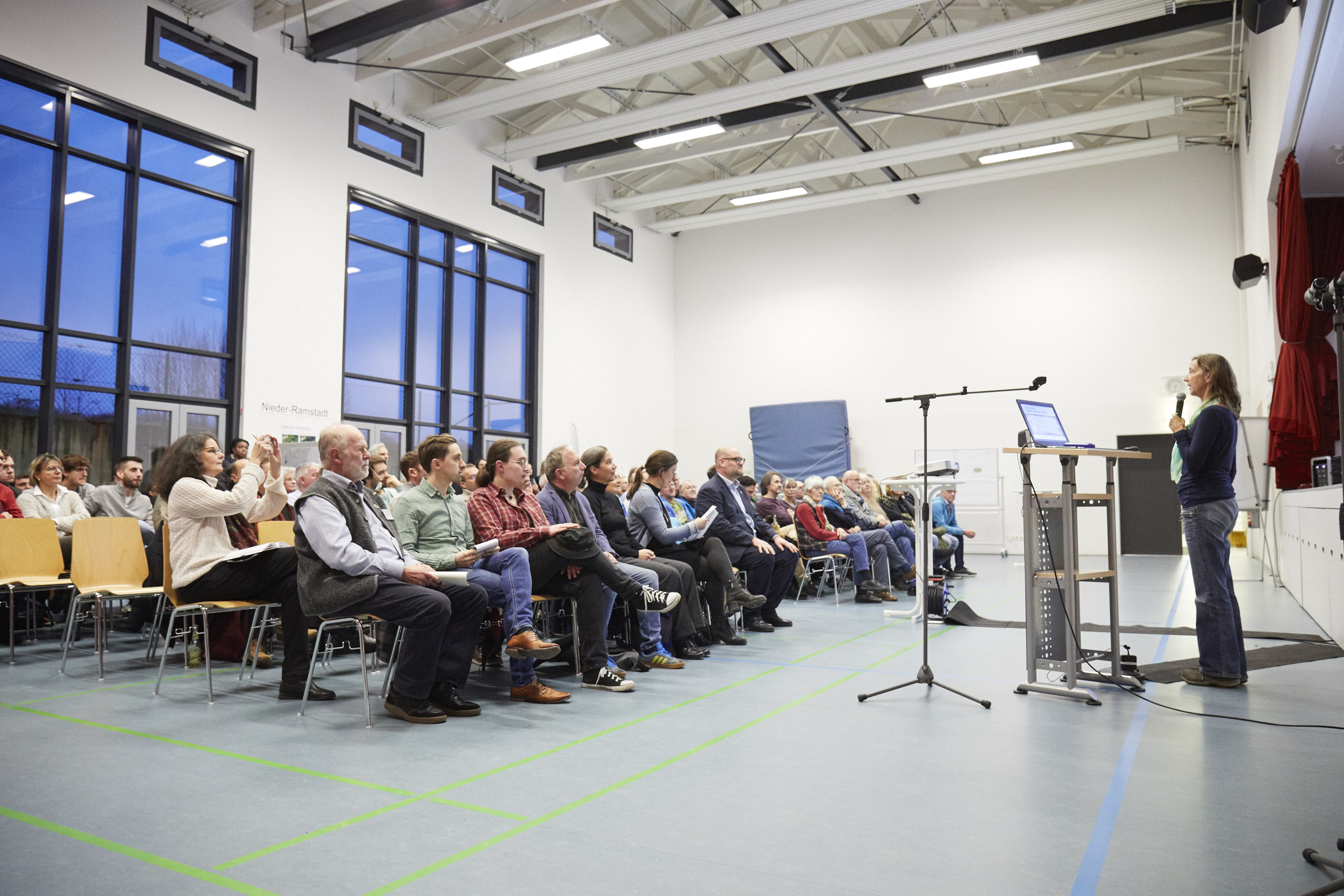
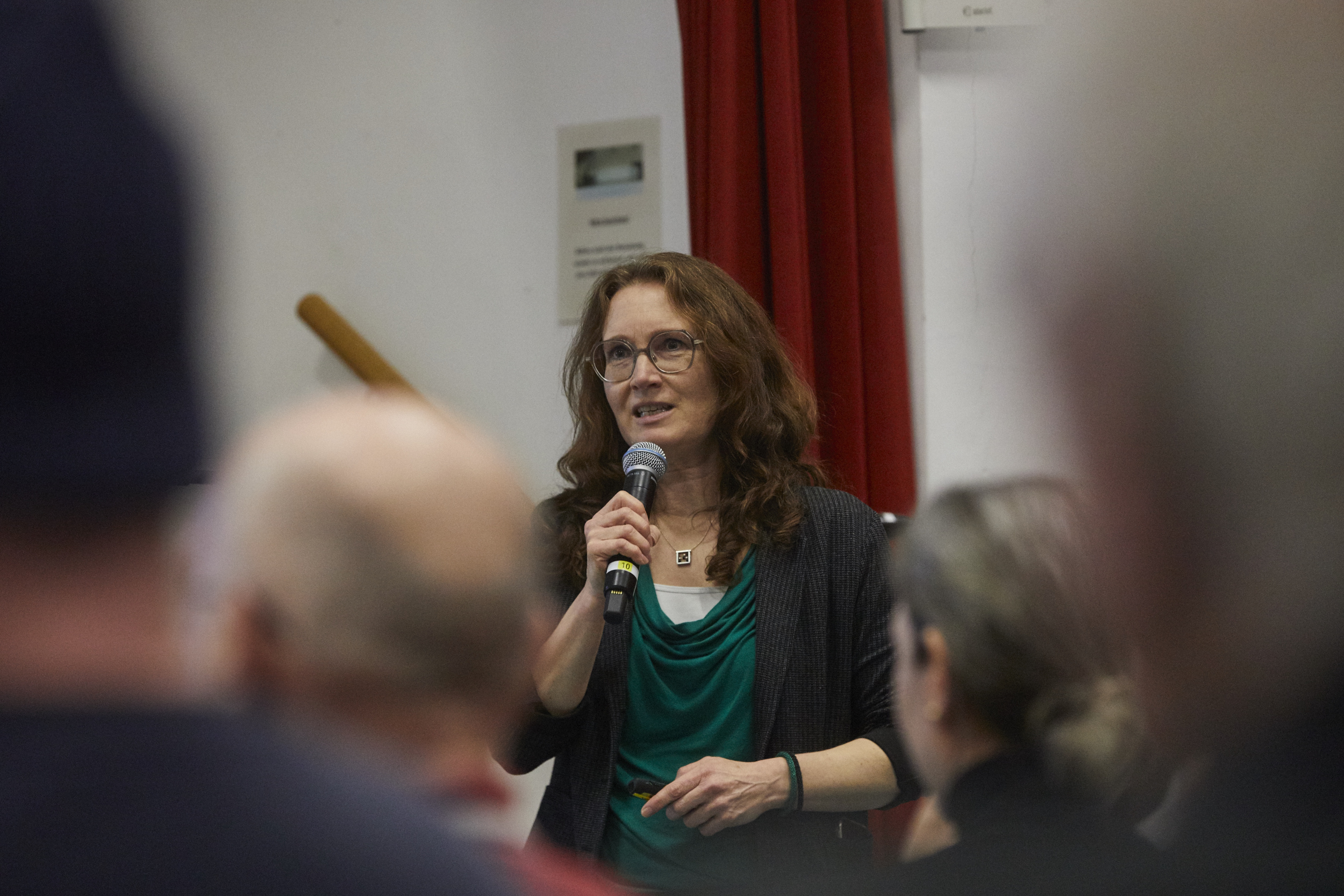
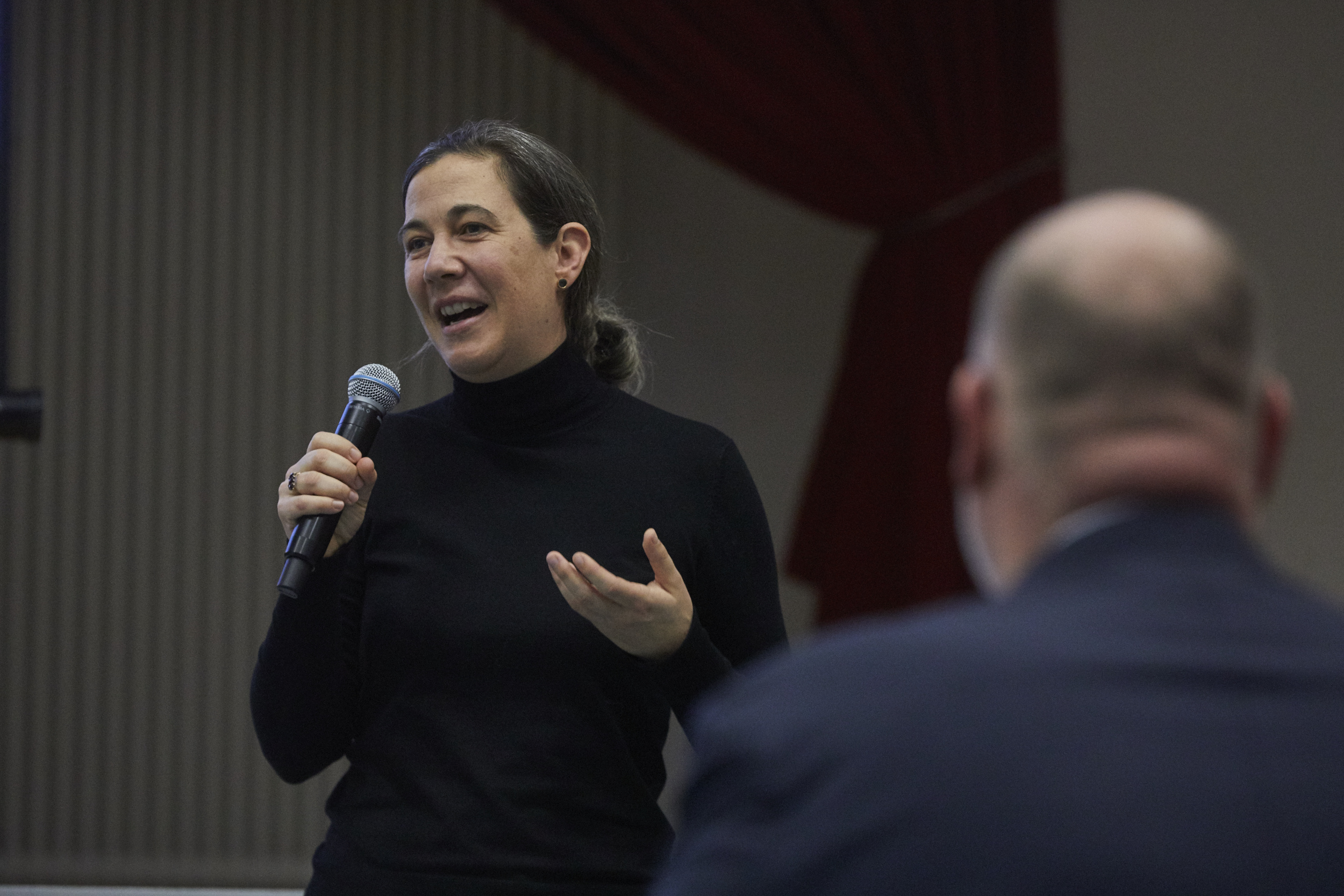
Also in the audience on that evening are Dr Jürgen Metzen and Dr Christine Metzen. The couple from Frankenhausen are actively involved in the “Modau Climate Region 2045” project. It was they who contacted h_da and are now eagerly awaiting the students’ presentations. “We are very pleased about their proposals,” says Jürgen Metzen. Dr Walter Heinz, chairman and founder of the Ober-Ramstadt Climate Initiative, thinks it is “great” that h_da is making an active contribution by developing concepts for the region. Many places are experiencing problems with extreme weather, he says, and climate adaptation is needed everywhere.
Transdisciplinary collaboration
The environmental engineering and the public management students jointly presented their results at the town hall meeting. The budding engineers had divided into six groups for the project, each of which looked at a certain district and a specific aspect of heavy rainfall. While the environmental engineering students worked on possible structures, planning countermeasures and communication concepts, the public management students got to grips with the actual implementation, funding opportunities, and how citizens could be sensitised and brought on board.
To this end, the students organised a special workshop on the evening of the meeting, where local residents could contribute their opinions and experiences. Dr Karin Bugow from Darmstadt Business School praised the collaboration: “It is not possible for one discipline to solve climate adaptation single-handedly. An interdisciplinary approach is needed.” In her view, the study project is a very good example of this.
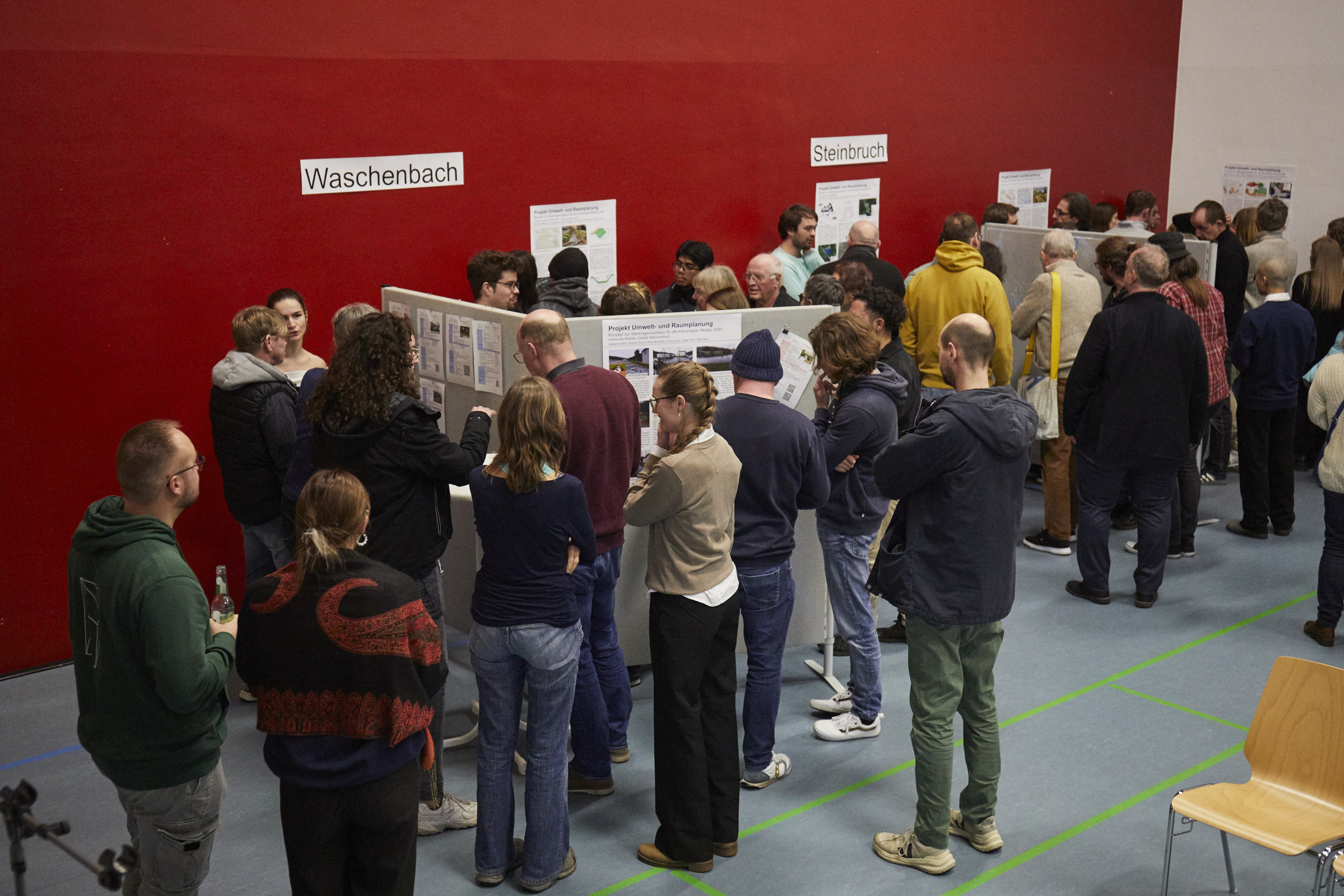
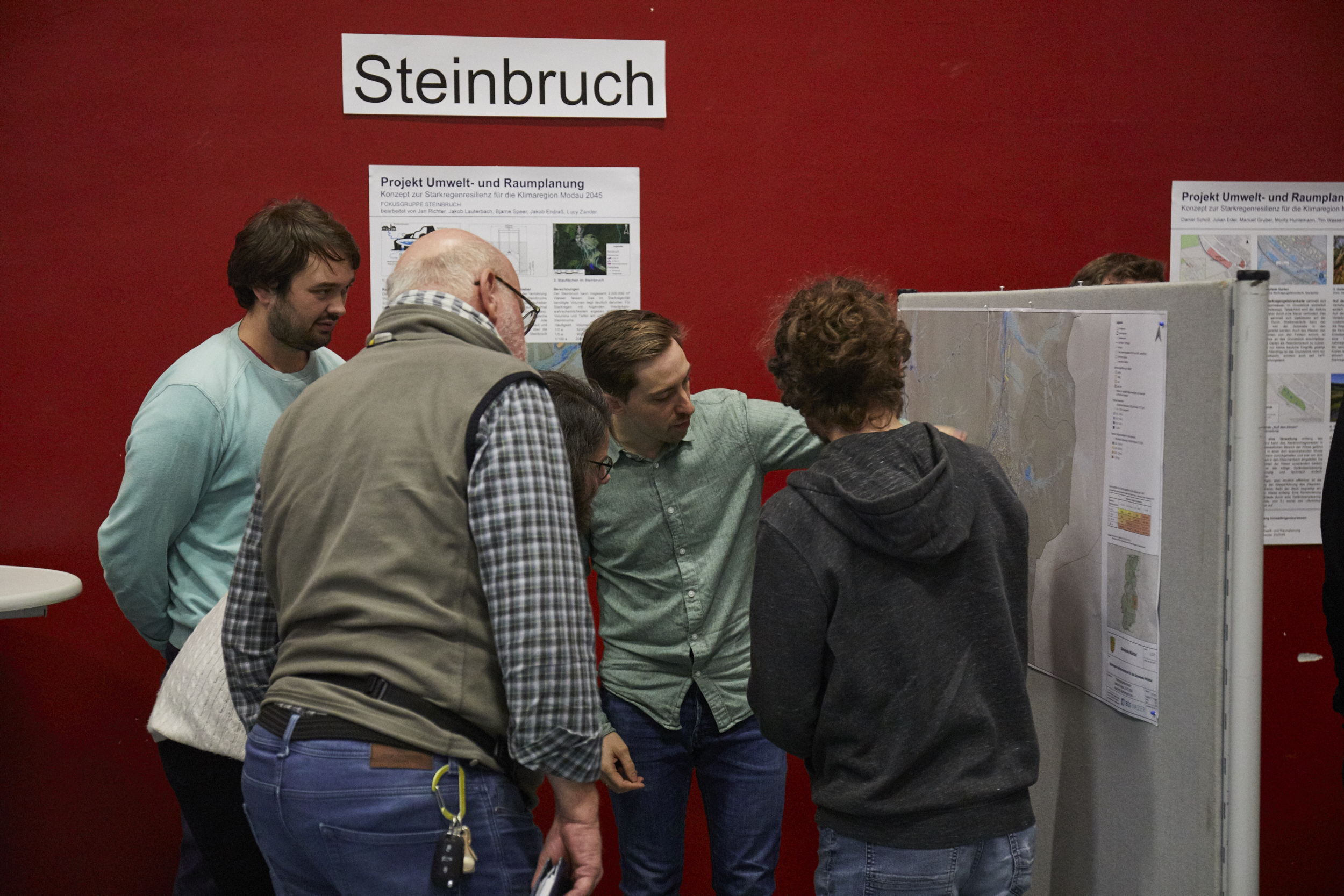
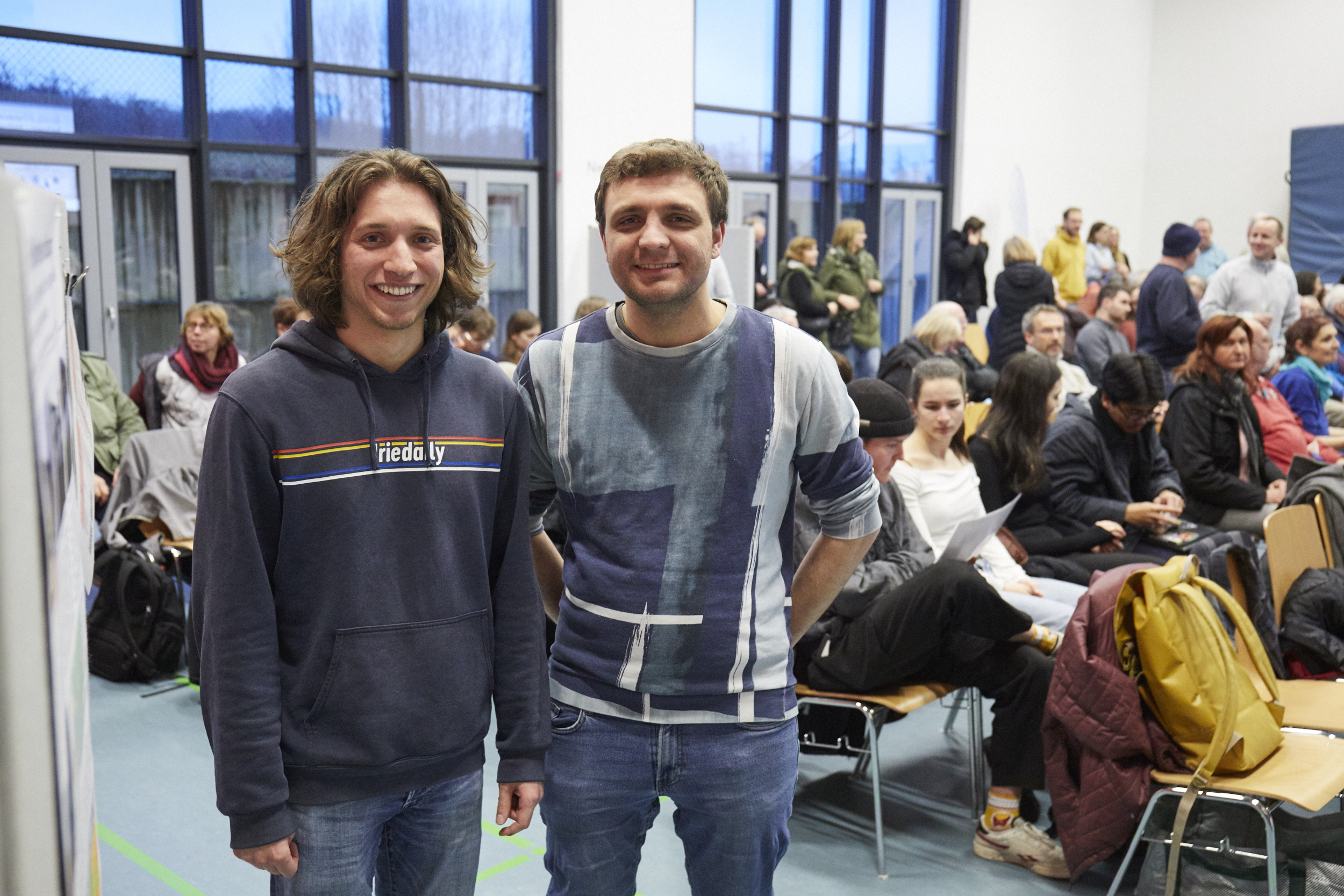
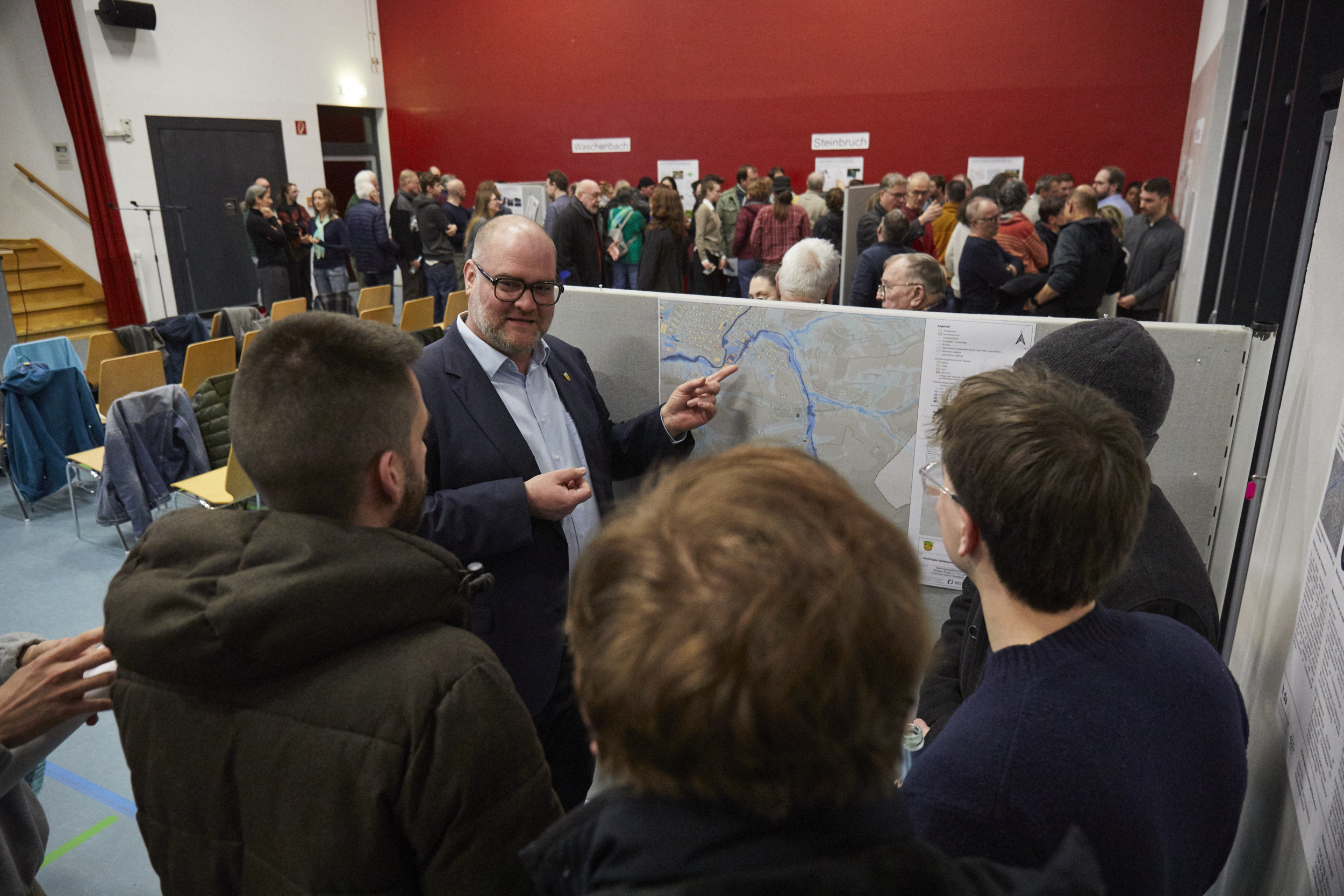
The evening was highly interactive and focused on discussions between students and citizens. On exhibition panels, the students displayed the concepts they had devised for the respective districts. Together with fellow students, Lukas Früh, 26, developed some ideas for Waschenbach. Photos and charts show possible locations for retention basins to which water can be channelled, slowed down and then seep away without causing extensive damage. These include a playground and the sports field. What he especially likes about the project is its practical relevance. “It revolves around a real place and real citizens,” he says.
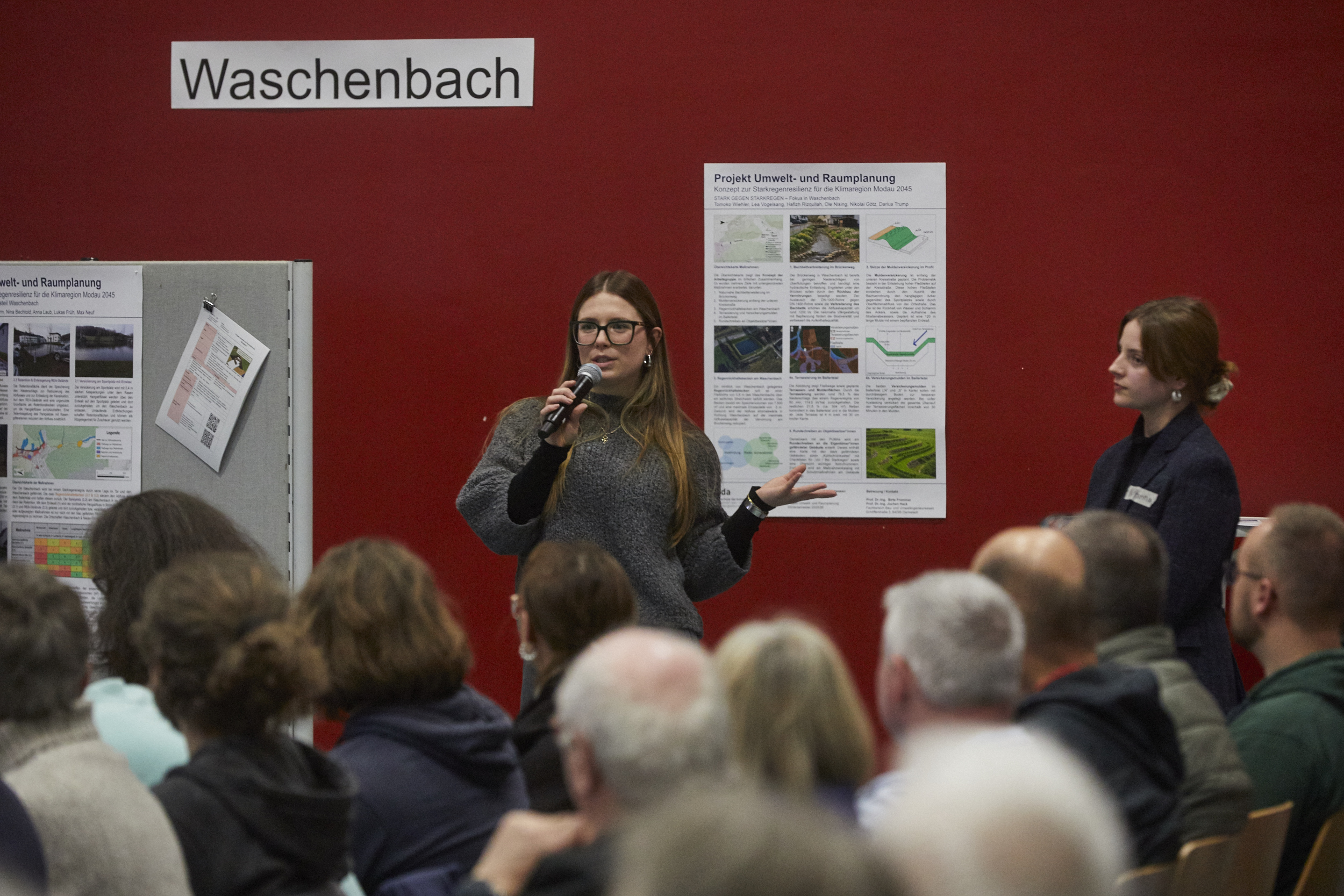
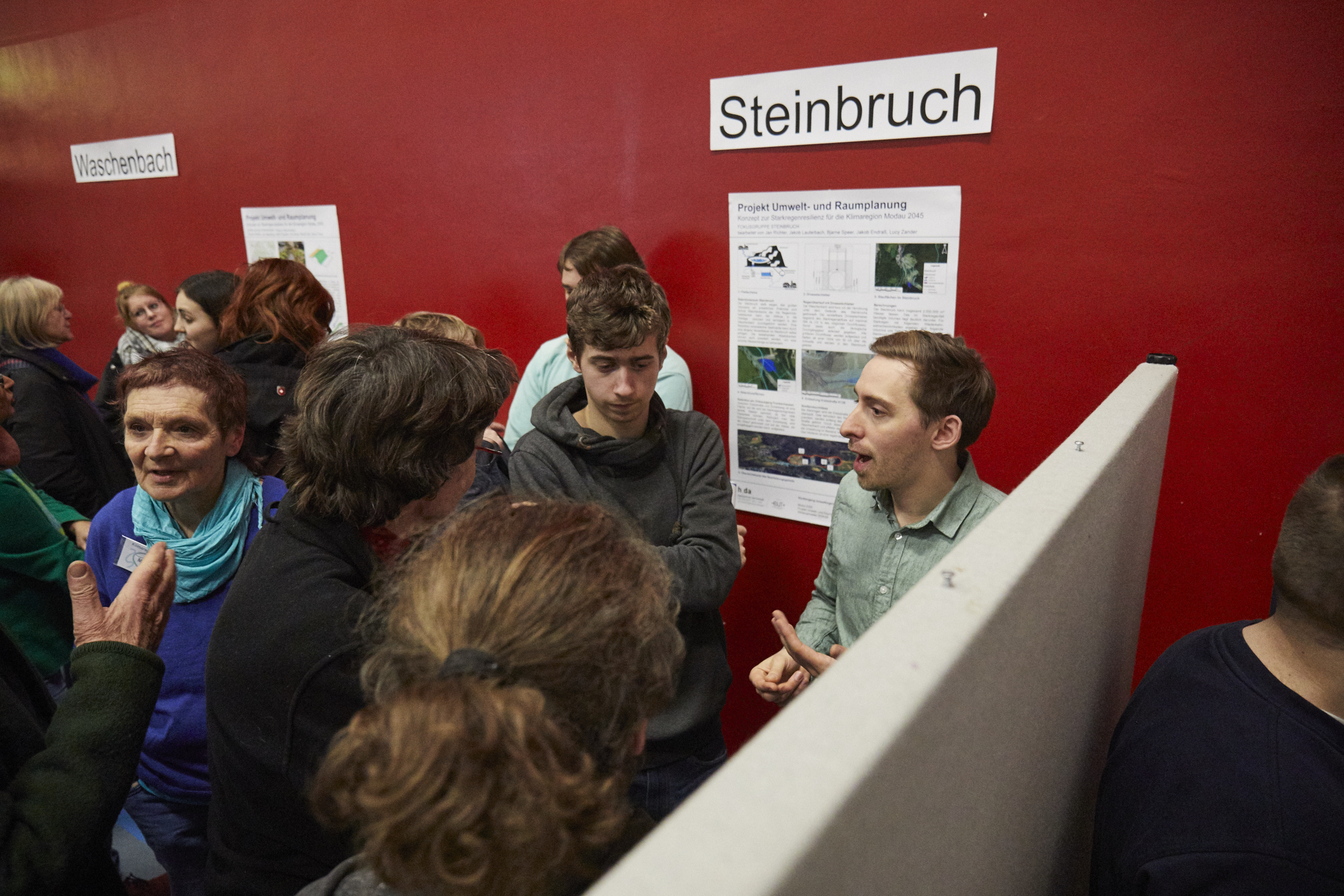
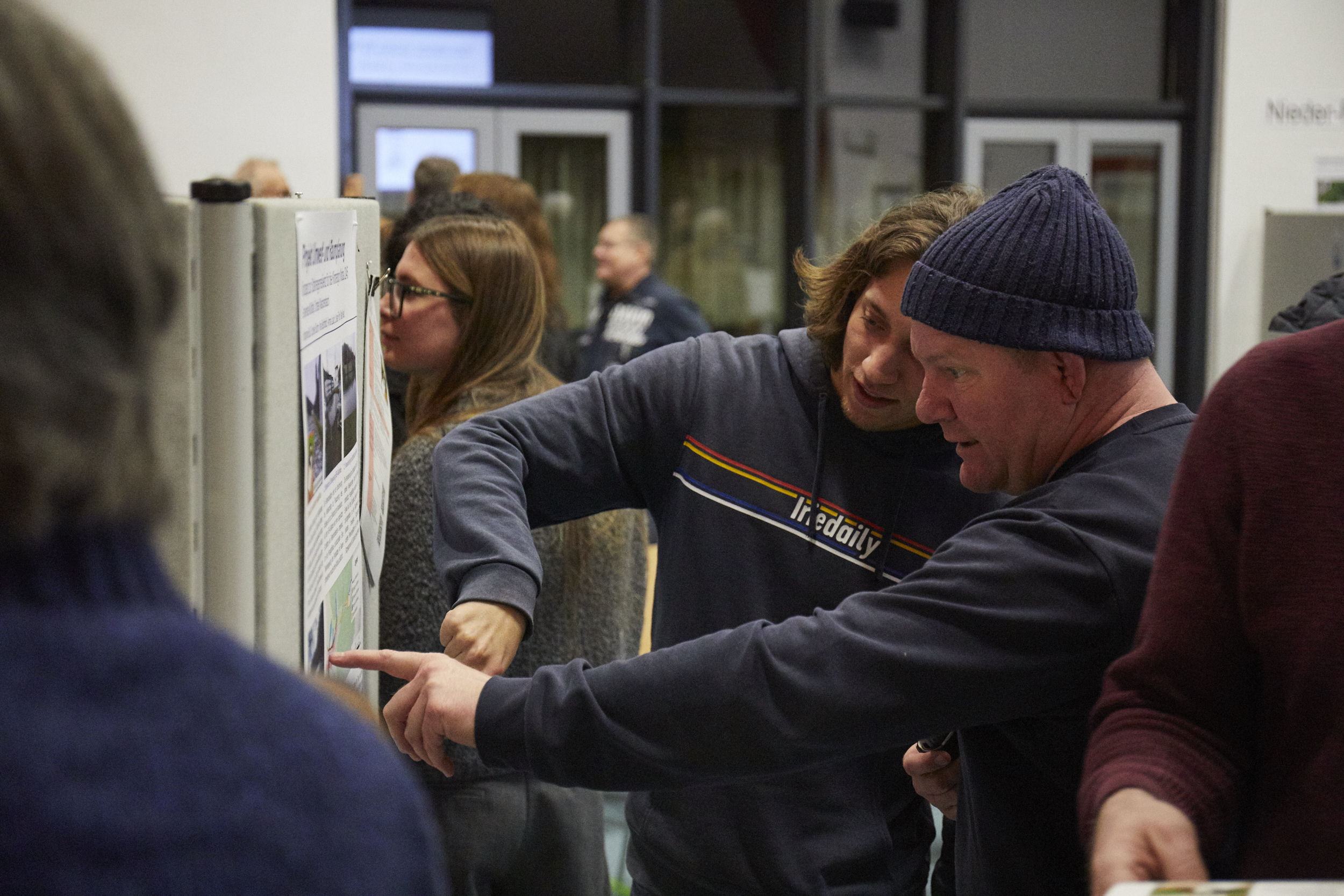
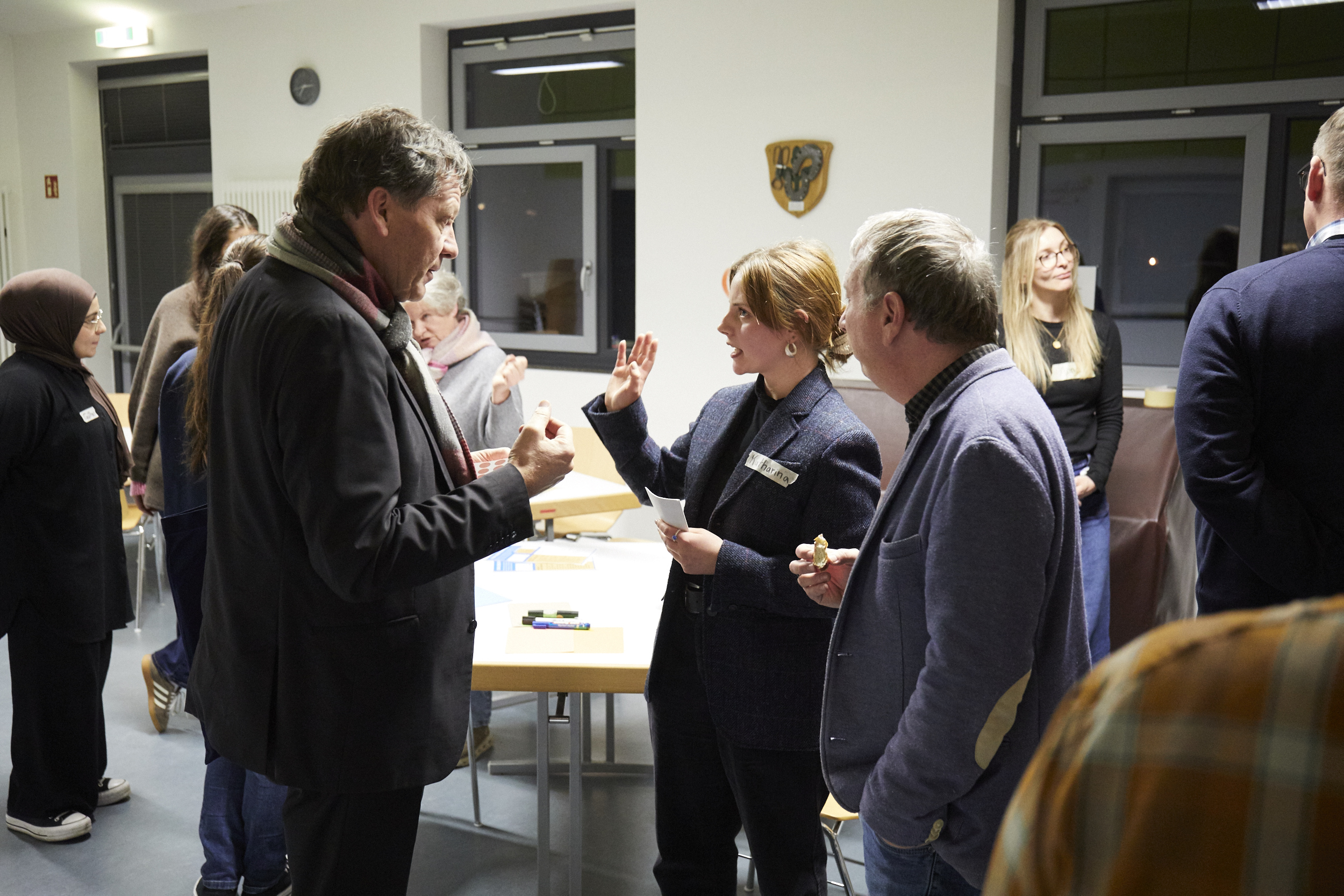
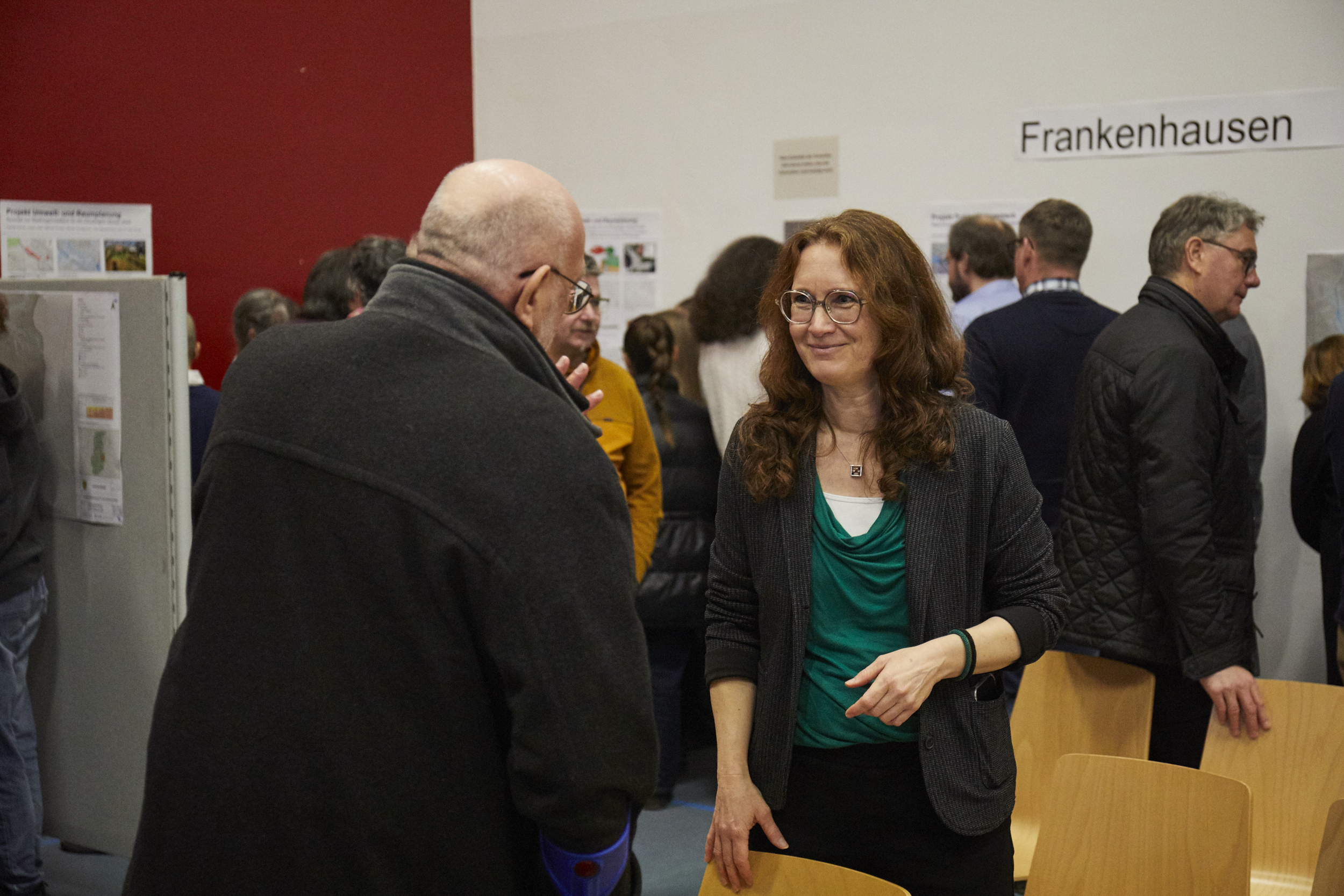
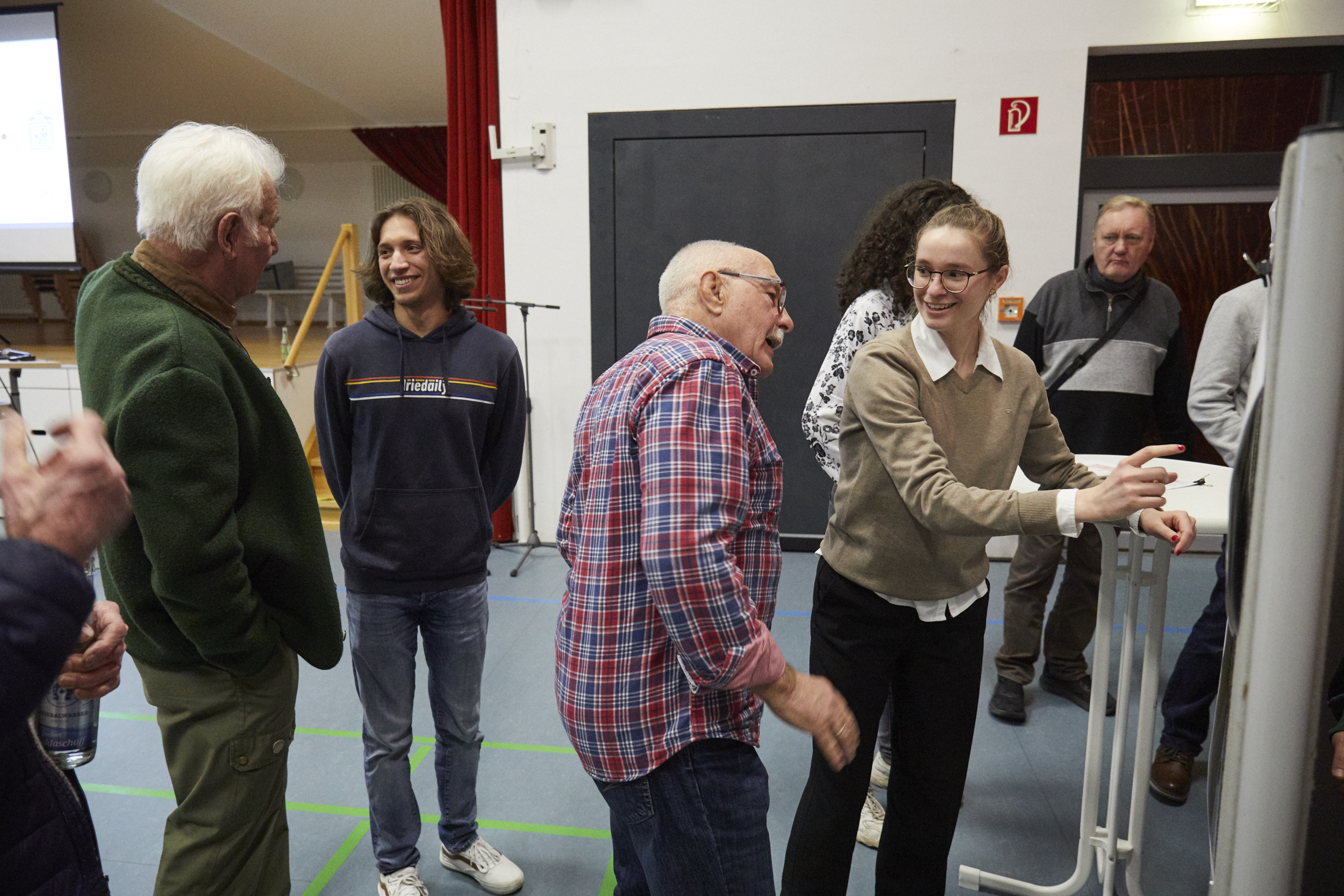
As a member of the team, he visited Waschenbach several times and conducted site inspections with the citizens’ initiative and local residents. “We also went there on our own to have another look round and take measurements,” reports Lukas Früh. He is pleased with the positive feedback from citizens. “It’s more motivating when you know who and what you are working for,” he says. Professor Frommer calls this “service learning for society”. “The students are learning for their future careers.”
Practical relevance as a source of motivation
Julian Eder, 27, also finds the high degree of practical relevance appealing. “It’s more exciting than projects that only exist on paper,” he says. Especially since the issue is highly topical. However, the students also experienced that some of their suggestions initially met with scepticism. “Not everyone was happy with the idea of flooding the sports field,” reports Lukas Früh. But one option would be to lay gravel underneath so that the water can drain away more easily and not cause extensive damage, he explains.
Build earth embankments to divert the water, widen the brook and let its bed meander naturally, unseal surfaces and car parks, use meadows more as retention reservoirs – the students have developed a wide range of proposals. “Many small tweaks and measures are possible,” says environmental engineering student Jakob Lauterbach. Among them is the idea of using the quarry between Frankenhausen and Waschenbach as a retention basin in the event of heavy rainfall, as it could hold up to two million cubic metres of water. “This has great potential,” says Lauterbach. So far, the brook has flowed through pipes under the site. A solution might be to build a sluice gate that diverts the water above ground. Pumping systems for the groundwater are already in place that could be used for this purpose. In this case, however, good communication with the quarry’s owners would be important and necessary.
Putting ideas into practice
The students have also thought about measures that the citizens themselves can adopt in an emergency. A display panel lists recommendations for protecting private property, ranging from sandbags and pumps to pebbles, cisterns and ditches in the garden. The students’ ideas met with a very positive response from local residents. “Some of their suggestions are really helpful and doable,” says a lady from Waschenbach. Her neighbour in Frankenhausen has already taken precautions in his own garden and installed a cistern. “We have to be better prepared for extreme weather,” he stresses. For him, the students’ concepts are a valuable source of information. “We can all learn from them,” he believes.
Professor Jochen Hack explains the effectiveness of such practical projects in a broader context: “In many cases, the solutions developed by the students not only serve to protect against heavy rainfall but also to make the community more climate-resilient in general, for example against heat waves,” he explains. Niels Starke, Mühltal’s mayor, agrees. At the end of the evening, he describes the students’ concepts as highly “productive”. “We will now look at which ideas we as a local authority can put into practice.” He is convinced that the results of the study project will play a lasting role in Mühltal over the coming years and can hopefully be applied in other places as well. “The university’s involvement is not just pie in the sky,” he is keen to emphasise. “It is an investment in the future and will be incorporated into the local authority’s budget.”
Related articles
impact, 24.6.2025: From rubbish to resource: Turning old chip fat into new house façades
impact, 22.4.2025: Water, water, everywhere...
impact, 20.10.2025: "Bringing disappointed people back on board"
impact, 22.11.2024: "What remains are the learning processes"
Contact our Editorial Team
Christina Janssen
Science Editor
University Communications
Tel.: +49.6151.533-60112
Email: christina.janssen@h-da.de
Translation: Sharon Oranski
Fotografie: Jens Steingässer