


Vibe Shift and Economy
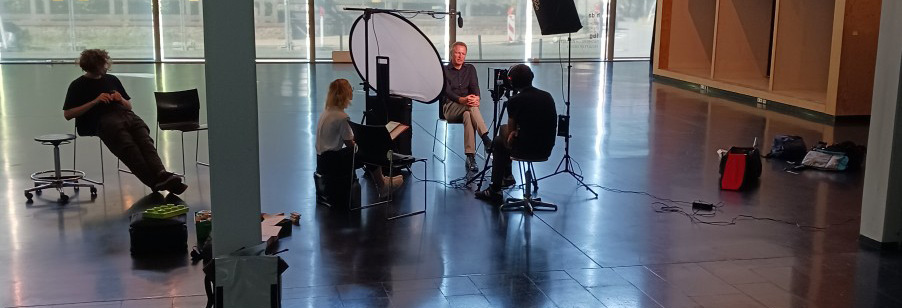
Until recently, climate change was a topic ubiquitous in public debate. Although the issue is resurfacing a little here and there thanks to the record heatwaves this summer, other problems are now dictating the headlines: a backlog of reforms, inflation, right-wing populism, transatlantic discord and the wars in Ukraine and the Middle East. Professor Thomas Döring, economist and sociologist at h_da, has observed a radical change in public mood. In this interview for impact, he talks about the “vibe shift”, anxiety about the future, sustainable growth and why sacrifices alone are not the answer to the economic challenges of our time.
Interview: Christina Janssen, 6.7.2026
impact: After Donald Trump won the election in 2024, the historian Niall Ferguson spoke of a global “vibe shift”. He said that fundamental political and cultural values were changing all over the world. Do you observe this in Germany as well?
Professor Thomas Döring: Yes, I would say it is the same here in Germany. Interestingly, sociologists have been describing this change for some time now. Ingolfur Blühdorn, for example, posits that not only our existing growth model is reaching its limits. According to his analysis, the eco-emancipatory project has also failed. Instead, he sees a society that is increasingly departing from these goals and turning more towards exclusion, nationalism and authoritarian forms of government.
impact: Blühdorn is not alone there.
Döring: Indeed. The sociologist Philipp Staab also describes the transition from a society of self-realisation to a society of self-preservation. Behind this is the perception that the problems facing us have meanwhile become greater than our ability to solve them. That is why many people are trying above all to hang on to what they already have. The sociologist Andreas Reckwitz also describes this in his book Verlust: modern societies survive on the promise that people’s lives will become better and better. Since the turn of the millennium, however, the perceived losses have outweighed the gains. This leads to disappointment and anxiety about the future – and it is precisely this, in turn, that makes people incline more towards self-preservation. This tallies with the “vibe shift” currently being discussed.
impact: Do you share this diagnosis?
Döring: Yes. In my opinion, there has been a significant shift in values in Western democracies. Perhaps not quite as strong as in the US, but in Germany, too, we are experiencing a major rupture.
How climate action disappeared off the radar
impact: Two years ago, climate change and green growth were at the core of the political agenda – today, they are almost niche topics. What happened?
Döring: I would even go back a bit further. For me, the tipping point was the COVID-19 pandemic. Climate action disappeared practically overnight because other crises suddenly dominated. The Russian invasion of Ukraine, the energy crisis and other geopolitical conflicts then followed. This chain of events has driven climate change out of the public eye.
impact: Although the problem has stayed with us.
Döring: The problem will not disappear just because it is hardly mentioned anymore. We will no doubt feel its consequences very keenly in the future.
impact: Why are current crises consigning complex, long-term issues to the sidelines?
Döring: Because people react very strongly to the here and now. Psychologists call this “present bias”, and we economists are also familiar with this phenomenon. Acute crises superimpose themselves on long-term developments. That is why issues such as climate change or species extinction have a hard time competing for political attention, even though they have enormous consequences in the long term.
The three dimensions of green growth
impact: The question of a long-term viable and sustainable economy is a common theme in your research. Can we reconcile growth, prosperity and sustainability – or must we prepare for a “post-growth economy”, that is, economic activity that forgoes further growth?
Döring: I believe there is broad consensus on the diagnosis: our current growth model has created material comfort, but it is reaching its ecological limits and, at the same time, has increased inequality by widening the gap in income and wealth. This is now generally agreed. My problem with the post-growth economy is that it describes many ingredients for a better society, but rarely the path to achieving it. Sustainable development always has three dimensions: environmental, social and economic. This was the core idea behind the Brundtland Report published in 1987, in which the United Nations defined the concept of sustainable growth for the first time. Sustainability means combining all three. If I mask out one of these dimensions, the core idea is lost.
impact: Is the “green growth” that everyone is talking about – economic growth through social innovation and investment in future technologies – the right way forward, then?
Döring: Yes – but not in the way it is frequently presented. The impression is often conveyed that switching to sustainable technologies automatically boosts new growth. In my view, that is a false promise. To begin with, we are simply replacing old production methods with new ones. That makes our economy more climate-friendly, but it does not yet generate any additional growth.
impact: How, then, does truly sustainable growth come about?
Döring: It only comes about when innovations increase productivity. Only when new technologies or social innovations guarantee that we use existing resources more efficiently does real growth occur.
impact: Lots of people believe, however, that more growth is only possible through consumption and use of resources.
Döring: I think that is a misconception. The real source of economic growth is not the consumption of more and more resources, but new knowledge. The scarcity factor is not materials, but the ability to develop better ideas and the smarter use of existing resources.
impact: What exactly do you mean?
Döring: Let’s take mobility, for example. It is not enough simply to replace combustion engines with electric cars. We must make public transport more attractive, invest in infrastructure, develop new storage technologies, use lighter materials and improve recycling. These are precisely the questions that researchers at various h_da faculties are investigating.
impact: At the moment, Germany seems to have missed the boat as far as this transformation is concerned.
Döring: Correct. Especially when it comes to electromobility, we have been resting on our past successes in the field of combustion engine technology for too long. Other countries, such as China, are now the innovation leaders. If we want to become competitive again, catching up with the status quo is not enough. We need to take innovation to the next level.
Politics fuels false expectations
impact: Lots of people find change threatening.
Döring: That is understandable. Every structural change spawns winners and losers. But the real problem arises when politicians convey the impression that existing structures can be maintained indefinitely. This fuels expectations that cannot be fulfilled in the long term – and that is precisely what triggers people’s anxiety about the future.
About Thomas Döring
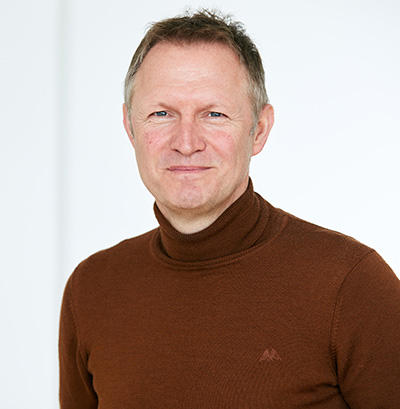
Thomas Döring is Professor of Politics and Institutions, specialising in Public Finance and Institutional Economics, at h_da’s Faculty of Social Sciences. He heads a working group on the reform of local government finances at the Academy for Territorial Development in the Leibniz Association. He also moderates public debates and is much in demand for radio and newspaper interviews. Photo: h_da / Markus Schmidt
impact: Is it even possible to shape such a transformation so that it is socially acceptable?
Döring: It will not succeed without some hardship. Structural change has always been painful. Think of the decline of the mining, steel and textile industries in various parts of Germany. The deciding factor is that new economic sectors emerge at the same time, which is why politics should spend less money on artificially preserving old structures – such as in the automotive industry – and instead create better conditions for new ones.
impact: Citizens experience and observe in their daily lives – in their own towns and cities – how and whether our current economic model still works. How do you assess the situation facing local authorities?
Döring: The situation is more dramatic than ever before. Ever since the Federal Republic of Germany was founded, local authority deficits have never been as high as they are now. In the past three years alone, these deficits have snowballed to over €60 billion. This shows that we really do have a structural problem here.
impact: What is behind it?
Döring: Local authorities’ revenues are growing, but by no means as fast as their expenditure. At the same time, the German economy has been suffering from weak growth for years. Added to this is a structural imbalance: local authorities receive around 15% of the general government tax revenues, but they are obliged to bear around 25% of public expenditure. When the economy was strong, it was still possible to close this gap. Today, that no longer works.
impact: Has the problem been resolved by the agreement between the national and regional governments to relieve the financial burden on the federal states and the local authorities? From now on, “Whoever assigns the task, pays the bill” is the principle that applies.
Döring: Generally speaking, yes. Whoever assigns a task should also finance it. This is in line with the principle that task responsibility and financial responsibility must lie with the same entity. But I have not yet seen the draft bill. From what we know so far, it seems to me that the amount of financial relief is far too small. And apparently the new rule will only apply to tasks assigned in the future. In other words, this financial relief does nothing to remedy existing shortfalls.
impact: What are the cost drivers burdening local authorities?
Döring: Contrary to what is often claimed, it is not, in the first instance, social security benefits or support for asylum seekers. The costs for child and youth welfare as well as integration assistance are rising particularly sharply. The Federal Government approves these benefits, but only partially funds them. The local authorities bear the main burden.
Investment in research, development and education
impact: One much-discussed possibility for injecting money into the system would be a wealth tax, such as your h_da colleague Ulrich Klüh is also advocating. Do you share his view?
Döring: Yes. In my opinion, abolishing the wealth tax in the 1990s in the course of German reunification was a mistake. Since then, wealth inequality has continued to grow. You could also target inheritance tax. Both could help finance public investment and strengthen social cohesion. However, local authorities would only benefit from this revenue if it were passed on to them via the municipal financial equalisation system. So far, this hardly ever happens.
impact: Chancellor Merz opines that many problems could be solved if people worked more. Is that true?
Döring: I think that falls short of the mark. The OECD’s figures for labour productivity per capita in its member countries are often misinterpreted. Germany has a very high percentage of part-time employment, which distorts the statistics. Take a married couple, for example, where one partner works full-time and the other initially does not work at all; the following year, however, the second partner starts a half-time job. Statistically, we then have 100% per working person in the first year and in the second year – with two people working – only 75%. This means that on paper the volume of work falls, but overall people are not working less, but more. Rather than calling for longer working hours, it would make more sense to improve overall conditions so that people who want to work more can – by providing better childcare, for example, or reforming the tax splitting system for married couples.
Related articles

impact, 20.04.2026: ROBUST AND RESILIENT – BUT DEMANDING
impact, 02.02.2026: WHEN DEMOCRACY COMES UNDER PRESSURE
impact, 20.10.2025: “BRINGING DISAPPOINTED PEOPLE BACK ON BOARD”
impact: The real problem lies elsewhere?
Döring: Productivity is the deciding factor. Germany has become less innovative in recent years. The German Council of Economic Experts – the “Five Sages” – pointed this out years ago. That is why we need investment above all in research, development and education. Those are the actual foundations of future growth.
impact: But in many places the opposite is happening. Regional governments, such as here in Hesse, are cutting funding for universities.
Döring: That is precisely the problem. If we cut back on funding for research and development, of all things, we undermine our future viability. This applies to the Hessian Higher Education Pact too.
impact: If you had to recommend an emergency programme to the Federal Government – what would be at the top of the list?
Döring: Simply moaning about the Federal Government is not my intention. It is good that the ball is finally rolling as far as the pension reform is concerned. We need a similar kind of courage regarding health and long-term care insurance. At the same time, we need to invest far more in infrastructure. The investment backlog confronting local authorities is enormous, and it will not be possible to reduce it with the programmes currently in place.
impact: What else would be important?
Döring: Research and development need more support; we need investment in schools and universities. Investing in education today lays the foundations for tomorrow’s prosperity. That is where Germany’s ability to hold its own in the face of international competition will be decided.
impact: Why do politicians drag their feet here?
Döring: Because structural reforms are often unpopular in the short term. The next election puts governments under pressure, which is why they frequently pander to the interests of individual groups. Long-term investments, by contrast, often only pay off years later.
impact: Which brings us back to where we started: the “vibe shift”. Is that term also an expression of a lack of confidence in the future?
Döring: When politics endeavours above all to preserve the status quo instead of actively shaping the future, this reinforces the impression of stagnation. And it is precisely that which causes uncertainty and anxiety about the future.
impact: Are you nevertheless optimistic?
Döring: Yes. But only if we muster the courage to invest more in the future again – in innovation, education, research and an efficient public infrastructure. Transformation succeeds not through stagnation but by shaping change. That, in fact, is the actual task of politics.
Contact our Editorial Team
Christina Janssen
Science Editor
University Communications
Tel.: +49.6151.533-60112
Email: christina.janssen@h-da.de
Translation: Sharon Oranski
Links
Professor Thomas Döring’s website
(in German only)
Thomas Döring, guest on Arte Saloon Talk
(YouTube video in German):
Wie wenig wollen wir arbeiten?