


Training for Democrarcy
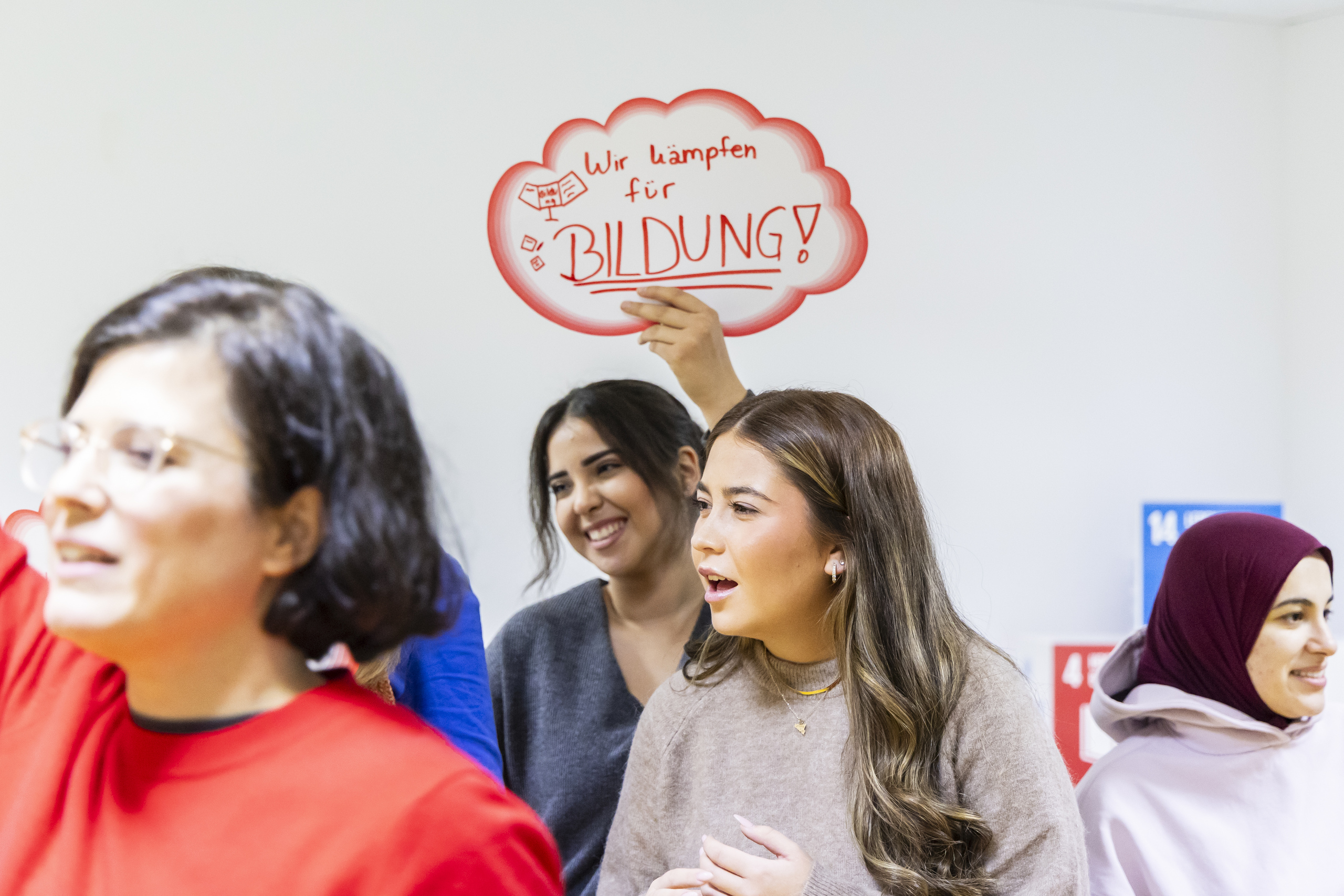
![[Translate to EN:] Studentin hält während des Workshops ein rot umrandetes Schuld mit den Worten „Wir kämpfen für Bildung“ hoch.](/fileadmin/_processed_/b/0/csm_26_02_Demokratiemuskel_Header_e62aac8b40.jpg)
How can we live democracy as a genuine everyday skill? This was the topic addressed by 45 Public Management students at h_da’ Faculty of Economics during a ‘democracy training day’. Through exercises, they practised active listening, allowing for different perspectives and tolerating differences of opinion. At the end, they realised how important it is to truly listen properly. The programme director sees a need for further training – partly due to the growing dissatisfaction with the state and politics.
By Alexandra Welsch, 8.2.2026
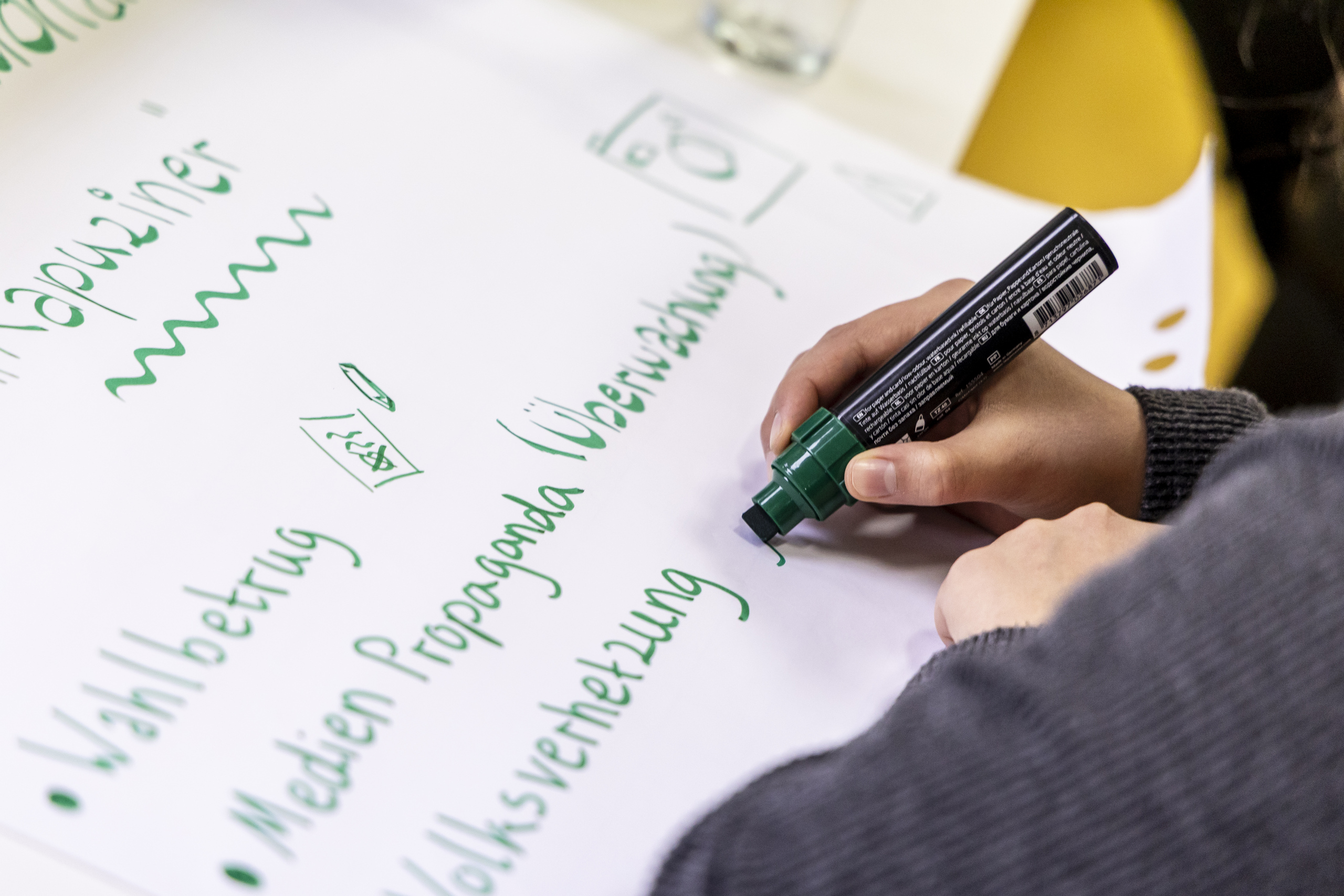
They stand together, talk, listen to each other. Sometimes there are lively discussions, sometimes laughter, animated gestures emphasise their thoughts, serious faces show sympathy. And then approaches are channelled and attitudes become visible. As ‘revolutionaries’, they focus on propaganda or election fraud, compiled on a flipchart. Or they hold up signs with slogans such as ‘We fight for education!’ or ‘Love not War – against racism’.
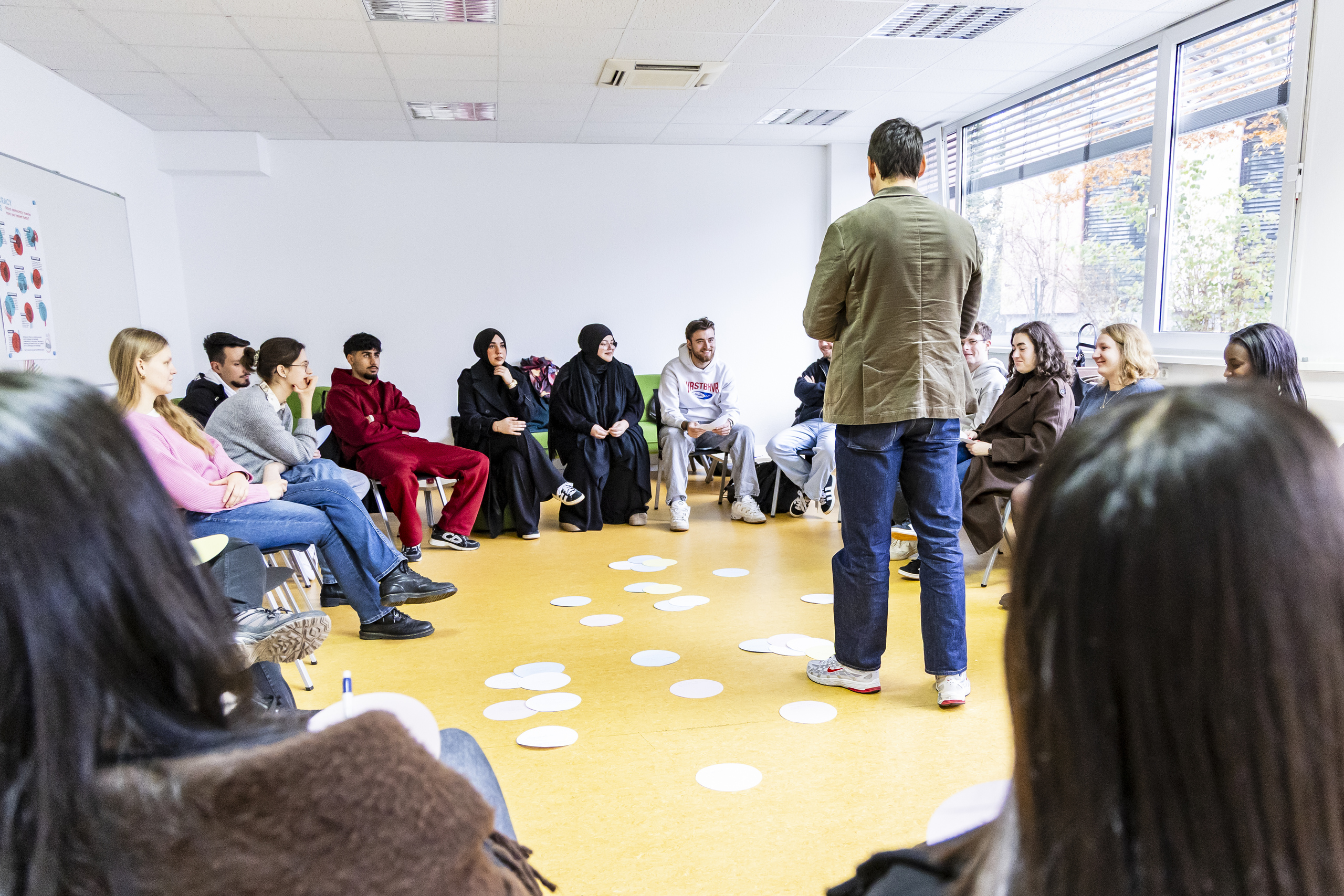
How can we live democracy as a genuine everyday skill beyond elections and parliaments? This question was the focus of a democracy training day in the winter semester 2025/26 at Darmstadt University of Applied Sciences. Under the guidance of two experts from the association ‘Mehr Demokratie e.V.’ (More Democracy), 45 students from the Public Management programme of h_da’s Faculty of Economics, along with several lecturers, spent a day exercising and training their democratic muscles. ‘Together, we explore how we can make our everyday lives more democratic: listening better, arguing constructively, seeing conflicts as opportunities, reflecting on ourselves and looking curiously at the motivations of others.’
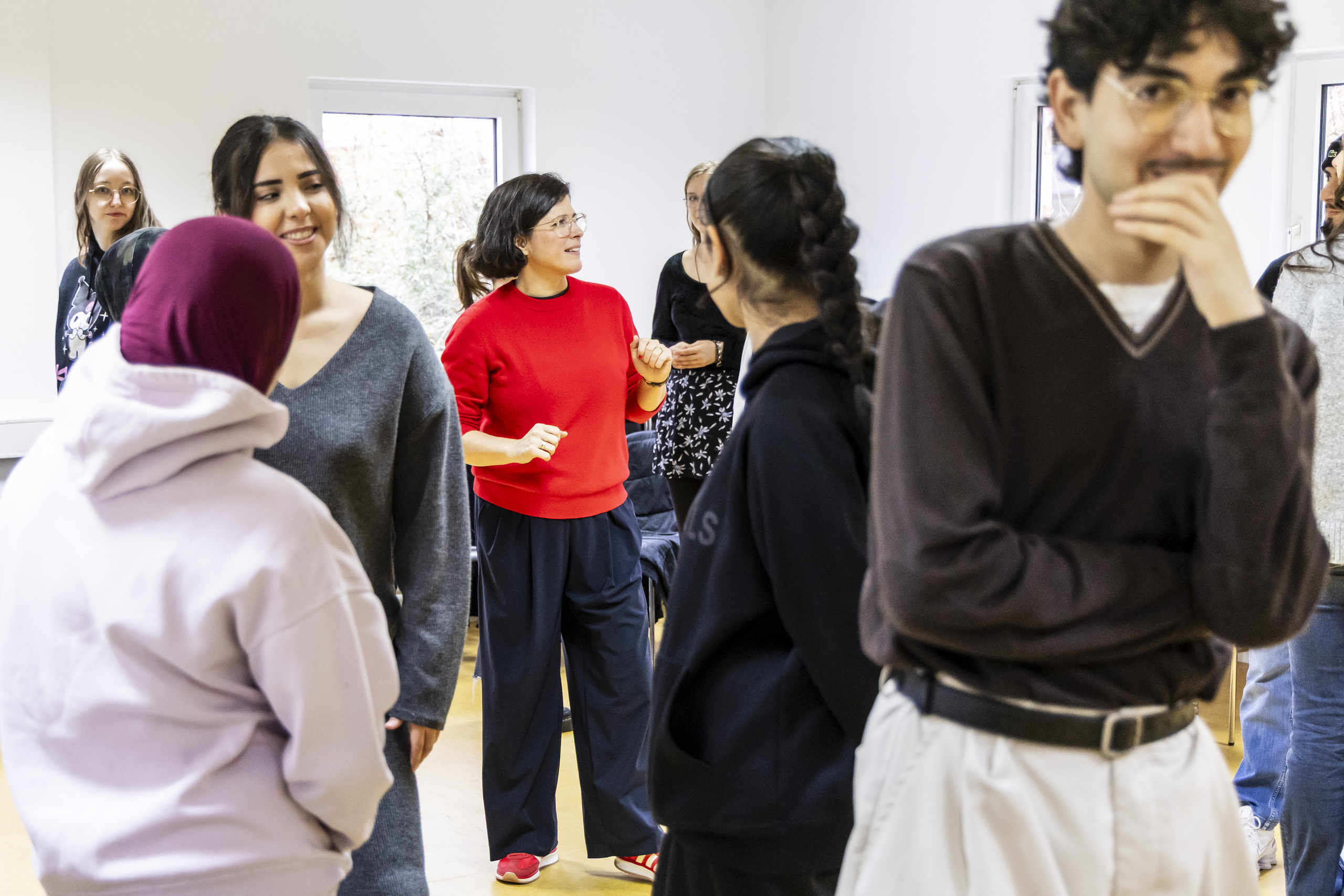
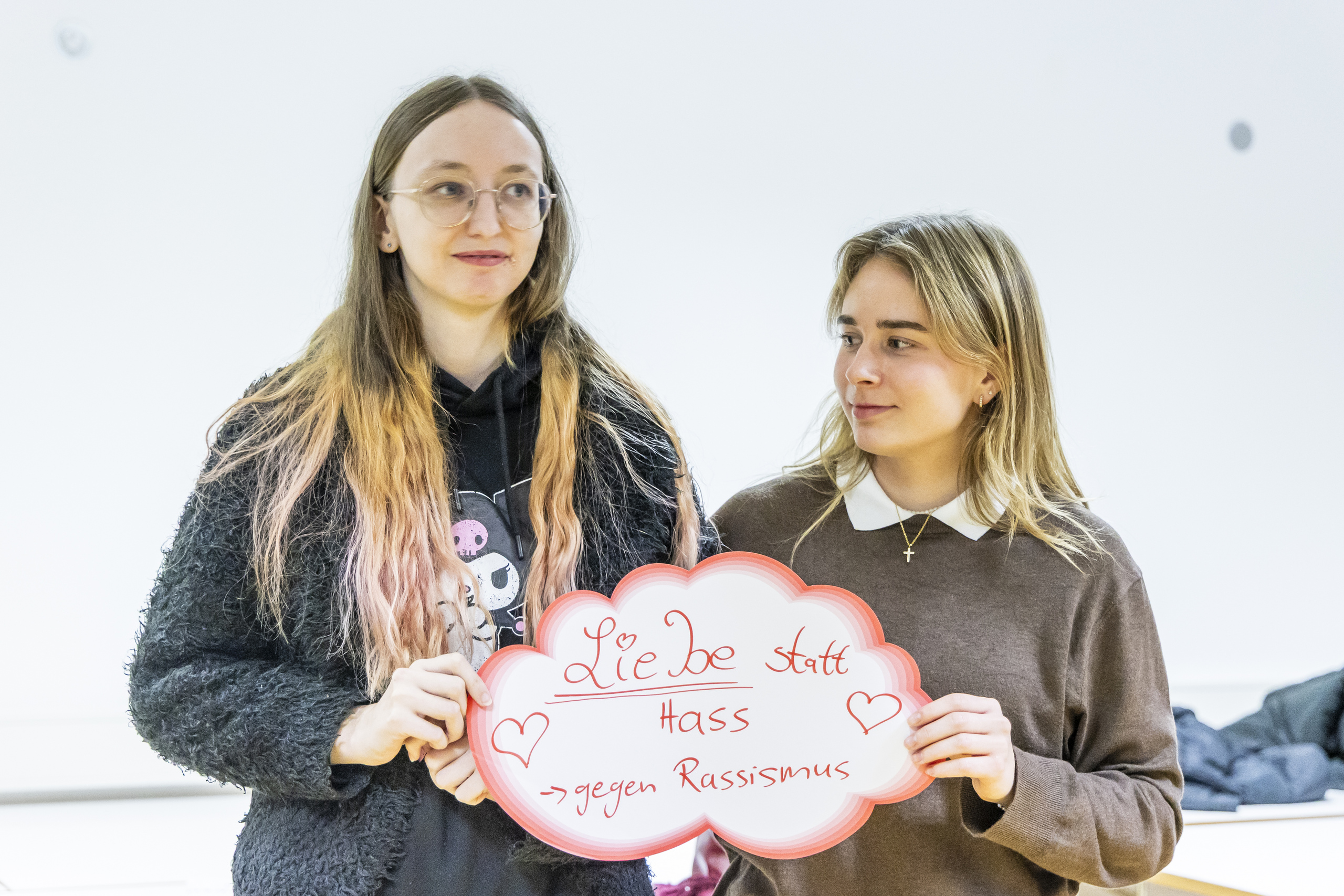
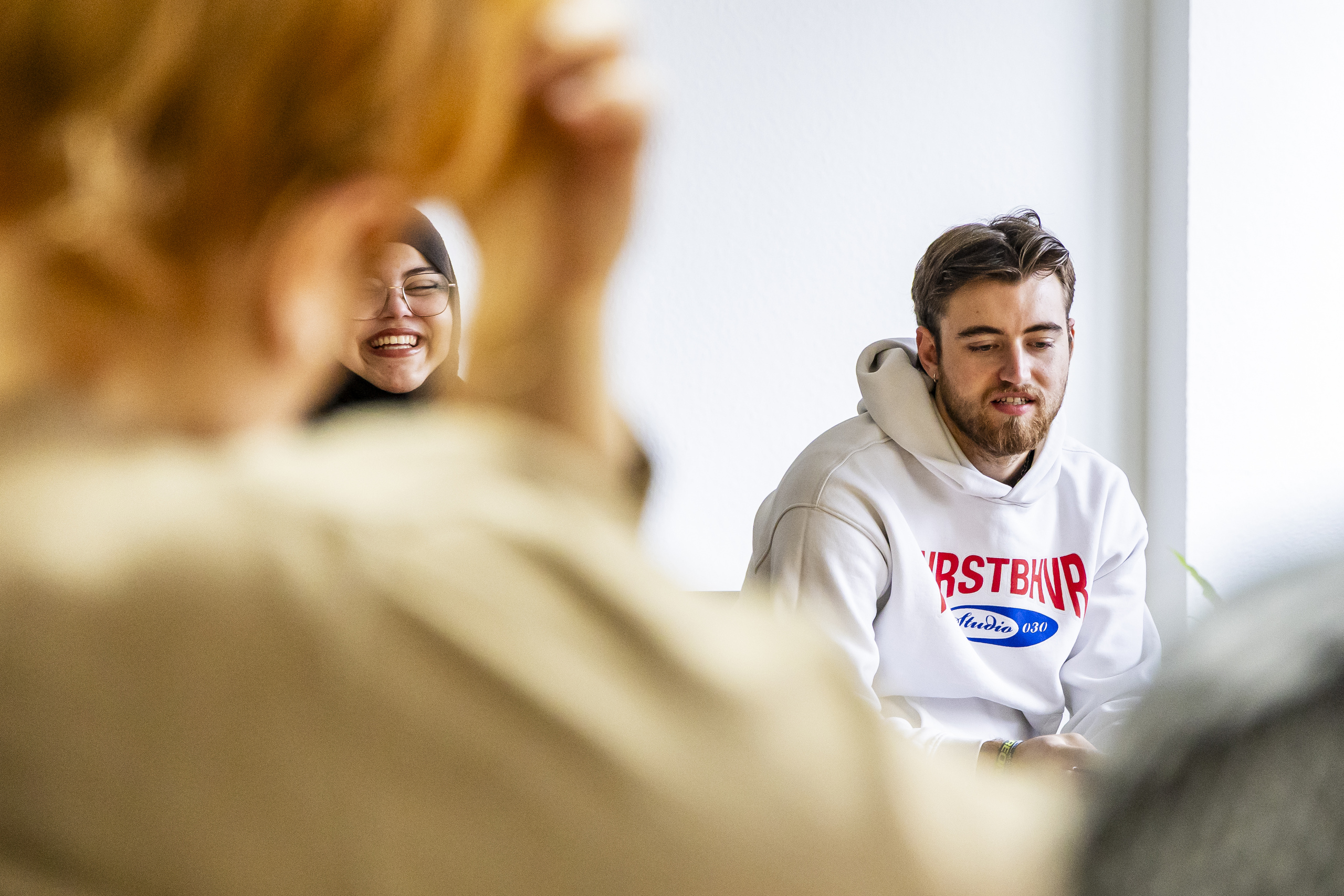
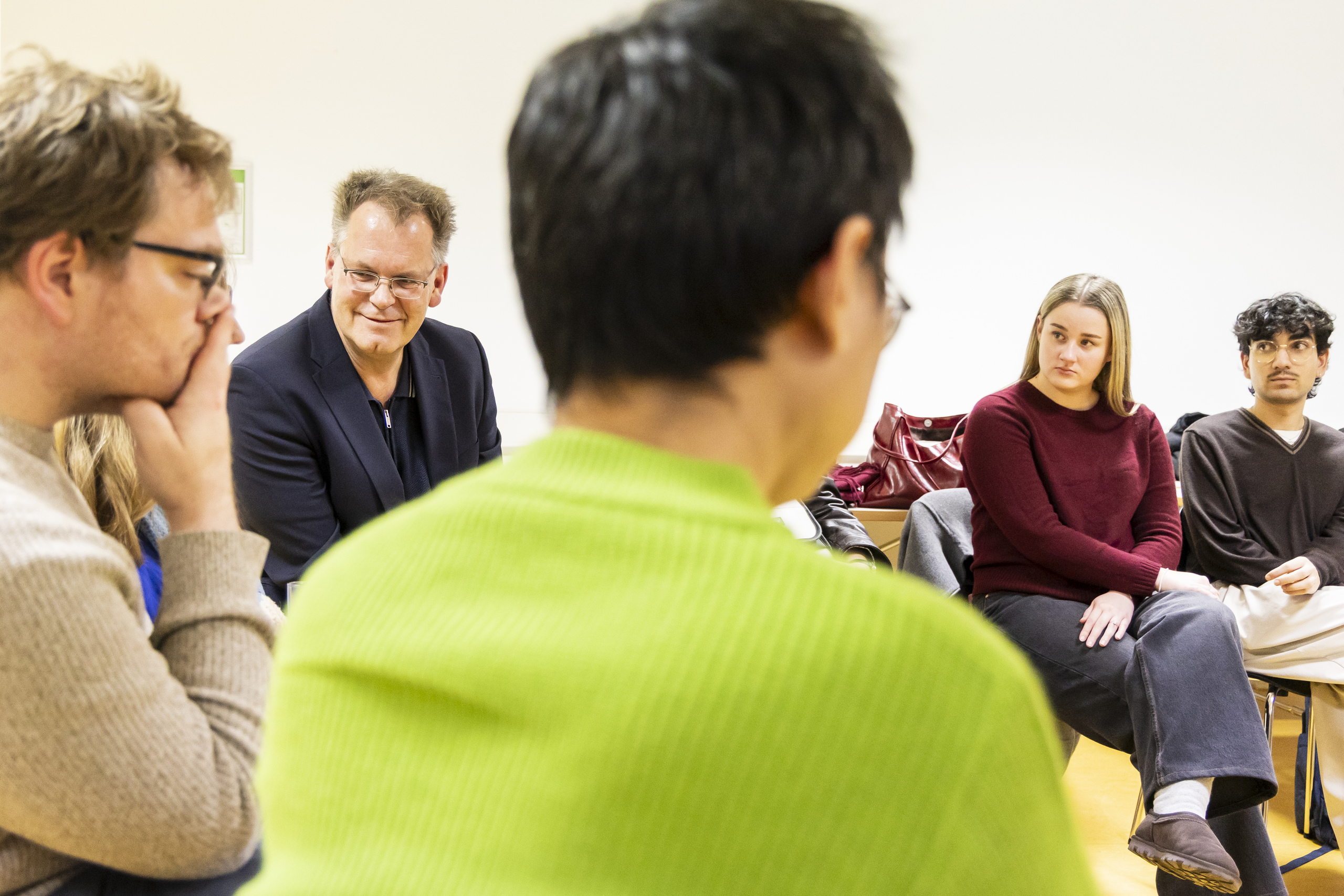
Friederike Edel, programme director, explains why this was and is an important issue. ‘We must do everything we can to ensure that our administrations defend democratic values,’ says the professor of Public Value Management. Democracy already proved to be a key issue in accompanying interviews during the development of the programme's profile in 2020. This is because ‘dissatisfaction with the state is growing and attacks are increasing.’ Public administrations are confronted with this and must be strengthened in dealing with it. Regardless of this, she also sees it as a central issue in view of the broad spectrum of students at h_da: ‘I think we practise democracy at the university.’
This approach was professionally explored in depth during the study day for first to third semester students under the guidance of two democracy education trainers: Achim Wölfel, political scientist and North Rhine-Westphalian managing director of Mehr Demokratie e.V., and Andrea Adamopoulos, business economist and board member of the state association. Based on the Danish concept of ‘democracy fitness,’ the aim was to activate and experience some of the ten ‘democracy muscles’ defined for the programme – such as active listening, mobilisation and dealing with differences of opinion.
‘Democracy is a catch-all term,’ Achim Wölfel points out. ‘We like to pack a lot into it.’ But it often becomes vague when it comes to putting it into practice. If we bring it down to everyday level, we can be more specific.’ One example is active listening – a ‘democracy muscle’ that was intensively trained in the workshop. In one exercise, two participants first sat down together and told each other which topic they felt most passionate about. For two minutes, they were asked to only listen, without asking any questions. ‘The educational concept behind this is to deal with differences of opinion and allow for other positions,’ explains the trainer.
In a further step, the mobilisation muscle was addressed in the form of a simulation game. Divided into opposing ‘revolutionaries’ and ‘democrats,’ the participants were asked to work out mini-campaigns on a burning issue in small groups. Within ten minutes, they had to come up with concrete methods to overthrow or save democracy under time pressure. As the political scientist points out, the paramount question here is how democratic the voting process within the group actually was
Andrea Adamopoulos also addresses the challenge of winning allies for one's cause without imposing one's own opinion on others: ‘As a first step, I explain what is important to me.’ Then draw the other person into your topic, for example by simply asking: How would you make this topic a big deal? Because: ‘I can't mobilise others,’ emphasises the trainer. ‘I can only create a space for others to mobilise themselves.’
For the two students Karabella Pleil and Marlin Reuter, one experience in particular left a lasting impression during the democracy training: active listening. ‘We sat back to back, so not facing each other,’ says Karabella, who is in her third semester of Public Management studies. ‘That helped us to concentrate solely on what was being said. Just listening. Afterwards, we had to repeat what had been said, which allowed us to see for ourselves how well we had really listened. ’
‘It was a wonderful experience,’ agrees first-year student Marlin. This exercise had the most lasting impact. Even on a friend to whom Marlin told about the workshop. Her friend's father is an AfD (a nationalist, right-wing political party) supporter. In a discussion with him, her friend was able to handle the situation with more confidence thanks to the ‘democracy methods’ described. Karabella had a similar experience: ‘I noticed in one situation that I had improved my listening skill.’ To her, active listening meant she was less prone to stereotyping.
‘It has a lot to do with self-awareness,’ says Andrea Adamopoulos, describing a key lever of democracy fitness training. Afterwards, you may be a little more aware and relaxed when dealing with diverging opinions. The keyword here is ambiguity tolerance – i.e. being able to tolerate ambiguities and contradictions. ‘That is the absolute foundation on which democracy is built,’ says the trainer. ‘And you should practise it regularly.’ Preferably with people who have different opinions.
‘There was real energy and momentum behind this,’ says Werner Stork, Professor of Organisation and Management at h_da, praising this extra training session on democracy. ‘I feel that topics like this also help us in our teaching.’ The students are very diverse, and team constellations are not always easy. It is therefore a relevant skill to not only tolerate contradictions, but to experience them as a benefit. ‘Seeing and defending diversity’ is what democracy is all about.
And Friederike Edel would like to build on that. ‘Corona has made us forget how to get along with each other.’ Increased isolation also makes it more difficult to engage in dialogue. ‘But humans are actually social creatures,’ notes the programme director. ‘That's why training our democratic muscles is so essential.’ She would like to continue offering this, at least in the Public Management programme. ‘But I also see potential beyond that.’ And first-year student Marlin agrees wholeheartedly: ‘It would be great if they did that in a larger group too!’
Related articles
impact, 8.12.2025: The true, the false and the felt
impact, 10.10 2025: Bringing disappointed poeple back on board
impact, 2.2.2026: When democracy comes under pressure
impact, 2.2.2026: Demokratie bauen: Wie Design und Infrastruktur Menschen verbinden
Contact the science editorial team
Christina Janssen
Science Editor
University Communications
Tel.: +49.6151.533-60112
Email: christina.janssen@h-da.de
Photography: Samira Schulz
Information on study programmes
Study programme website: Public Management
Study programmes at Darmstadt Business School